


 Shkruar nga Pamfleti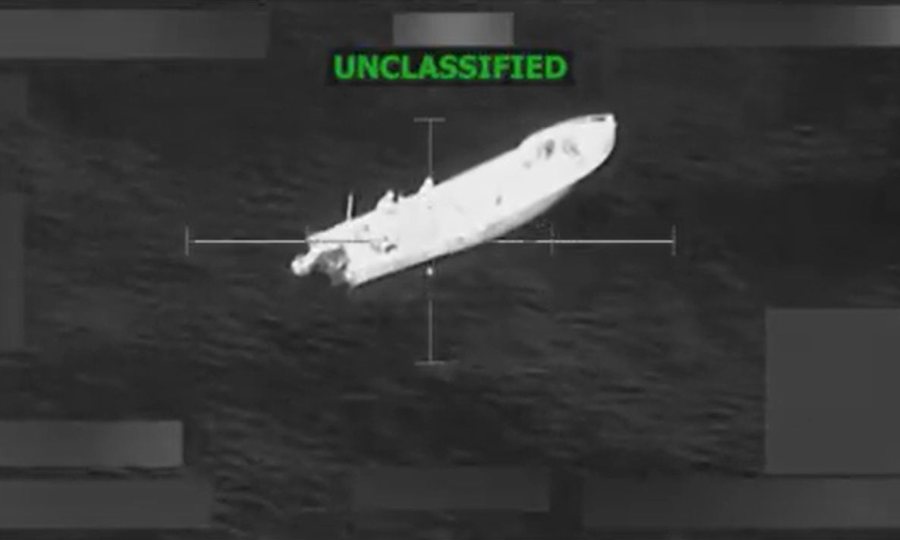
The UK's decision marks a significant break with its closest ally and intelligence-sharing partner and highlights growing skepticism about the legality of the US military campaign in Latin America...
The United Kingdom has stopped sharing information with the United States about ships suspected of smuggling drugs in the Caribbean because it does not want to be complicit in US military strikes and believes these attacks are illegal, according to a CNN article, which cites sources familiar with the matter.
The UK's decision marks a significant break with its closest ally and intelligence-sharing partner and highlights growing skepticism about the legality of the US military campaign in Latin America.
For years, the United Kingdom, which controls a number of territories in the Caribbean where it has set up intelligence agencies, has helped the United States identify ships suspected of transporting drugs so that the U.S. Coast Guard can intercept them, the sources said. That means the forces would stop the ships, board them by force, arrest the crew and seize the drugs.
The information was usually sent to the Joint Interagency Task Force South, headquartered in Florida that includes representatives from a number of partner countries and works to reduce the illegal drug trade.
But soon after the deadly US attacks on the ships began in September, the UK began to worry that the US might be using the information it provides to choose its own targets. British officials believe the US military strikes, which have killed 76 people, violate international law, the sources said. The intelligence interception began a month ago, they said.
The UN human rights chief, Volker Turk, said last month that the attacks violate international law and constitute “extrajudicial killings.” The United Kingdom agrees with that assessment, sources told CNN.
The British Embassy in Washington, the Pentagon and the White House did not respond to CNN's requests for comment.
Before the US military began its raids in September, combating illegal drug trafficking was the responsibility of the authorities and the US Coast Guard, while cartel members and drug traffickers were treated as criminals with rights to a fair trial, something the UK was willing to help with, according to sources.
However, the Trump administration has argued that the U.S. military can legally kill suspected drug traffickers because they pose a direct threat to Americans and are “enemy combatants” engaged in “armed conflict” with the U.S., according to a letter the administration sent to Congress. The U.S. Department of Justice’s Office of Legal Counsel issued an opinion, still classified, supporting that argument, according to CNN, and Trump has labeled a number of drug cartels as “foreign terrorist groups.” The White House has repeatedly said that the administration’s actions are “fully consistent with the Law of Armed Conflict,” the area of international law designed to prevent attacks on civilians.
However, legal experts argue that the law of armed conflict still applies to civilians trafficking drugs and that designating a group as a "foreign terrorist organization" does not automatically authorize the use of deadly force. According to CNN, many of the ships hit by the US were either stationary or had turned back when they were attacked, undermining the government's claim that they posed an immediate threat that could not be addressed by capture.
Senior US Defense Department officials have also expressed skepticism about the military campaign. The commander of US Southern Command (SOUTHCOM), Admiral Alvin Holsey, resigned during a meeting last month with Defense Secretary Pete Hegseth and the chairman of the Joint Chiefs of Staff after raising questions about the legality of the strikes, according to CNN.
According to CNN, lawyers specializing in international law at the Department of Defense's Office of General Counsel have also raised concerns about the legality of the strikes. Multiple current and former military lawyers told CNN that the strikes do not appear to be legal. Hegseth's spokesman has previously denied that any lawyers involved in the operations disagreed.
Canada, another key U.S. ally that has helped the U.S. Coast Guard catch suspected drug traffickers in the Caribbean for nearly two decades, has also distanced itself from the U.S. military strikes. Sources told CNN that Canada intends to continue its cooperation with the Coast Guard.
However, the country has made it clear to the US that it does not want its intelligence used to help target ships for deadly attacks, CNN's sources said.
A spokesperson for the Canadian Department of Defence told the Canadian Press last month that “it is important to emphasize that the activities of the Canadian Armed Forces under Operation Caribbean, conducted in coordination with the US Coast Guard, are separate and distinct from US military attacks on suspected drug trafficking vessels.”


Lini një Përgjigje