


 Shkruar nga Pamfleti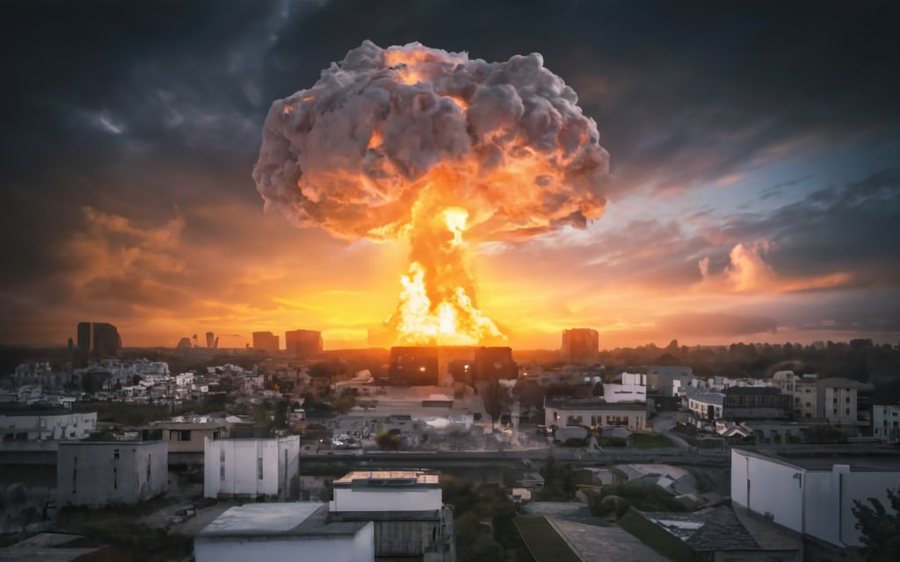
On February 24, Moscow opened a Pandora's box, the effects of which we will see in the medium and long term...
Nuclear deterrence can be defined as the threat of nuclear retaliation against an adversary for an attack on a state's vital interests, imposing costs so high that they would clearly outweigh any potential benefits. The reality of atomic weapons, i.e. their unlimited destructive potential, presupposes the principle that nuclear wars cannot be won.
However, the presence of nuclear weapons in the military arsenals of states ensured a period of relative peace during the Cold War, as the belief that a direct conventional clash could easily degenerate into an atomic conflict curbed the will to attack. This principle, informally called "balance of terror", is based on the assumption of mutual assured destruction (or MAD), ie. in the awareness that from a nuclear conflict all parties would be severely destroyed, to the point that the very survival of humanity would be endangered.
This, as we know, however, did not prevent "proxy wars" or conflicts created between blocs (Soviet/Western) in which the threshold of conflict never reached nuclear power, despite huge losses in terms of strategy and human and military resources .
However, the use of nuclear weapons has not been eliminated from the military doctrine of the states that possess them, that is, they do not serve only as a deterrent: the United States and Russia believe that they can be used on the battlefield in a limited way, without necessarily achieving an overall escalation. For this reason, even today there are non-strategic nuclear weapons (wrongly called tactical), the use of which is not only postulated, but also considered in very specific cases by NATO and Russia.
Superiority in the number of nuclear weapons is of secondary importance in relation to nuclear deterrence, since even states with small nuclear forces can impose restraint on those with larger nuclear forces, since only a small number of warheads are destructive.
If Ukraine still had that part of the atomic arsenal inherited from the USSR, instead of trading it for the guarantees of its independence, autonomy and sovereignty under the 1994 Budapest memorandum, Russia would probably have refrained from invading on February 24, 2022. This last consideration can be taken and translated to mean: Russia attacked Ukraine precisely because the latter no longer possessed nuclear weapons and at that moment was not part of a partnership or alliance that could use them them to protect him.
This undeniable assumption should cause all current prevention and non-proliferation policies to be reconsidered.
In a sense, on February 24, Moscow opened a Pandora's box, the effects of which we will see in the medium and long term, but which can already be seen in the embryo: China, for example, is accelerating its program of nuclear rearmament in the belief that having a substantial arsenal protects it from regional and global adversaries and it is very likely, in the near future, that it will revise its doctrine of non-use, thus aligning itself with those of the States United States and Russia.
North Korea, as we know, has long since restarted its nuclear and missile program in the firm belief that having an adequate and modern atomic arsenal is an insurance policy for the survival of the current government regime led by the Kim family: the fall of Gaddafi in Libya, a few years after the official renunciation of nuclear energy, set a precedent.
Not having atomic weapons is one thing, having even a few is another. The possession of a nuclear arsenal, even a small one, protects against large-scale conventional military operations in the event that they are possessed by both adversaries. An emblematic case of this was observed when Pakistani forces crossed the Line of Control in disputed Kashmir with India in 1999 (commonly known as the Kargil War). Instead of waging all-out war, India refrained from retaliating with nuclear force despite its advantage over Pakistan. At the same time, while Pakistan also possessed the ability to credibly strike back with nuclear force, the Kargil war eventually de-escalated and a return to crisis stability was achieved.
The key to understanding is, once again, the regional balance of power: if Iran were to reach the nuclear threshold, stability in the Middle East region would most likely be achieved since Israel is known to possess atomic weapons and other regional actors (Turkey and Arabia Saudis) have "sponsors" or allies who own them.
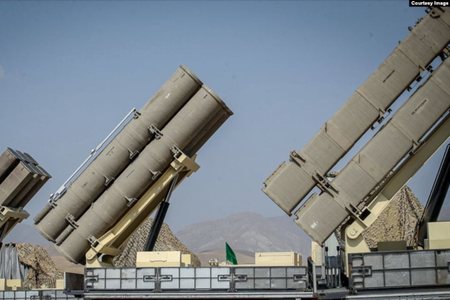
However, there is one factor that confuses the cards on the table, even though everything has to be demonstrated (fortunately): ABM (Anti-Ballistic Missile) capabilities. Historically, the withdrawal of the United States from the ABM Treaty in 2001 triggered Russia's search for new systems capable of possibly overcoming the US missile "shield", in turn generating the US response to its nuclear program. missile modernization and a hypersonic race. After all, as we have said, a small handful of heads is enough to generate terrible damage. As far as Moscow was concerned, what was at stake was Russia's only effective deterrent capability, given its clear (and still continuous) of conventional forces compared to those of the United States.
We must also bear in mind that, in today's world in which new (and old) hostile regional actors possess an expanding nuclear arsenal, the main danger - for example to the US - is that of facing two or three opponents at the same time. So the nuclear arsenal may lose its capacity to deter, including a second strike, due to compliance with nuclear disarmament treaties.
The temptation is therefore to increase the number of available warheads (and their carriers), but such a move would probably be ineffective.
A qualitative rather than quantitative response can be more effective, while also allowing you to maintain the ethical high ground by showing yourself as a responsible actor. In other words, it would be necessary to increase the accuracy and ability to avoid the protection of nuclear carriers, but this does not eliminate the initial assumption of our analysis: as long as nuclear weapons are the prerogative of some, given their deterrence , capacity (which we have seen is another side of the coin), there will be more and more people wanting them, and even if complete nuclear disarmament were achieved globally. Indeed, many countries would be motivated to attack precisely because of the lack of possibility of being annihilated by a nuclear counterattack. /Adapted "Pamphlet" from "Inside Over"



Lini një Përgjigje