


 Shkruar nga Adam Samson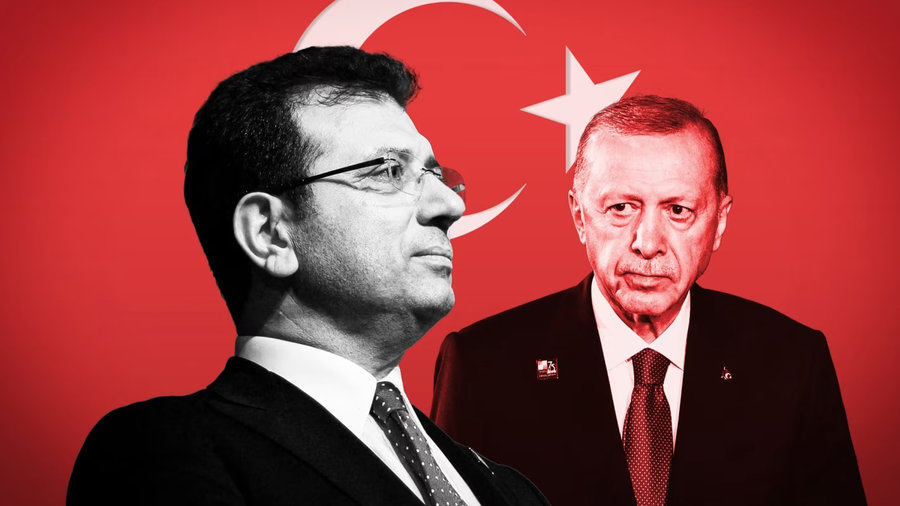
This week's political unrest represents a major setback to a comprehensive economic reform program that began after Erdogan's reelection in 2023.
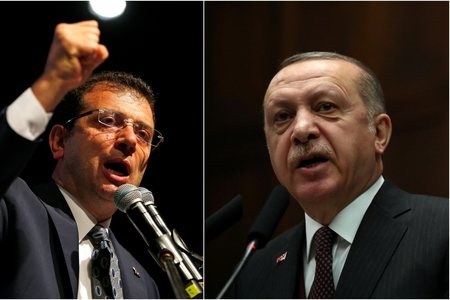
Turkey's central bank burned through almost $12 billion defending the lira in a record intervention after President Recep Tayyip Erdogan's ban on his political rival sparked a political crisis that spooked investors and sent the local currency plummeting.
The bank spent $11.5 billion to prop up the currency on Wednesday after the detention of Istanbul Mayor Ekrem İmamoğlu, the most prominent leader in Turkey's political opposition, said a person with knowledge of the matter and calculations based on official data by Burumcekçi Research and Consultancy.
The intervention was nearly four times larger than any previous such move in official bank data. It came after the lira fell as much as 11 percent against the U.S. dollar to a record low on Wednesday after Erdogan's move against Imamoglu sparked a rout in Turkey's markets.
A Turkish banker said officials had "lost control" of the market early Wednesday, adding that it had "left a scar" on investor confidence.
JPMorgan Chase, a major player in emerging market finance, also noted that “lira liquidity was impaired amid large outflows” on Wednesday. The central bank declined to comment.
Analysts say the central bank is likely to continue intervening in the market on Thursday and Friday.
Policymakers have taken other steps to calm markets this week, including holding an emergency central bank meeting on Thursday, at which a key overnight interest rate was raised in an effort to keep domestic savings in lira instead of shifting to dollars.
The actions have eased the lira's slide, leaving the currency down 3 percent for the week, although Istanbul's BIST 100 stock index fell almost 8 percent on Friday in its worst week since 2008.
Imamoglu, who has emerged as Erdogan's most serious political challenger during his two decades in power, was expected to run as the presidential candidate for his opposition Republican People's Party (CHP), which was hoping to force early elections.
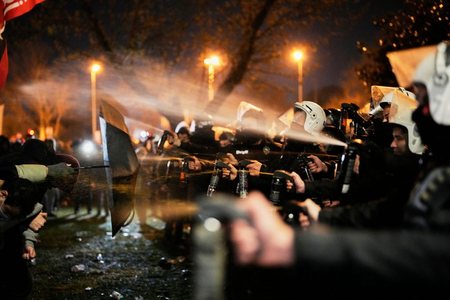
The arrest has sparked days of unrest, with the CHP calling for more protests over the weekend. Erdogan on Friday denounced the demonstrations as "street terrorism."
This week's political unrest represents a major setback to a comprehensive economic reform program that began after Erdogan's reelection in 2023.
The program led by Mehmet Şimçek, a former Merrill Lynch banker, aims to quell Turkey's long-running inflation crisis and attract investors who have fled over the past decade as the president has slid toward autocracy and pursued unorthodox monetary policy.
Şimçek's program has included large interest rate hikes - reversing Erdogan's previous insistence on keeping rates low despite rampant inflation - and tax increases.
It has shown some signs of success with inflation down to 39 percent from over 85 percent at the end of 2022. Turkey has also been rapidly rebuilding its currency war arm after it was impoverished as Erdogan's government tried to prop up the economy and the lira ahead of 2023 elections. Gross foreign exchange reserves had risen to almost $100 billion before this week's interventions, from about $57 billion in mid-2023.
Long-term investors have remained cautious about investing in Turkish assets for fear that Erdogan will turn to unorthodox economic policies, as he has done in the past.
But hedge funds and other investors looking to profit from interest rates above 40 percent have placed roughly $35 billion in so-called “carry trades,” when traders borrow in low-yielding currencies to bet on high-yielding ones, according to JPMorgan./ Adapted from “Pamphlet” by “Financial Times”


Lini një Përgjigje