


 Shkruar nga Pamfleti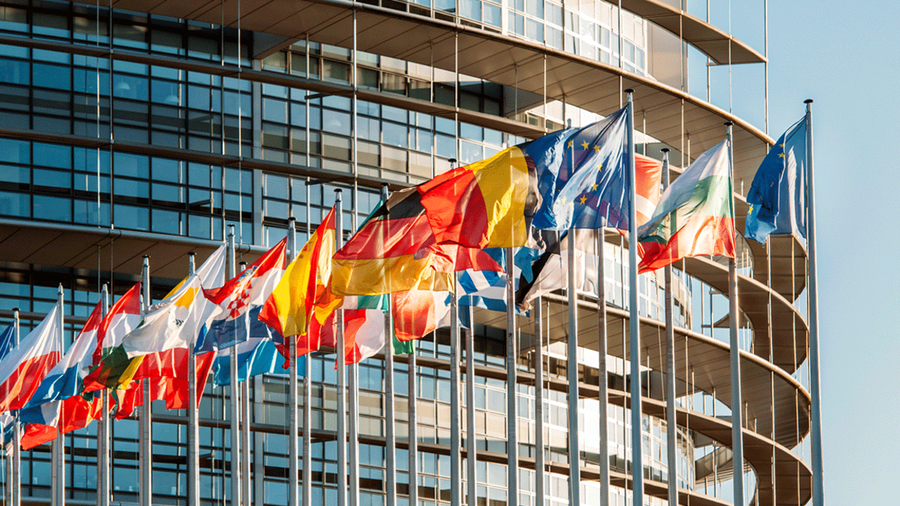
June 2003 marked a historical moment, as the leaders of the European Union states unanimously expressed their will for the European perspective of the Western Balkans (BP).
"Welcome to Europe!", was the motto of that summit held in Thessaloniki, Greece, which gave hope to countries that, apart from being the poorest on the continent, were also suffering from divisive conflicts between them.
A hope that the path of integration in the European Union would bring more economic prosperity, chances for a better life, opportunities for employment, free movement, good governance, a more competitive and functional economy, in short more opportunities to all these places.
But the EU was clear. The road is indeed open, but not paved. The countries have a lot to do in order to meet the conditions that will enable their membership, with full rights in the European Union.
But, the EU itself very quickly showed signs of "fatigue" of the process, after the membership of Bulgaria and Romania and the skepticism shown by some of the large member countries for further expansion.
In order to revive the commitment made in Thessaloniki, in 2014, Germany initiated the so-called "Berlin Process", a high-level cooperation between Albania, Bosnia-Herzegovina, Kosovo, North Macedonia, Montenegro and Serbia, as and some EU member states.
More than an open invitation to the EU, it was an incentive for increased cooperation between the BP countries themselves.
Following it, in 2015, the European Commission approved an economic and investment plan for the Western Balkans, the so-called interconnection agenda, worth about 30 billion euros, which would come from the mobilization of funds and guarantees for the withdrawal of financing.
20 years after the historic promise, many things have changed. The countries of the Western Balkans have progressed in their integration, although the conflicts have not completely disappeared.
Trade between them has increased, communication has been facilitated, employment opportunities have increased, most of the countries have signed agreements on movement.
The President of the European Commission, Ursula von der Leyen, recently declared in Tirana that more than half of the fund provided for the economic and investment plan has already been used. But much else remains the same.
The Western Balkans has moved very slowly and has not seized the chance that was offered two decades ago. No country has yet become a member of the EU, although some have progressed faster in the integration process.
The average income remains between 30-40% of the European average, where unfortunately, Albania is last, together with Kosovo.
20 years later, EU leaders gathered again in Tirana. The atmosphere was much more friendly, the reception was much more glitter, gas and joy, as our prime minister knows how to do.
But the message basically does not seem to have changed much: the economies of the Western Balkans and the European Union are still very far from each other;
A lot of work needs to be done to raise economies; To move forward, reforms are needed, and these reforms will be accompanied by funding from the EU;
If you want access to the European Union, you must be on the same level; The time has come to overcome the conflicts that have been going on for too long, keeping you in your place.
The most emphatic was the French Prime Minister Macron, who made it clear that an exact date of membership does not make sense, as it is linked to the country's commitment and based on merit.
It seems that the entire Balkans still has a long way to go. The European Union says it is waiting for us, but without much enthusiasm. The Balkans must overcome the biggest obstacles themselves.
In the case of Albania, it seems that these obstacles remain the same. And not having something fundamentally new to offer in the integration process, the reception we reserved for the heads of state of the EU would certainly be filled with song and dance!/Monitor


Lini një Përgjigje