


 Shkruar nga Pamfleti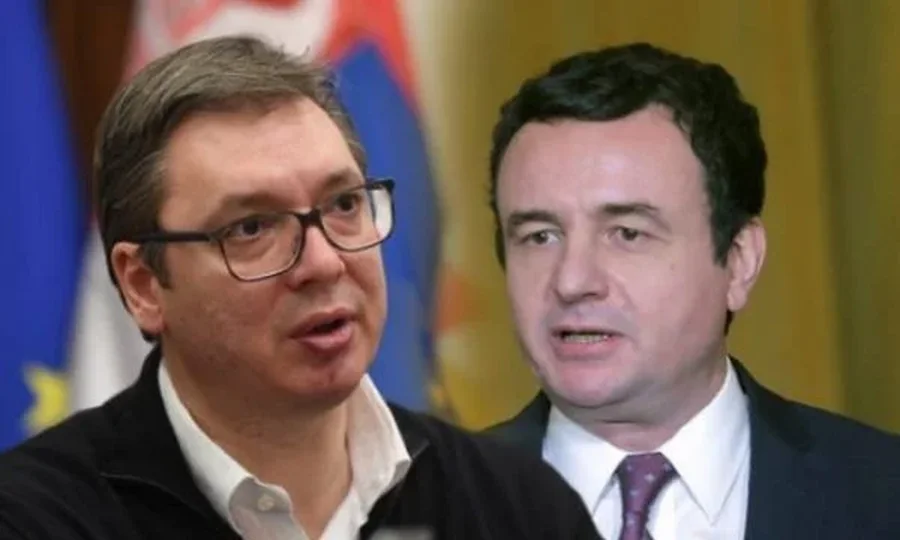
The European Union hopes that this year Kosovo and Serbia will implement the agreements reached so far in the dialogue mediated by the bloc, stressing that they are mandatory and must be fully implemented by both parties.
The EU's spokesman, Peter Stano, said in Brussels that the start of the implementation of the agreement on license plates this week between the two countries shows that "when there is will from the parties, then progress is possible."
Kosovo and Serbia also officially recognized each other's license plates, not implementing from January 1 the regime of stickers that covered state symbols on license plates when vehicles moved in their respective territories.
"The dialogue work continues and the focus is on the implementation of what was agreed upon in Brussels and then in Ohrid last year. We saw in the case of license plate recognition that progress is possible. The parties agreed on the implementation of the decision on license plates", said Stano.
He emphasized that the EU will work to help the parties to implement what they committed to and reiterated that they are binding on the parties.
The bloc of 27 countries has been mediating the dialogue for the normalization of relations between Kosovo and Serbia since 2011.
Last year, Kosovo and Serbia reached the Agreement on the way to the normalization of relations and the Annex for its implementation. Despite international pressure for the parties to implement the agreement, the European bloc has said that it is not being implemented.
When asked what tools the EU has to convince Serbia to implement the agreement, since it has stated that it will not implement some parts of it, Stano said on Monday that Serbia has chosen EU integration as its orientation and in case of failure in the implementation of obligations, this process would be jeopardized.
"We know that there are other issues that Serbia must fulfill in the integration process, not only Kosovo. But one more will make the journey even more difficult," he said.
The agreement on normalization, of 11 articles, among other things, foresees a level of self-management for the Serbian community in Kosovo and mutual recognition of the state symbols, while asking Pristina and Belgrade to also implement all previous agreements of dialogue.
The United States has repeatedly said that the dialogue for the normalization of relations should be concluded with mutual recognition between Kosovo and Serbia.
The international community has repeatedly asked Kosovo to establish the Association of Serb-majority municipalities, which should give greater decision-making to the Serbs in Kosovo.
A draft statute for the Association was presented to Kosovo and Serbia in October by representatives of the EU, the United States, France, Germany and Italy. However, recently, the Prime Minister of Kosovo, Albin Kurti, has said that he and some of his ministers will write the draft statute for the Association.
Regarding the punitive measures that the EU took against Kosovo last year, following the rise of tensions in the north of the country when the Albanian mayors installed their officials in the four Serb-majority municipalities after elections contested and boycotted by the local Serbs, Stano said that they will be removed "when it is estimated that the appropriate steps have been taken for the extension of the situation in the north of Kosovo".
He emphasized that the bloc is monitoring the situation on the ground and working with partners to see if the appropriate measures have been taken.
Last month, the president of Kosovo, Vjosa Osmani, said that there is a tendency from some countries to misuse the measures that the bloc decided at the beginning of this year towards her country, to "condition it on completely different issues".
"As for the measures, they had to be removed, in fact they never had to be put in place, despite the disagreements that existed between the Government of Kosovo and the partners in the EU regarding May 26", said Osmani.
She insisted that Kosovo has met the conditions for lifting the measures, saying that "what was requested from Kosovo for what they called escalation, happened"./REL



Lini një Përgjigje