


 Shkruar nga Pamfleti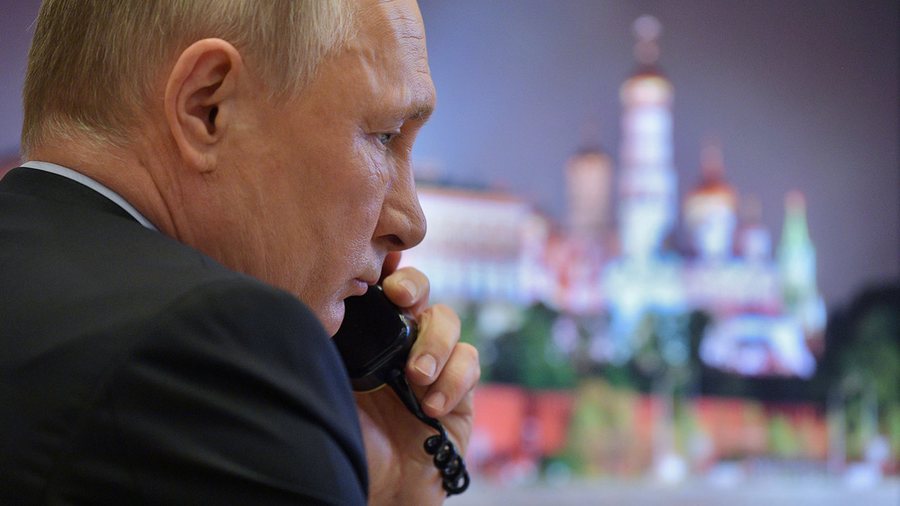
Moscow is ready to work on a memorandum with Ukraine on future peace talks, as well as a ceasefire, but the two countries must find compromises that suit both sides.
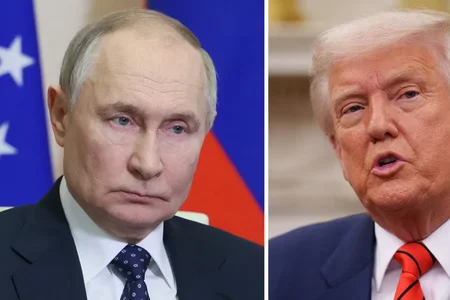
US President Donald Trump and his Russian counterpart, Vladimir Putin, have discussed for about 120 minutes via secure telephone lines, in an attempt to achieve peace in Ukraine.
The call began shortly after 4:15 p.m. and the two leaders spoke for more than two hours.
The talks were conducted via encrypted lines, with the participation of translators. Vladimir Putin chose to communicate with Trump in Russian, although he understands English, but in negotiations he uses Russian.
According to Reuters, Putin spoke from Sochi, on the Black Sea, while Trump from Washington.
As CNN reported, citing sources from the Ukrainian presidency, Trump previously had a conversation with Volodymyr Zelensky, while immediately after the call with Putin, he will speak with European NATO leaders and then make statements.
Putin called the conversation that lasted more than two hours "meaningful, sincere and very useful," Russian state news agency RIA Novosti reported.
Putin told Trump that Moscow is ready to work on a memorandum with Ukraine on future peace talks, as well as a ceasefire, but that the two countries need to find compromises that suit both sides, according to RIA Novosti.
Trump is pinning his hopes on a new personal appeal to Putin to get the Kremlin leader to agree to an unconditional 30-day ceasefire with Kiev.
The White House warned that Trump was "tired and frustrated" with the slow progress in resolving the conflict. The Kremlin said the phone call between the Russian and American leaders was "important."
He reiterated his assertion that the "root causes of the conflict" must be eliminated.
In fact, in the last hour, the Ukrainian armed forces have reported losses after a Russian airstrike in Kramatorsk in the country's Donetsk region, at the time the crucial Trump-Putin phone call was underway. They also report "large-scale fires caused by Russian strikes" in the village of Stary Saltiv, Kharkiv, but there were no casualties.
At the same time, according to the Russian state news agency TASS, the Kremlin spokesman stated that ending the war in Ukraine will require "quite arduous and, perhaps, protracted work."
Trump is also open to a meeting with Putin, however "everything" remains on the table, even secondary sanctions.
For its part, the Kremlin, as reported by the state news agency RIA citing a statement by spokesman Dmitry Peskov, stressed that the meeting between Vladimir Putin and Donald Trump is not currently being prepared.
Moscow conditions
According to the Kremlin, the main conditions set by Putin include:
Complete withdrawal of Ukrainian forces from Donbass and "Novorossiya"
Abandoning Ukraine's NATO membership ambitions
Lifting all Western sanctions against Moscow
Kiev's commitment to neutrality and a non-nuclear regime
Full protection of the rights of Russian-speaking citizens in Ukraine.
Why Putin thinks he has the upper hand
According to Bloomberg, Putin is ready for a protracted war if that is what is required to achieve his goals, while he seems optimistic about the scenario of further sanctions from the US, according to sources close to the Kremlin.
According to the report, Putin is confident that his forces can break through Ukraine's defenses by the end of the year and take full control of the four regions claimed by Russia. This means that the Russian president is unlikely to offer any significant concessions to Trump in their conversation.
Moreover, Putin has shown no sign that he is ready to stop the war, as his troops slowly but steadily advance on the battlefield.
At the same time, Russia's economy has largely adjusted after years of sweeping sanctions, while the Kremlin has repeatedly stated that Russia is unmoved by threats of further restrictions and that they will not persuade Putin to change his war aims.
Finally, as Bota Iliyas, senior analyst at Prism, a London-based research organization, assesses, "Putin does not trust Trump, but will force him to agree to a ceasefire on Moscow's terms."
"Putin has been encouraged by his ability to make maximalist demands on Ukraine without facing any serious backlash from the Trump administration," the analyst said. /Adapted from Pamphlet/


Lini një Përgjigje