


 Shkruar nga Pamfleti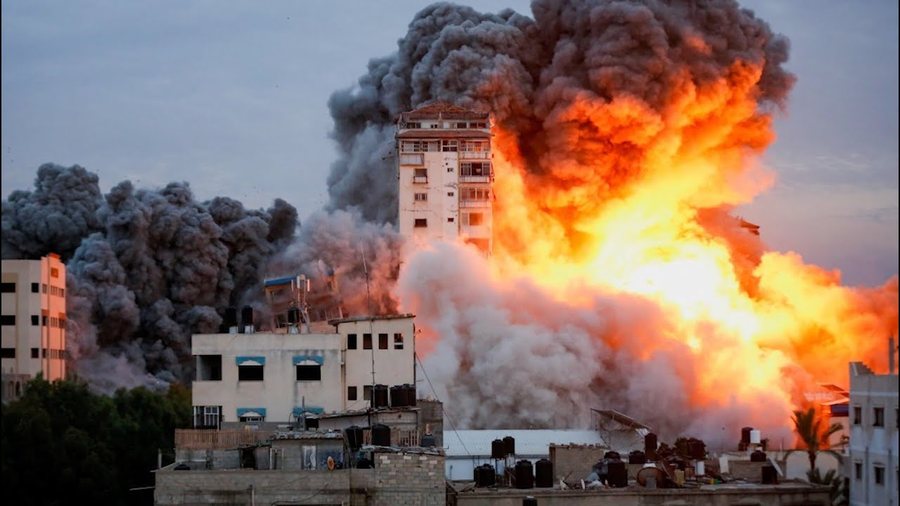
In the three-and-a-half decades since it began operations as an underground militant group, Hamas has consistently pursued a violent strategy aimed at pushing back against Israeli rule — and has made steady progress despite inflicting great suffering on both sides of the conflict. .
But since its surprise incursion into Israel over the weekend it represents the deadliest attack Hamas has carried out to date, and Israel's already unprecedented response threatens to end Hamas' 16-year rule in the Gaza Strip.
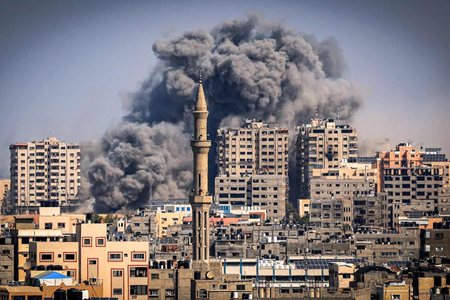
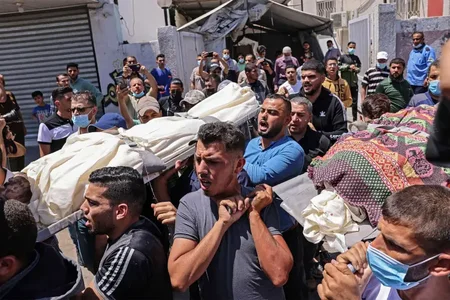
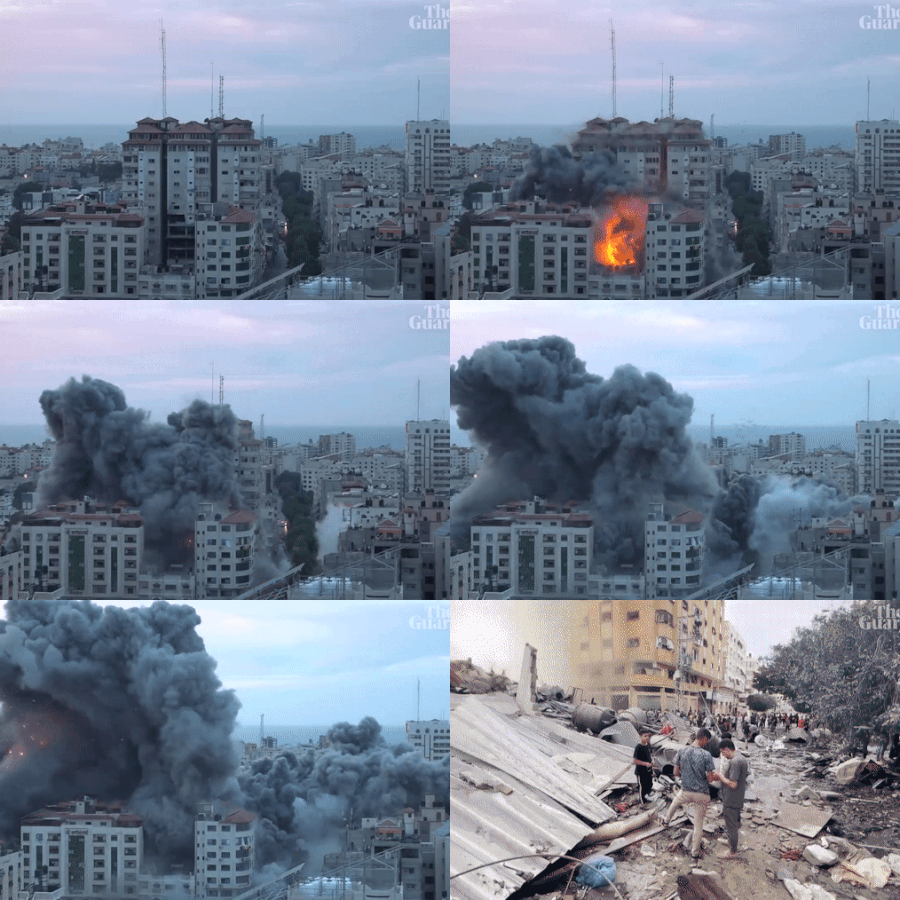
Israel's retaliation for the Hamas attack, which has killed more than 1,200 people in Israel and sent dozens of hostages to Gaza, is likely to bring much greater death and destruction to Gaza, where 2.3 million Palestinians are homeless. to flee and where more than 1,350 people have been killed so far.
Hamas officials have said they are prepared for any scenario, including a protracted war, and that allies such as Iran and Lebanon's Hezbollah would join the fray if Israel escalates the situation.
"I don't think at the moment anyone really knows what the outcome will be," said Tahani Mustafa, a Palestinian analyst at the Crisis Group, an international think tank.
But given the extensive planning for this attack, "it's very hard to imagine that they haven't tried to strategize for every possible scenario," he added.
Shaul Shay, an Israeli researcher and retired colonel who formerly served in military intelligence, said Hamas had "miscalculated" Israel's response and now faced a much more serious conflict than the militants had anticipated.
"I hope and believe that Israel will not stop until Hamas is defeated in the Gaza Strip, and I don't think that would be their [Hamas'] expectation before the operation," Shay said.
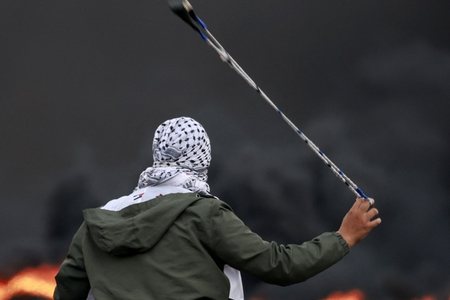
Since its founding in the late 1980s, on the eve of the first Palestinian uprising, Hamas has been committed to armed struggle and the destruction of Israel. At the height of the peace process in the 1990s, this group launched a series of suicide bombings and other attacks that killed thousands of Israeli civilians. The violence only intensified after the failure of peace talks and became even more deadly during the second Palestinian uprising in 2000.
Hamas attacks have been countered by massive Israeli military incursions into the occupied West Bank and Gaza, which have caused large numbers of Palestinian deaths. But as violence subsided in 2005, Israel unilaterally withdrew its soldiers and nearly 8,000 Jewish settlers from Gaza while maintaining tight control over land, air and sea access to the enclave.
Hamas claimed that the withdrawal of Israeli soldiers was due to its approach, and a year later it won the Palestinian elections. In 2007, after fierce fighting, Hamas forcibly occupied Gaza from the internationally recognized Palestinian Authority.
Over the next 16 years, through four wars and countless smaller battles with Israel that devastated Gaza, Hamas only grew more powerful. Each time there were more missiles that could reach greater distances. Each time its leaders survived, securing a ceasefire and gradual easing of the blockade imposed by Israel and Egypt. Meanwhile, Hamas built a government, including a police force, ministries and customs terminals with metal detectors and passport control.
Thousands of Palestinians killed, residential buildings flattened, infrastructure destroyed, oppressive restrictions on movement, interrupted dreams among many people in Gaza. This territory is a coastal strip 40 kilometers long and is located between Israel and Egypt.
For all these events in the Gaza Strip, Hamas has blamed Israel, as have many Palestinians. The Hamas government has faced only a few sporadic protests over the years, which it has quickly suppressed with violence.
If Hamas's armed struggle against Israel looks like a failure—or worse—imagine the alternative.
The Palestinian leadership in the West Bank recognized Israel and renounced armed conflict more than three decades ago, hoping it would lead to the creation of a state in the West Bank, Gaza and East Jerusalem, territories that have been occupied by Israel in the 1967 Middle East war.
But peace talks have repeatedly failed, in part because of Hamas violence, but also because of the relentless expansion of Israeli-built settlements that are now home to more than half a million Israelis. There have been no serious peace talks for more than a decade, and the Palestinian Authority has been reduced to an administrative body in the 40 percent of West Bank territory where it is allowed to operate.
The president of the Palestinian Authority, Mahmoud Abbas, a moderate politician, has been powerless to stop settlement expansion, settler violence, the destruction of homes, or the implementation of tenuous agreements on the holy site surrounding Jerusalem. It has been overshadowed in every war that has been waged in Gaza - including the latest one - and the Palestinian Authority is widely seen as an accomplice to the occupation.
"Palestinians have tried everything from elections to boycotts at the [International Criminal Court], but also involvement in a supposed peace process," said Mustafa of the Crisis Group. "There has been one of the most conciliatory leaderships in the entire history of the Palestinian national movement, and again this has not been enough."
However, the scale of the weekend's attack took Hamas's approach to an entirely different dimension not seen before.
"It is unclear what the ultimate goal of Hamas is, beyond fighting to the death or liberating Palestine," said Hugh Lovatt, a Middle East expert at the European Council on Foreign Relations.
The latest attack constitutes "a complete strategic breach", he said.
"Despite committing attacks on civilians in the past and past wars against Israel, [Hamas] has also simultaneously engaged in several political fronts," including negotiations with Abbas's Fatah movement and even tacit coordination with Israel, it said. Lovatt.
"It now appears to have fully endorsed violence as a long-term strategic solution."
Israel looks increasingly likely to launch a ground offensive in Gaza. He could retake territory in an attempt to root out Hamas, and such action would certainly be long and bloody. But even such a decision could push Hamas – which is also present in Lebanon and the West Bank – to return to its covert operations.
Hamas and the most militant group, Islamic Jihad, are holding close to 150 men, women and children, who were taken hostage and taken to the Gaza Strip. Hamas' armed wing has claimed that some of the hostages have already been killed during Israeli strikes and has threatened to kill the hostages if Israel attacks Palestinian civilians without warning.
Hamas may succeed - as it has in the past - in exchanging hostages for thousands of Palestinian prisoners held in Israeli jails in a deal that Palestinians would see as triumph and Israelis as agony.
After the Hamas attack, there have been almost no calls for restraint against Israel, but this may change if the war drags on.
In the end, both sides may find themselves returning to the status quo: An internationally brokered cease-fire, with Hamas ruling a devastated and aid-dependent Gaza, and Israel increasing security along its border.
Even this, at least for Hamas, would seem like a victory./REL




Lini një Përgjigje