


 Shkruar nga Pamfleti
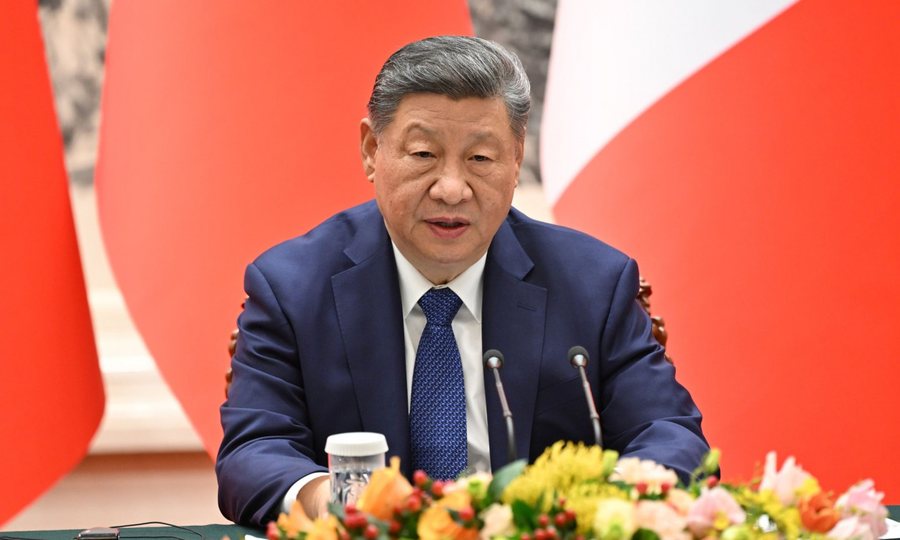
Chinese President Xi Jinping's speech about "unstoppable reunification" with Taiwan, accompanied by massive military maneuvers around the island, has significantly increased tensions in the Taiwan Strait.
Chinese President Xi Jinping’s New Year’s speech was not merely ceremonial. When he declared that “reunification with Taiwan is a trend of the times and is unstoppable,” the message was widely read as a political and strategic signal, reinforced by the massive military maneuvers that the Chinese military had completed just the day before around the island.
The statement comes at a time when Beijing is systematically increasing pressure on Taiwan, shifting the issue from the diplomatic sphere to that of a concrete demonstration of force. The question that is now openly raised in international circles is whether China is really preparing the ground for military action by 2026, or whether we are dealing with a long-term strategy of intimidation.
China has the capacity, but invasion remains an extreme gamble
Militarily, China has never been stronger. The People's Liberation Army has built an arsenal that allows it to surround Taiwan, block major ports, strike critical infrastructure, and impose sustained air and naval pressure. Recent exercises have shown that a partial or complete blockade is technically feasible.
However, a direct amphibious invasion would be an extremely complex and risky operation. Taiwan has difficult terrain, a military trained for asymmetric defense, and tacit but decisive support from the West. The losses for China would be heavy and the outcome uncertain, a factor that Beijing cannot ignore.
The US factor: the undeclared red line
Any military move against Taiwan would automatically bring the United States into play. Although Washington maintains a policy of “strategic ambiguity,” the reality is that Taiwan is a key node for American security in the Indo-Pacific and for global technology chains.
An American intervention would turn the conflict into a direct clash between the world's two greatest powers, with the risk of regional escalation and global consequences. For China, this would be not only a military war, but also an unprecedented economic blow through sanctions, technological isolation, and the shaking of domestic stability.
Why 2026 is seen as a critical year
The year 2026 is seen as a sensitive point for several reasons:
-Xi Jinping seeks to end his era with a historic achievement;
-The Chinese economy is facing slowdown and internal pressure;
-The US and allies are distracted by multiple global crises;
-Taiwan is increasing defense spending and military cooperation with the West;
This creates a window of danger, but not necessarily an inevitable decision for war.
Most likely scenario: pressure without invasion
Most analysts agree that China is more likely to continue a strategy of controlled pressure, combining military maneuvers, political threats, economic warfare, and psychological pressure, without crossing the threshold of a full-scale invasion that would bring direct confrontation with the US.
But Xi Jinping's speech makes it clear that the Taiwan issue is no longer being postponed for future generations. It has been placed at the center of Beijing's agenda – and that makes the Taiwan Strait one of the most dangerous spots on the planet as we approach 2026. /Pamphlet





Sipas Rezolutës së OKB-SË,më 25 Tetor të 1971, Taiwan është pjesë e territorit kinez.Pra Kina e ka territor të sajin.Taiwan është kinez,me popullsi 99%kineze dhe flet zyrtarisht gjuhën mandatin,që është gjuha zyrtare në Kinë dhe Taiwan.. Më thoni kush ka të drejtë:Jankit,taivanezët apo vëllezërit prej mishi dhe gjaku,që janë kinezet...