


 Shkruar nga Diplomatico | Pamfleti.net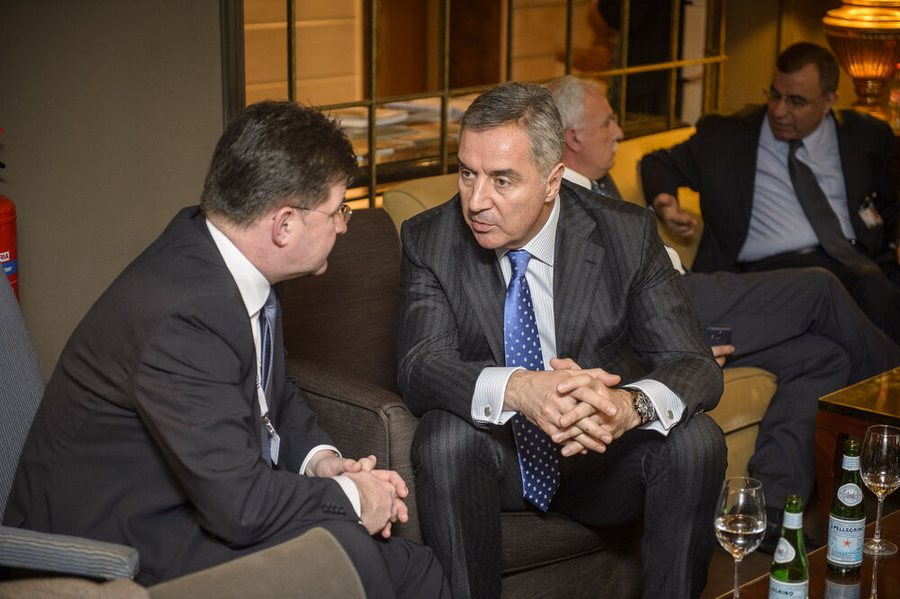
Dark diplomacy, secret connections and a visit that (didn't) happen: How the former Montenegrin president's name ended up in Jeffrey Epstein's private communications with one of the EU's leading figures...
For years, the name Jeffrey Epstein has been synonymous with dark networks of sexual abuse, political elites and scandals that crossed the borders of the United States. But what was not expected was the indirect involvement of a Balkan leader in the voluminous files that the US Department of Justice recently published. It is about the former president of Montenegro, Milo Đukanović, whose name is mentioned in the correspondence between Epstein and the Slovak diplomat Miroslav Lajčak, currently the EU special representative for the Kosovo-Serbia dialogue.
In the published communications, Lajčak wrote to Epstein in 2018 about a possible visit to Montenegro, noting that "the president of Montenegro is happy about our visit." This single detail has been enough to raise an avalanche of questions and speculation about the possible inclusion of Đukanović in the orbit of Epstein's contacts. In other messages, Epstein describes Đukanović as "a great guy," an epithet that contradicts the former Montenegrin president's own claim, who after the documents were published reacted: "I have never known him. I have had no contact, neither directly nor indirectly."
His statement, while clear, is not enough to erase the public suspicion that arises when a state leader's name is mentioned in messages with a figure as contaminated as Epstein. Moreover, the context of these conversations suggests that the visit was more than an idea; it was coordinated and expected to be carried out with official hospitality.
The scandal has deepened further with Lajčak's own resignation from his position as advisor to the Slovak prime minister, an act that made it impossible to defend the "coincidence" thesis of the conversations. Given that Epstein built structured relationships with influential people, including politicians, academics, and financiers, the mention of Đukanović as a potential host places him, at least in public perception, in a particularly delicate position.
Analysts in the region do not see this as a direct involvement in Epstein's crimes, but as an alarming symptom of the way politicians from the Balkans can become involved in networks of global influence, often unaware of the moral and political risks these connections carry.
Further, a critical article in the Montenegrin media with the rhetorical title "Mr. Đukanović, where can I meet Epstein?" mocked the president's defensive statement as lukewarm and insincere. At a time when the Epstein files are being used as a window into the shadowy world of international elites, any mention of a regional leader carries great reputational weight.
So far there is no evidence to prove that Đukanović had direct contact with Epstein, but the fact that important diplomatic figures, such as Lajčak, have brokered a possible visit involving the Montenegrin presidency raises questions about how diplomacy, power and personal interests are connected in the backdrop of Balkan politics.
This scandal is not only an embarrassing episode for a politician who has dominated the Montenegrin scene for decades, but also a strong warning signal for all governments in the region: every connection, every meeting and every correspondence with suspicious figures on the global stage could become a political time bomb in the future.
In an era where transparency is the best defensive weapon for leaders, silence or denial is not enough. It is up to public opinion to demand answers, and for public figures to provide them – not with hastily written statements on social media, but with transparency, accountability and concrete evidence./ Pamphlet


Lini një Përgjigje