


 Shkruar nga Pamfleti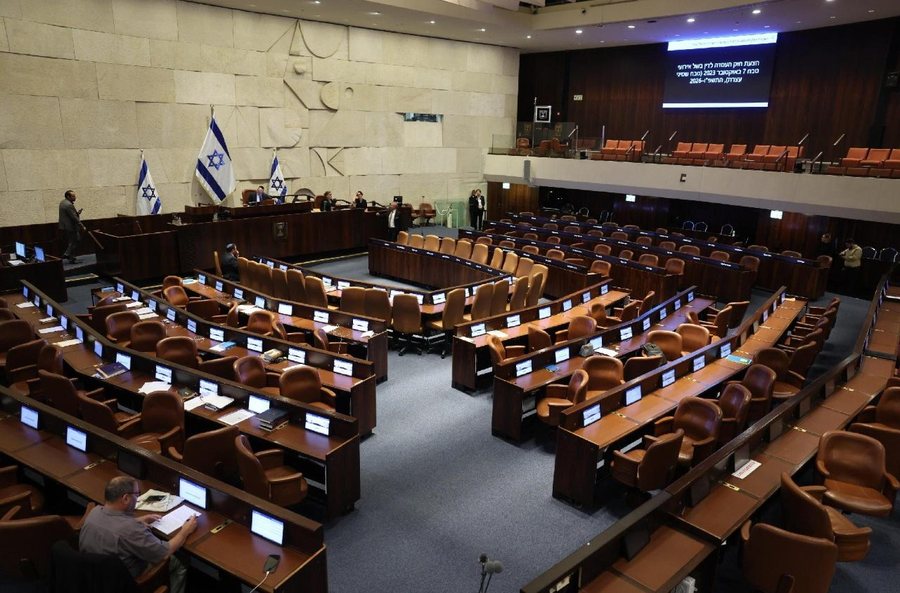
The new law also provides for the death penalty and opens up a debate about justice, security and international consequences for Israel...
The Knesset's decision to establish a special military tribunal to try Palestinians accused of participating in the October 7, 2023 attacks constitutes a political and legal development of great importance for Israel. It is not just about prosecuting the perpetrators of the massacre, but about turning the Israeli national trauma into a permanent structure of trial, punishment, and public representation of guilt.
The law was passed with 93 votes in favor and none against, showing that the October 7 attacks remain a major point of political unity in Israel, despite deep divisions over the war in Gaza, judicial reform, the government, and relations with the United States. The blow of that day continues to produce consensus even for extreme measures such as the reinstatement of the death penalty.
The new military tribunal will be based in Jerusalem and the trials are expected to be broadcast live. Beyond the criminal aspect, it is also seen as a political and symbolic instrument. Israeli authorities aim to build a public narrative on the events of October 7, give faces to the accused and create an official memory of the attacks that shook the country.
The decision to impose the death penalty significantly changes the political weight of the trial. Israel has only carried out the death penalty once in its modern history, in the case of Nazi criminal Adolf Eichmann. The reference to that trial is considered symbolic and aims to place October 7 not only in the history of modern terrorism, but also in the history of the existential trauma of the Jewish people.
However, critics warn that such a comparison could weaken the distinction between individual responsibility, organizational affiliation, and Palestinian national identity. In conditions of war, the line between justice and revenge can become more blurred.
From a strategic perspective, the law is also intended to send a message to Hamas, Hezbollah and other armed groups in the region: participants in attacks against Israeli civilians will not be treated as ordinary prisoners, but as perpetrators of the most serious crimes. However, analysts assess that the effect is more symbolic than practical, as militant groups do not make decisions based on fear of future legal proceedings.
One of the main debates is about ensuring a fair trial. As the tribunal takes on a historical and political character, it becomes more difficult to maintain complete neutrality. The military court will try Palestinians who have been detained for months, while in some cases it is reported that they still do not have full formal charges.
Particularly sensitive are allegations of torture and inhumane treatment of Palestinian prisoners, which the Israeli government denies. If the evidence were to be based on testimony obtained under duress or coercion, the legitimacy of the entire process could be called into question.
Israel is already under international pressure over the war in Gaza. The International Criminal Court is investigating developments in the conflict and has issued arrest warrants for senior Israeli figures, while the International Court of Justice is examining charges of genocide, which Israel denies as politically motivated.
In this climate, the creation of a special tribunal with the possibility of the death penalty could increase Israel's diplomatic isolation. Supporters of the law see it as a necessary response to an unprecedented crime, while critics argue that the state is transferring the logic of war within the justice system.
The consequences could also extend to the economy and international relations. Israel's image directly affects investment, technological cooperation, trade relations and strategic partnerships with the US and Europe. The war in Gaza has already caused tensions with Western governments, universities, multinational companies and investment funds. Such a tribunal could strengthen boycott campaigns and increase diplomatic pressure on Tel Aviv.
On the Palestinian side, Hamas is expected to use the law as part of its political propaganda, arguing that Israel is not seeking justice but the political and symbolic destruction of its adversary. Analysts warn that death sentences could create martyr figures and further fuel the cycle of radicalization in the region.
The main debate remains how the process will be conducted. Israel has the right to try the perpetrators of the attacks that caused mass killings, kidnappings and one of the most traumatic events in the country's history. But the more serious the crime, the stronger the standard of justice and legal procedures must be.
The special tribunal could become the place where Israel presents its version of the truth of October 7 to the world. But it could also be seen as a symbol of a state that, under the pressure of war, uses justice as a continuation of the conflict by other means. In this fragile distinction, according to observers, lies an important part of Israel’s future credibility in the international arena. /Adapted from “Inside Over”


Lini një Përgjigje