


 Shkruar nga Pamfleti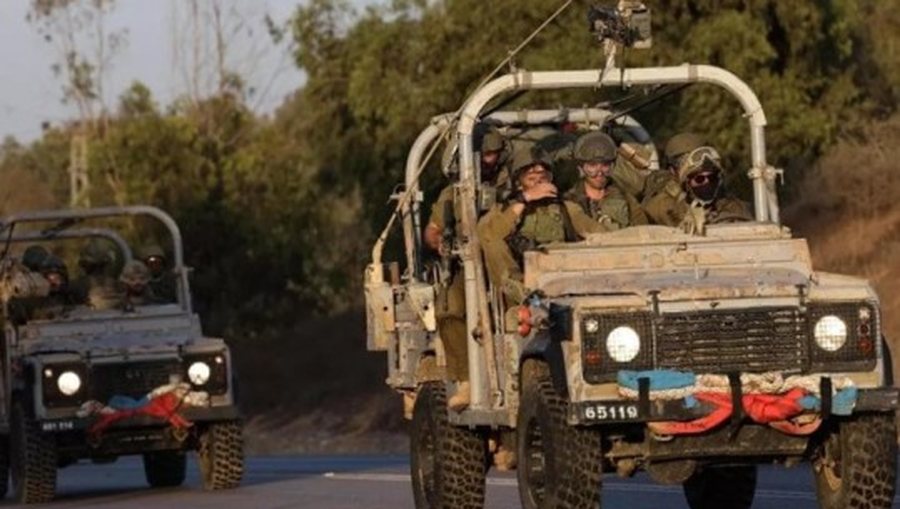
There is an internal tension, which is only intensifying, between the two key targets of the war in the Gaza Strip.
The Israeli military's desire to further damage Hamas could oppose efforts to secure a hostage deal.
The IDF General Staff believes that if the fighting ends within two weeks, it will not be possible to achieve the goals of the war, and at the same time, signs of widespread damage to the Hamas command are increasing.
There is an internal tension, which is only intensifying, between the two key targets of the war in the Gaza Strip.
Israel wants to strip Hamas of its organizational and military capabilities, but at the same time it wants to create the conditions for the release of civilians and soldiers held captive by Hamas.
The IDF claims that it can achieve both goals, and that the more time it has to increase military pressure on Hamas, the better the chances that Hamas will show some flexibility in negotiations for the release of the hostages.
With this in mind, the Army General Staff understands that time is now a critical element.
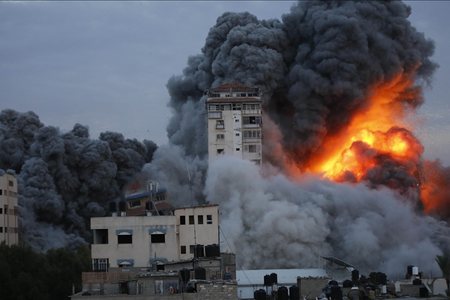
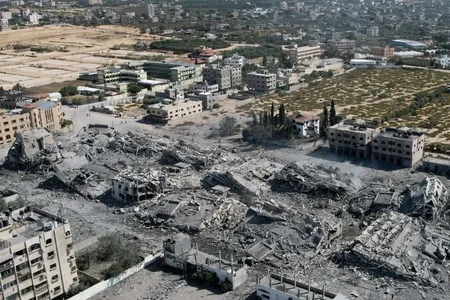
There are growing reservations in the West about the high death toll of Palestinian civilians in the IDF ground offensive, with US pressure mounting on Israel to limit operations in the northern Gaza Strip soon, within weeks.
So far, the ground offensive has been carried out at a relatively slow pace, in an effort to minimize risks to IDF forces.
Now that the regiment's battle teams are operating in the heart of Gaza City and around Hamas headquarters, there is an effort to maximize military gains before the IDF is asked to stop.
The debate is not only about when to put a limit on the ground offensive in the northern Gaza Strip, but about the possibility of a temporary ceasefire allowing the release of hostages.
Soon, the two main efforts may collide.
Politicians may have to decide how to proceed, while the military worries it will stall, for the sake of a deal, and then find it harder to resume strikes at the level of force required to hit Hamas.
Veteran security analyst David Ignatius reported in the Washington Post on Saturday that a hostage deal was taking shape with Qatar's mediation.
This will involve the release of over 100 people, including Thai workers, tourists, Israelis with dual citizenship, as well as women and children, in exchange for a similar number of Palestinian women and minors who are imprisoned in Israel for violations of security.
Ignatius said the negotiations have stalled for now as Israel is demanding that Hamas first release the hostages it is holding.
According to the Washington Post story, Qatar is having difficulty communicating with senior Hamas officials in order to advance the deal.
Hezbollah's next moves
Hezbollah Secretary General Hassan Nasrallah gave his second speech since the outbreak of war in Gaza on Saturday, his second in a week.
In an apology speech for his organization's Martyrs' Day, Nasrallah praised members of the radical axis for their contribution to the fight against Israel, but stopped short of vowing to escalate his organization's operations.
Dr. Shimon Shapira, an expert on Hezbollah, told Haaretz that Nasrallah gave extensive details about his movements in recent weeks, "but he was not particularly fired up, he often seemed to be analyzing events, rather than dictated them".
Defense Minister Yoav Gallant responded to Nasrallah's words with a warning, indicating that Hezbollah was close to making a fatal mistake.
Over the past week, as the IDF deepened its operations in Gaza, Hezbollah increased the level of hostilities along the border with Lebanon.
The organization now attacks IDF positions several times a day, as well as forces stationed in border communities, most of which have been emptied of their inhabitants.
There has been an increasing use of attack drones.
However, Hezbollah is suffering relatively heavy losses compared to Israeli losses.
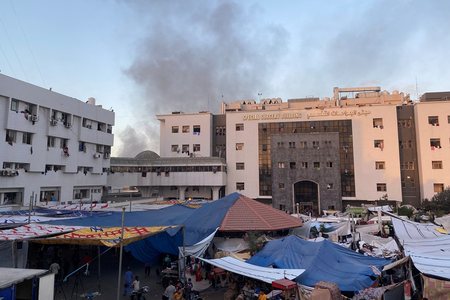
It is possible that the events surrounding the Al-Shifa hospital will increase the level of Hezbollah attacks.
Meanwhile, it is clear that Nasrallah wants to create the impression that his organization is working for the Palestinians.
An indication of this is the attempted attack on Israeli citizens in Brazil, which was prevented earlier this month by local intelligence services, aided by Israel./ Haaretz




Lini një Përgjigje