


 Shkruar nga Pamfleti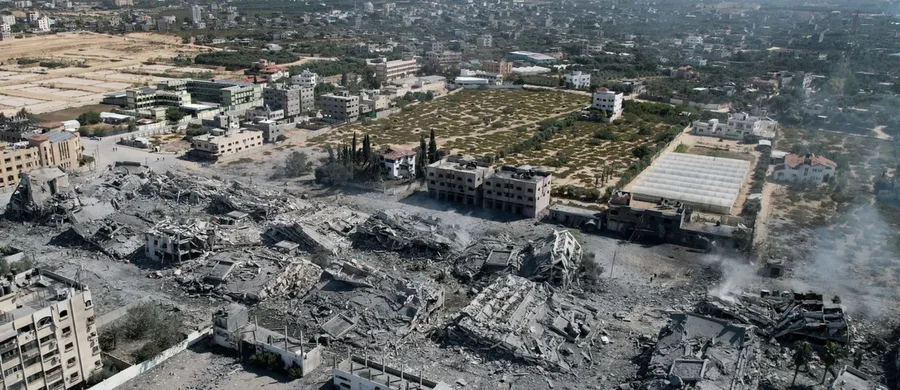
Residents here knew they were luckier than most in Gaza.
Around the afternoon of Friday, October 20, residents of the "Al-Zahra" neighborhood stood in front of the ruins and dust that were once their homes. Friday was supposed to be special: the Islamic day of prayer marked the start of the weekend, and at Al-Zahra it meant falafel and hummus, coffee and crying.
All served in large family apartments or villas by the Mediterranean Sea. Residents here knew they were luckier than most in Gaza.
However, during the night, Israeli bombs demolished the blocks with 25 apartments, home to hundreds of residents. Israel has been bombing Gaza for days in response to Hamas attacks on October 7, but until that day "Al-Zahra" had not been hit.
Some of those who lived here among them doctors, lawyers, academics, fashion designers and performers tried to stay and survive in the ruins, but most gathered what they could and dispersed across the Gaza Strip.
Hana Hussen, who grew up in Al-Zahra, followed the news thousands of kilometers away in Turkey in horror. He had moved there two years ago. In a hurry he called home that day. He called to see if the family was safe. He told them that he loved them very much. Then the line was disconnected.
Residents of the destroyed apartment blocks had taken shelter from the bombs at the nearby university, thanks to the efforts of local dentist Mahmoud Shaheen, who led the mass evacuation of his neighbors. His account came to light earlier this week when he told the BBC how Israeli agents had called him to order him to evacuate residents from the neighborhood as it was about to be bombed.
The Israel Defense Forces (IDF) told the BBC that they were unable to answer specific questions when asked about the decision to bomb Al-Zahran. Hamas was attacking Israel from across the Gaza Strip and was "embedded in civilian infrastructure," the Israeli military said. She did not mention any Hamas operatives killed in the attacks in "Al-Zahra" and it is believed that no one died.
Israel says the strategy has been to root out Hamas, which it accuses of operating close to civilians — and that it is taking measures to avoid civilian casualties, such as the phone call to Mahmoud.
The agent who had called the dentist told him that "we see things that you don't see". Mahmoud's neighbors may have escaped alive, but not all of them survived what was to come.
The Gaza Strip is densely populated with high levels of poverty and strict entry and exit controls. But "Al-Zahra" was a neighborhood of big houses and bright spaces, almond and fig trees, sports grounds and parks.
"Al-Zahra" began to be built in 1990 by the late president of the Palestinian Authority, Yasser Arafat, as a place for staff and supporters. Locals say she still had strong ties to the PA, which runs the occupied West Bank and is fiercely opposed to Hamas.
It is located just north of the Wadi Gaza River – an area Israel ordered civilians to move south on October 13. That followed days of shelling, Israel's response to hundreds of Hamas gunmen sneaking across the border, killing more than 1,400 people, mostly civilians, including many children, and taking more than 200 hostages. The brutality of the attacks on southern Israeli villages and the massacre of young people gathered at a music festival has traumatized Israel.
Everyone the BBC spoke to insisted that, to their knowledge, the area was as far from Hamas and the group's operations as it is possible to be in Gaza, which Hamas has ruled since 2007. "There was no army here," a Palestinian said. "I don't think there was any Hamas supporter living here."
For Nashwa Rezeq, who had lived in "Al-Zahra" for 18 years, the neighborhood was "the biggest city of all".
Heavily involved in neighborhood committees and the local youth council, Nashwa has also been managing a community Facebook group for over a decade. If you ask her about a certain resident, she probably knows that person and possibly the phone number.
The Facebook page has about 10,000 followers. On the eve of the war there were posts about billiards in a local cafe and a congratulatory message to a graduating student.
Now the Facebook group is where they share updates on the destruction of their neighborhood and confirm the deaths of those who lived there. Never before has it kept Nashwan so busy.
A recent post mourns a family killed by a rocket that hit their Italian restaurant.
When war was declared, Nashwa headed south with her husband and four children, as the family always did during escalations. She gave her neighbor a key, asking them to take care of her beloved houseplants.
Two days after the first bombings, her building – the tallest in Al-Zahra – was destroyed in the morning.
"Someone called me and said, 'I just passed by your building and everything is on the ground,'" she recalled.
She describes her house on the fifth floor as "very big and spacious". Her family bought it and renovated it over the past ten years – most recently they bought an air conditioner, a TV and furniture.
"A lot of people say it's just money, but for me my house was my soul," she says.
It is now south of Gaza. Says her family is still in danger. "Three days ago, they bombed the house next to us. The smoke of that bombing suffocated us."
Fëmijët e saj vazhdojnë të pyesin pse nuk mund të kishin marrë me vete kondicionerin e ri dhe televizorin kur ata ikën nga “Al-Zahra”. Ata gjithashtu vazhdojnë të pyesin se kur mund të shkojnë në shtëpi dhe të mbledhin lodrat e tyre.
Për Nashwan janë bimët e saj të shtëpisë: “I doja të gjitha”.
Profesori i universitetit, Ahmed Hammad, i cili jetonte në ndërtesën afër Nashwas, ishte anëtar i vjetër i këtij komuniteti. Ai ishte një nga ata që zgjodhi të qëndronte pas bombardimeve.
Profesor i medias dhe komunikimit, rreth të 50-ave, Ahmedi mezi pret të tregojë punimet e tij hulumtuese dhe flet me krenari për gjashtë fëmijët, nga tetë deri në 27 vjeç.
“Njëri prej tyre është stomatolog, njëri punon në IT, njëri prej tyre ka studiuar letërsi angleze në universitet. Tre të tjerët janë ende në shkollë”, thotë ai.
Kur folëm në telefon muajin e kaluar, Ahmedi dhe familja e tij ishin strehuar në shtëpinë e tyre në “Al-Zahra”, tani pa dyer dhe dritare. Duke mos qenë më në gjendje të shkonin në punë apo shkollë, ata e kalonin kohën e tyre duke kërkuar dru për të djegur që të mund të gatuanin. Ata qëndruan pasi ishin shumë të frikësuar për t’u evakuuar, duke u shqetësuar se do të kapeshin nga sulmet teksa lëviznin drejt jugut.
Por natën e 27 tetorit Izraeli intensifikoi sulmet ajrore dhe zgjeroi operacionet tokësore – dhe ne humbëm kontaktin me Ahmedin. Ditë më vonë ra në kontakt për të thënë se ishin larguar nga lagjja e tyre pas një “nate shumë, shumë të vështirë” dhe në mëngjes u bë edhe më keq.
Ai e përshkruan shmangien e “bombardimeve të vazhdueshme” në udhëtimin në jug. “Sa herë që binte një bombë, ne shtriheshim në tokë”.
Në Turqi, Hana e mbante në dorë telefonin duke pritur për lajme të reja nga familja. Teksa priste, tregoi histori për atë që ajo e quajti “vendi më i bukur, më i ngrohti në botë”.
Banorët e “Al-Zahras” u mblodhën në plazh dhe mbushën rrugën kryesore që të çonte atje në lindje dhe perëndim të diellit. Të premteve, Hana dhe miqtë e saj shkonin atje për të treguar shaka dhe histori që ndodhnin gjatë javës, thotë ajo.
Se sa shumë e ndryshoi lufta jetën këtu, Hana thotë se filloi të merrte mesazhe “përhumbëse” nga të njëjtat shoqe – njëra duke pyetur nëse Hana do të kujdesej për fëmijët e saj nëse do të vdiste, të tjerat duke kërkuar këshilla për “opsione alternative për produktet higjienike për gratë”. Një tjetër donte që të kishin ujë të pastër për të pirë.
Pas shumë ditësh pritjeje, Hana më në fund kontaktoi me familjen e saj, përfshirë vëllanë e saj, Yahya, të cilin ajo e përshkruan si shpirtin e saj binjak.
Yahya ishte në mesin e gjeneratës së re të sipërmarrësve në “Al-Zahra”. Disenjatori 30-vjeçar preferon të flasë për jetën e tij të mëparshme, në vend të akomodimit aktual të mbipopulluar në jug të lagjes, ku eci me familjen e tij disa orë pasi shtëpia e tyre u shkatërrua. Njerëzit shpesh postonin video nga çatitë e “Al-Zahras”. Disa shfaqnin ngjyra spektakolare teksa perëndonte dielli.
"All those things made us feel satisfied," says Yahya via WhatsApp.
Citing some of his favorite things about his neighborhood, Yahya writes: “The lights at night. The sea. It is a quiet and elegant city".
Now he sometimes abruptly ends WhatsApp chats. "Can I go now because there is a bomb near me," he says in one message.
He left Al-Zahra with two bags containing an iPad, documents, hoodie, water bottle, passport, chocolate and a first aid kit. He was forced to leave behind his intricate works – fabrics, dresses and skirts.
“And the sewing machine. And many beautiful memories," he says.
Meanwhile, Mahmoud says he feels lucky to have enough money for the inflated prices of everyday items. One of Mahmoud's close friends is staying in a villa in Al-Zahra, and the dentist recently sent him flour so he could make bread. But the same items are increasingly insufficient.
"I went to all the stores today looking for lenses... and I don't want to make it big, I went into at least 40 stores looking for lenses and I couldn't find any," he says. "A seller told me: 'Don't waste your time'".
Mahmoud says he hopes to return to "Al-Zahra" after the end of the war. "I hope that God will allow us to survive and then we will try to fix things."






Lini një Përgjigje