


 Shkruar nga Pamfleti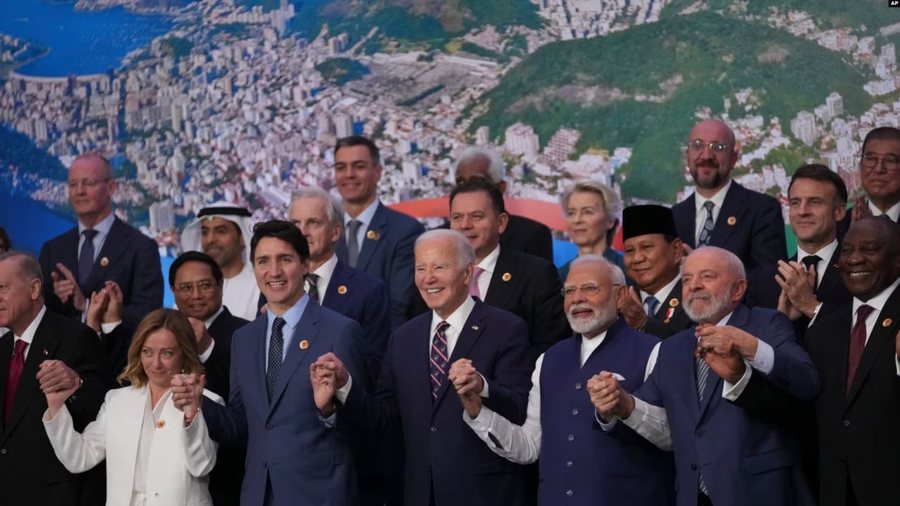
Experts say that poverty and hunger are the main factors causing the global migration crisis. As Voice of America correspondent Aline Barros reports, experts say that the design and implementation of effective social security programs and policies can help mitigate the causes that force people to leave their countries.
Steve Seide was a political science student in Haiti. He left in 2023 because he couldn't find work there. Security was also a concern. The 22-year-old immigrant says it forced him to leave for a better life.
"The situation there is difficult. I chose Brazil because I heard about the job opportunities and how hospitable Brazilians are," says Steve Seide, an immigrant from Haiti.
To get to Brazil, he crossed illegally into the Dominican Republic. He says the road was dangerous and expensive.
"The first time, I didn't manage to cross the border, but I came back."
Mr. Seide spent a month in the Dominican Republic. He worked and saved money. After a month, he received a visa for humanitarian purposes and now lives in Brazil in search of economic stability.
"In life, you don't have to stop. If you want to get somewhere, you have to fight to the end," he says.
According to the Brazilian federal police, about 164,000 Haitians live in Brazil.
Brazil recently hosted the leaders of the world's 20 most developed countries in Rio de Janeiro. The experts who were present there say that the G20 countries should have policies ready to integrate immigrants in their new homes.
"This should always be approached from a human rights perspective. G20 leaders must recognize that migration also occurs due to issues such as poverty, disasters caused by climate change, wars and conflicts," says Paolo Illes, founder of the Center for Human Rights and Citizenship of Migrants in Sao Paulo .
In the statement of this G20 meeting, it was agreed that it is important to prevent irregular migration and to deal with the root causes that cause population displacement, such as hunger and poverty. Wellington Dias, Brazil's development minister, says 2.4 billion people worldwide live in poverty.
"Beyond the issue of migration, I always say that hunger and poverty are not only problems for those who are hungry or living in poverty. It is a problem for the middle class, for the rich, for rich countries and for rich individuals", says Minister Dias.
He says that people out of desperation can get involved in crime, creating problems for everyone.
For this reason, one of the main initiatives of the G20 is the creation of the Global Alliance Against Hunger and Poverty.
The alliance aims to provide funding for 500 million people and school meals for 150 million children. More than 80 countries, 24 international organizations, nine international financial institutions and 31 philanthropic organizations have joined the initiative so far.
“It's not just providing food anymore; we are talking about the implementation of a development plan that improves education, which is a key element for the eradication of poverty, as well as health, the economy, creates jobs and improves infrastructure", says Wellington Dias, Minister of Development in Brazil.
According to the United Nations, the link between food insecurity, migration and displacement is greatly influenced by climate change, natural disasters, conflicts and poverty which were the main topics during the G20 meeting in Brazil./VOA







Lini një Përgjigje