


 Shkruar nga Marc Champion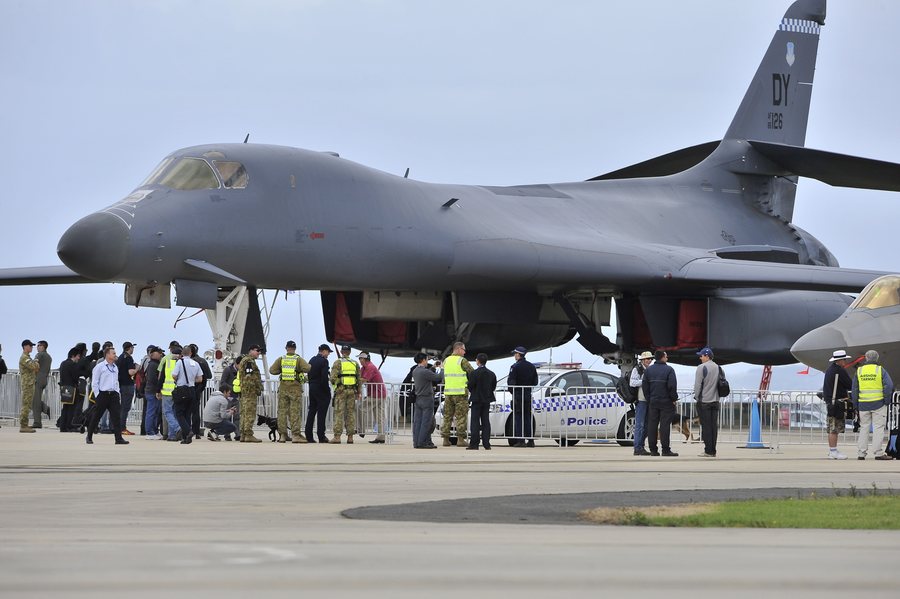
If the US wants to push Iran back, it will have to do so either by withdrawing or by reinforcing its troops in Iraq and Syria to make them safe.
The United States Air Force has struck 85 targets in Iraq and Syria in an announced response to the killing a week ago of three American servicemen in a drone strike by Iran-backed militias.
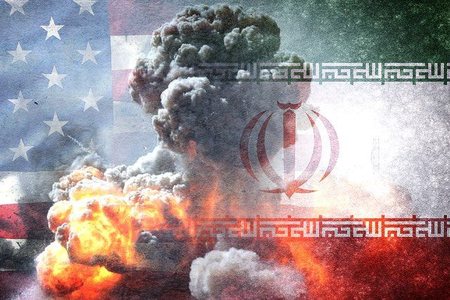
It didn't take long for critics to declare the Biden administration's response too weak to deter further attacks. And they are right in that respect, but on the other hand, the belief that the appropriate response is to bomb Iran itself is much easier said than done, given the consequences that would follow.
Deterrence as a strategy is often described as just a matter of being tough enough on the adversary: the stronger the threat or strike, the greater the deterrence. But this approach is likely to force the opponent to escalate his attacks.
Because for the prevention strategy to work, what you do is no more important than what the other party thinks. Or as a recent Rand Corporation study on the matter puts it, one must understand the adversary's "interests, motives, and imperatives" and then act on them.
In the case of Iran, these tasks are clear and at the top is the survival of the current regime. So to back down after any US attack, clerics in Tehran must believe that their rule was more threatened by retaliation than by showing weakness to a population that hates it. And this is not at all clear.
Also, we know that Ayatollah Ali Khamenei wants the US and Israel to give up their influence in the Middle East, allowing Iran to assume what he sees as its rightful role as the dominant power. of the region, as he has been telling the world this for decades.
From Tehran's perspective, Iran has made great progress in this regard since the US did it a huge favor by invading Iraq and toppling Sadaam Hussein, the dictator of a Sunni-dominated regime against which it waged a grueling war. in the years 1981-1988.
Israel's and the US's response to the Hamas attack against southern Israel on October 7, 2023, has been another gift to Iran. With Saddam gone and Shiite allies in charge of Baghdad, Iran's first priority today is to drive the US out of Iraq and bring under control a neighbor that produces and exports more oil than Iran itself.
In this respect, it is very close to success. Despite losing the 2021 elections to a multi-ethnic coalition and a Western-leaning government, Iran and factions close to it used their control over the Supreme Court and other Iraqi institutions to topple the government and regain power alone a year later.
As Michael Knights and a team monitoring Iraq for the Counter-Terrorism Center at the U.S. Military Academy West Point have documented, since then Iran-backed militias have placed their men in secret, security, and intelligence agencies. other key areas, but also to income through full control over the Ministry of Petroleum.
Prime Minister Mohammed Shia'Al-Sudani represents a coalition of mainly pro-Iranian Shiite parties. And before Hamas reclaimed the region on October 7, 2023, it was getting ready to negotiate the withdrawal of the remaining US troops from Iraq.
The group that claimed responsibility for the January 28 drone attack on US forces on the border between Jordan and Syria, the Islamic Resistance in Iraq, also includes Khatai'b Hezbollah, one of the Iraqi militias closest to Iran. At least some of its fighters receive salaries from Tehran but also commanders in the Popular Mobilization Forces (PMF), or Al-Hashd al-Shaabi, a consolidation of mostly pro-Iranian militias that are already part of the regular Iraqi army.
It should therefore come as no surprise that, as reported by Iran's Tasnim news agency, the PMF was among the targets the US bombed on Friday. In fact, it is an Iraqi version of Iran's Islamic Revolutionary Guard Corps. Iraqi groups that the US considers terrorist organizations, and are armed and closely linked to Iran, are very close to controlling all state structures in Iraq.
Under these circumstances, the thousands of US troops remaining in Iraq are essentially vulnerable. And hundreds more in Syria. It is naive to assume that Tehran and the pro-Iranian militias will not use the advantage they have until the US presence in the region disappears. Their campaign only accelerated under the pretext of the war in Gaza, under which any act of violence against the US or Israel can be sold to much of the world as a just cause. There is no doubt that the attacks will continue, once the current US airstrikes stop, or at a later time convenient for Tehran.
Because they serve an essential goal of Iranian foreign policy. And this fact makes a direct strike on Iran seem like a natural alternative. Some have recalled in recent days the example of Operation Praying Mantis in 1988, when the U.S. Navy struck Iranian naval vessels and its oil platforms to prevent it from laying naval mines after one of them damaged a U.S. warship. .
It was an excellent example of the operation of a strict preventive policy. But that doesn't mean it would work again today, against a much stronger Iran and in a radically different geopolitical situation. In 1988, Iran was exhausted from the war with Iraq and isolated internationally.
Due to atheism and the war in neighboring Afghanistan, Ayatollah Ruhollah Khomeini considered the Soviet Union as a lesser "Satan" that would soon disintegrate. China was poor, had no influence in the Middle East, and had no Axis of Resistance for Iran to use as a force multiplier abroad.
Meanwhile, the US was near the peak of its power. Today, Iran has built a large arsenal of drones and ballistic missiles, with a range of 1,500 kilometers and possibly more, as well as an as yet untested but on paper sophisticated air defense system.
He has quite a few militant groups he can call on in a potential battleground that stretches from Yemen south to Gaza, Lebanon, Syria and Iraq. It is internationally isolated only in the imagination of the West. China has moved into the country to replace European investment, while Russia has become a key security partner, supplying it with high-end fighter jets and other technology.
In Iraq, a $264 billion economy larger than Lebanon and Syria combined, the IRGC is trying to replicate for its proxies the industrial and energy empire it built at home. In this context, a direct attack by Iran would be more likely to kill exposed US troops in Iraq and Syria.
If the US wants to push Iran back, it will have to do so either by withdrawing or by reinforcing its troops in Iraq and Syria to make them safe. Meanwhile, there are other, less satisfactory financial, cyber, etc. means that the US can use to exert pressure on the Iranian regime.
Whether they will be able to change his behavior after more than 40 years of trying is uncertain. But coupled with an ongoing campaign of airstrikes against pro-Iranian militias across the region, and a deal that brought a significant reduction in casualties in Gaza, these measures are worth a try.
They would stand a better chance of success than bombing Iran directly, and with a much lower risk of igniting the kind of war that neither side can afford. / Adapted "Pamphlet" from "Bloomberg"





Lini një Përgjigje