


 Shkruar nga Pamfleti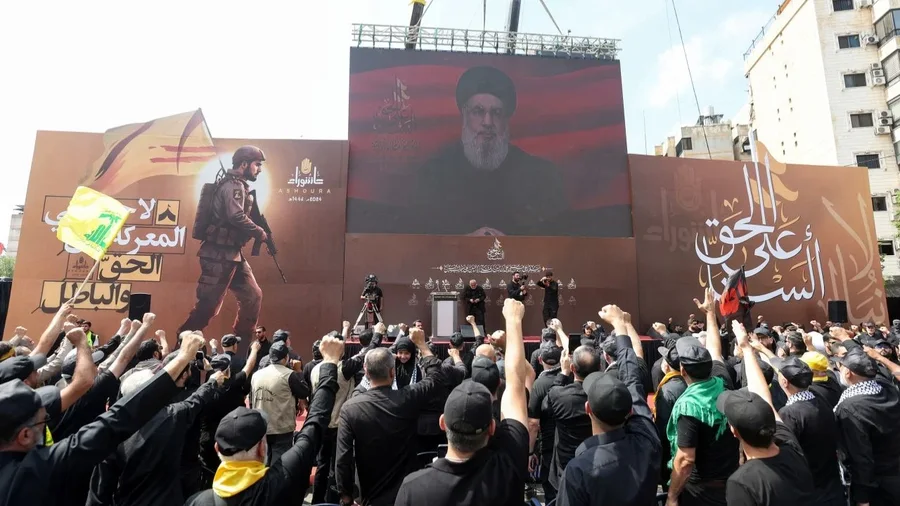
Hezbollah has confirmed the death of its leader, Hassan Nasrallah, after Israeli attacks in Beirut. The IDF announced a few days ago that the Hezhollah leader had died after the attacks, but Hezbollah has now confirmed the news.
“His Eminence, the Master of the Resistance, the righteous slave, has passed away to be with his Lord. His death came after the treacherous Zionist attack in the southern suburbs," Hezbollah said in a statement.
The group pledged its fight against Israel and continued support of "Gaza and Palestine, and the defense of Lebanon and its steadfast and honorable people."
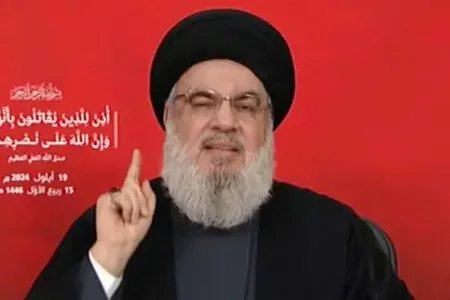
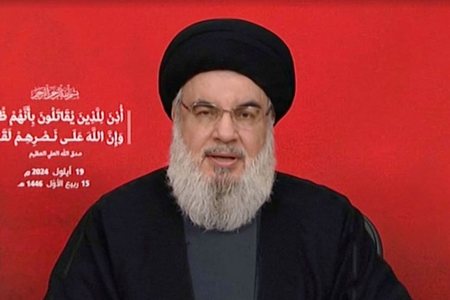
Hassan Nasrallah, the leader of the militant Shiite Islamist movement Hezbollah in Lebanon, which was the target of Friday's fierce Israeli airstrike in Beirut, is one of the best-known and most influential figures in the Middle East.
For years, he has not been seen in public precisely for fear of being killed by Israel. A shadowy figure with close personal ties to Iran, the sheikh played a key role in turning Hezbollah into the political and military force it is today and is held in high esteem by the group's supporters.
Under his leadership, Hezbollah has helped train Hamas fighters, paramilitary groups in Iraq and Yemen, and supplied weapons from Iran for use against the Jewish state. It was Hassan Nasrallah who led the evolution of Hezbollah from a militia founded to fight Israeli troops occupying Lebanon into a military force more powerful than the Lebanese army, a power broker in Lebanese politics, a provider of social services, health and education as well as a key element of the efforts of its major supporter, Iran, in the battle for regional supremacy.
Born in Beirut in 1960 to a simple family, Nasrallah joined the Amal movement, later transformed into a Shiite militia, after Lebanon was engulfed in civil war in 1975. He and others broke away from the organization in 1982, shortly after Israel invaded Lebanon in response to Palestinian militant attacks. A new Islamist group was created, which received significant military and organizational support from Iran's Revolutionary Guards based in the Bekaa Valley and emerged as the most effective of the Shia militias that would later form Hezbollah. In 1985, Hezbollah officially announced its founding by publishing an "open letter" that identified the US and the Soviet Union as the main enemies of Islam and called for the "extinction" of Israel, which it said was occupying Muslim lands. .
Nasrallah became Hezbollah's leader in 1992 at the age of 32, after his predecessor Abbas al-Musawi was killed in an Israeli helicopter attack. In his most recent speech, Nasrallah blamed Israel for the explosion of thousands of pagers and radios used by Hezbollah members, which killed 39 people and wounded thousands more, and vowed revenge. Soon after, Israel dramatically escalated attacks on Hezbollah, launching a wave of bombings that killed nearly 800 people.




Lini një Përgjigje