


 Shkruar nga Paul Valentino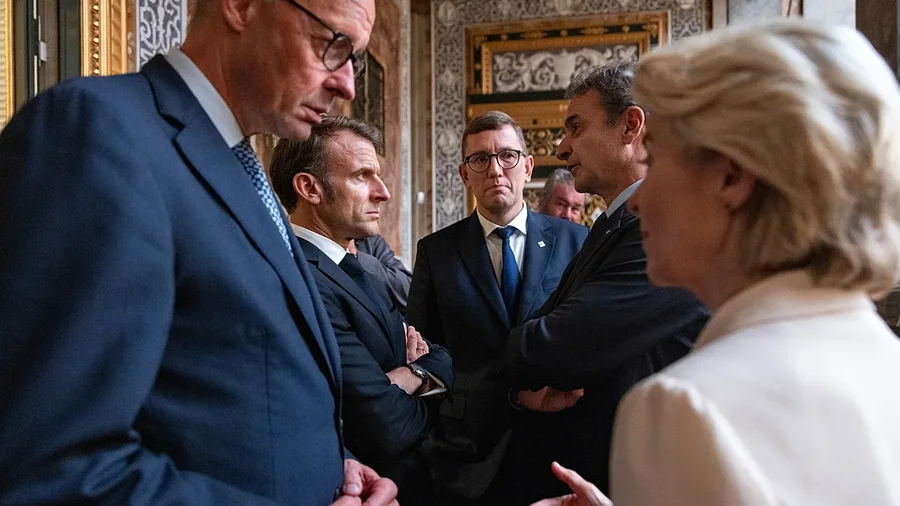
Brussels, left alone to support Ukraine, should be able to negotiate with Moscow...
Now that Viktor Orbán has been defeated in the elections and Hungary has lifted its veto on the €90 billion interest-free loan to Ukraine, the European Union is fully supporting Kiev and its fight against the Russian invader. The final green light given by the ambassadors of twenty-seven countries is a strong signal of Europe’s determination to continue its engagement, in the face of American disengagement and Russia’s growing offensive against Ukrainian civilian infrastructure. The adoption of the twentieth package of sanctions, which aims to target Moscow’s economic interests and its oil exports via its shadow fleet, further strengthens European action, while the Brussels Commission is already working on a new round of austerity measures.
Distracted as we are by the dangerous game being played in the Strait of Hormuz, we have almost overlooked the importance of this turning point in the Ukrainian crisis: "Europe has demonstrated its ability to stand alone, and that is a great achievement," says a former European prime minister.
Thanks to the financial and military support of the European Union, which buys weapons from the US and delivers them to Kiev, Ukraine now has the resources and capabilities to resist for a long time, a year or more, preventing significant Russian advances and inflicting painful losses, both at the front and deep in their energy infrastructure.
In other words, Kiev cannot be forced to capitulate to the punitive and imperial conditions demanded by Putin and supported in part by the Trump administration in its dishonest mediation, led by Steve Witkoff and Jared Kushner, currently blocked by events in the Persian Gulf. But it is precisely this “trompe l’oeil” negotiation that highlights the double problem that risks undermining Europe’s bold financial and military commitment. The first is that, in the words of Claudia Major, an analyst at the German Marshall Fund, “we do not have a definition of what a victory for Ukraine is. It is not a strategy to keep Kiev in the game until something changes in Moscow, someone dies or is expelled, or the economy collapses.”
Even more important and fundamental, however, is the lack of a diplomatic dimension with Europe at the forefront. Of all the lessons that the great Henry Kissinger has left us, the fundamental one is that war and diplomacy are inextricably linked. Military leverage serves to negotiate from a position of strength, since every conflict must end with an agreement, a treaty, a peace. It is time for Europe to take on a plan, coordinated with Ukraine, and take direct responsibility for negotiating it with Russia. Not to negotiate the transfer of Ukrainian territory, but to insist on essential conditions such as security guarantees for Kiev.
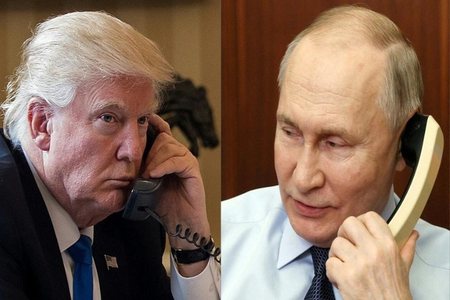
Of course, the Union needs a strategy to sit at the table, as Putin has so far refused. There is a studied boast in the hour-and-a-half-long phone call with Donald Trump, in which the Tsar “generously” offered a ceasefire in Ukraine on May 9. Of course, the prospect of opening a diplomatic channel with the Kremlin is highly questionable. French President Emmanuel Macron tried this in February, sending his top foreign policy adviser, Emmanuel Bonne, to Moscow. This unilateral move, described by Sergei Lavrov as “pathetic diplomacy,” alarmed both Ukrainians and the Baltic states.
But now Europe is in a different position. Stronger and more united. Only by acting together, and above all by using the tools at its disposal, can the Union be taken seriously: military support, sanctions, frozen Russian funds, and diplomacy must advance on different but parallel lines.
Two questions arise from this perspective. First, what should be the objective: A Korean solution with a ceasefire on the current front line would allow Putin to secure de facto recognition of the annexation of Crimea and Zelensky to preserve the fortified strategic line of Donbas, without which he could no longer defend Kiev.
The mother of all questions, however, remains who should take the initiative on behalf of Europe. It is hard to imagine it being the Ursula von der Leyen-Antonio Costa duo. In recent months, several countries, including Italy, have supported opening direct talks with Moscow and raised the possibility of appointing a special envoy for Ukraine. Among the names being floated was Mario Draghi. In February, the idea of a direct channel and an envoy was even supported by the leaders of Latvia and Estonia, usually the most reluctant to start any dialogue with Moscow. But the proposal for an envoy has many flaws, including the powers it would give them.
More feasible and effective would be the idea of a small group of European leaders (two or three, modeled after the Minsk negotiations) acting on behalf of the EU, also seeking the assistance of the US and China, and perhaps other actors such as Turkey, India, and Azerbaijan.
Whatever happens, Europe, which now bears the entire burden of supporting Kiev, must also equip itself with the tools and a strategy to communicate with Russia. To paraphrase Clemenceau, diplomacy is too serious a matter to be left in the hands of a mad president and two clueless real estate developers./ Adapted from “Pamphlet” by “Corriere della Sera”


Sllavet qe shtrihen qe nga oqeani Paqesor ne lindje e kane pasur e do e kene qellimin te dalin oqeanin Atlantik. A do tia arrijne? Une them po, sepse jane dhelpra te ideologjise e politikes. "Perqafuan" komunizmin, jo per komunizem, por per tu bashkuar (grusht bashkuar) me njeri tjetrin. Ata nuk bene komunizem por ultrafashizem me diktaturen me te ndyre qe ka vuajtur njerezimi vetem e vetem qe Kremlini te zoteroje boten. Nuk behet stan me lepuj themi ne Shqiptaret kokekrisur. Nuk mund te imagjinohet demokraci e liri, me Hitler, Stalin, Mao CeDun, Trump e kompani, jo. Njerezimi qe kur filloi te njohe pronen u nda ne, ata qe kane e ata qe nuk kane. Edhe ketri mbledh e di ku ka fshehur kokrra deri ne nje mije vende te fshehta qe t'i kete per dite te veshtira. Si i behet, hic si ka shkuar do te shkoje, rrumpalle.
Lufta eshte vazhdimi i politikes me dhune. Politika behet nga diplomatet e salloneve qe artikuljone nje gjuhe mondane e ne fund nuk te con ne zgjidhje paqesore. Diplomacia duhet e kete personel ushtarake qe dine trajtojne probleme lufte e jo biseda te djemve te mamave qe me shume u kushtojne vemendje mbajtjes se gotes se pijes e jo thelbit te problemit, luftes.
Ja fusin pordhes keta taljanet. Kemi Mbretin e Shurrelit. Sot beme nje tjeter xhest te math. Kryefashisti Kanye West, i ndaluar te mbaje koncerte kudo ne Evrope (perfshi dhe ne italine e motres Giorgia) eshte ftuar te mbaje nje koncert ne Tirane. Pra jo vetem ira me Putinin dhe Xi por dhe me fashisto-nazistet, kudo ndodhen!