


 Shkruar nga Pamfleti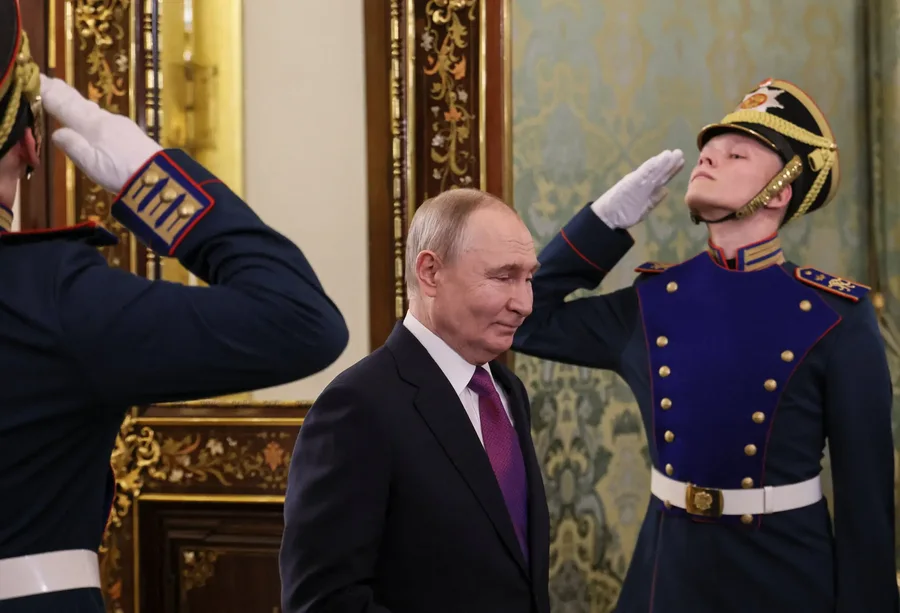
Secretary of State Marco Rubio, testifying last Wednesday in the Senate, said that the issue of the Donetsk region had become "the only remaining sticking point" in the peace negotiations that required attention...
As Russian and Ukrainian negotiators reconvene in Abu Dhabi later this week for peace talks hosted by the Trump administration, at least one crucial issue remains unresolved: the fate of the Donetsk region.
For months, Russian officials have suggested that Moscow will not stop fighting until Ukraine hands over 2,082 square miles of the Donetsk region that Kiev still controls.
Secretary of State Marco Rubio, testifying last Wednesday in the Senate, said that the issue of the Donetsk region had become "the only remaining sticking point" in the peace negotiations that required attention, noting that it was an obstacle they had not yet overcome.
A day later, Moscow disputed this. Kremlin foreign policy aide Yuri Ushakov said other issues still need to be addressed, including the security guarantees that Western countries have offered Ukraine.
However, it is clear that the Ukrainian-controlled area of land in the Donetsk region, smaller than the state of Delaware, is at the center of the talks. This has raised the question: Why is Russian President Vladimir Putin so interested in this particular piece of land, compared to other parts of Ukrainian territory to which Moscow has claims?
-Symbolism and State Propaganda
Since Russia invaded Ukraine in 2014, Donetsk has been at the center of Moscow's effort to secede and later annex the largely Russian-speaking industrial region of eastern Ukraine, which the Kremlin describes as historically Russian.
Russia has crafted much of its state propaganda around rescuing the people of the Donetsk and Luhansk regions, the area collectively known as Donbas. Russia has now taken full control of the Luhansk region.
In late 2022, the Kremlin announced that it had annexed four regions of Ukraine - Luhansk, Donetsk, Kherson and Zaporizhzhia.
Russian negotiators stopped short of demanding, in last year's talks, parts of the Kherson and Zaporizhia regions that Russia does not already control. If Kiev were to hold on to much of Donetsk, Putin could face a backlash from pro-war nationalist elements of his base.
The part of the Donetsk region that Ukraine still holds has symbolic significance. It includes Sloviansk, the city where Moscow launched what it called a pro-Russian “separatist” uprising in 2014. A failure by Moscow to take the city, which Russian propaganda describes as the cradle of the “Russian Spring,” after 12 years of fighting, could intensify criticism from pro-war nationalists.
Taking the rest of Donetsk could also help Putin shape a victory narrative. Putin knows that any decision by Kiev to hand over the territory would be particularly controversial inside Ukraine, where troops have died for that land for 12 years.
Ukrainian President Volodymyr Zelensky said on Friday that he was ready to make compromises to end the war, but not to compromise Ukraine's territorial integrity.
In December, Zelensky said he was ready to withdraw his troops from the part of the Donetsk region held by Kiev and turn those areas into a demilitarized zone. But he said Russia would have to withdraw its forces from an equivalent area of land in the Donetsk region.
-'Anchoring Formula'
As President Trump’s attempt to broker peace hit a snag last summer, his administration rejected a land swap idea that included Donetsk in an effort to revive talks with the Kremlin. Putin came back with a counterproposal, leading to the Alaska summit.
It has not been made public exactly what Mr. Trump and Mr. Putin agreed to during that meeting. But since then, Russian leaders, without providing details, have insisted that any peace deal adhere to the “spirit of Anchorage” or “Anchorage formula.”
The phrase is generally seen as Kremlin shorthand for the deal Mr. Putin agreed to with Mr. Trump in Alaska: He would stop the war if Ukraine surrendered the rest of Donetsk, and agreed to a series of other non-territorial demands. Zelensky disagreed. He noted that Ukraine’s constitution forbade territorial concessions without a nationwide referendum.
The issue then resurfaced in a new form in a 28-point plan drafted last fall by American negotiators, with input from Mr. Putin’s special envoy, Kirill Dmitriev.
That plan proposed that Ukrainian forces withdraw from the part of the Donetsk region they still control and create a “neutral demilitarized buffer zone.” It would be internationally recognized as Russian territory, but Russian troops would not be allowed on the ground. Having agreed to the offer with Trump in Alaska, Putin might feel that any deviation from that would be a tough deal. The problem was that Ukraine never agreed.
-Fortifications and Water
The part of the Donetsk region that Ukraine still holds is one of the most fortified parts of the front, because the defenses date back to 2014, before Russia launched its full-scale invasion.
The loss of these fortifications would make Ukraine more vulnerable to any future Russian attack, some analysts have said, putting Moscow in a good position to launch a new invasion if the peace deal fails.
The Russian-occupied city of Donetsk, the capital of the Donetsk region, was also hit by a severe water crisis last year and continues to face problems with water shortages.
A canal supplying water to the region, known as the Siverskyi Donets-Donbas Canal, was destroyed at the start of the full-scale invasion in 2022. It also begins northeast of Sloviansk, in territory still controlled by Ukraine.
Putin was asked about the water shortages during his telephone press conference in December. He explained that the main water intake is in territory that is "unfortunately still controlled by the enemy."
The Russian leader said the problem could be "essentially resolved" once "this territory is under the control of our armed forces." / Adapted from "The New York Times"


Lini një Përgjigje