


 Shkruar nga Pamfleti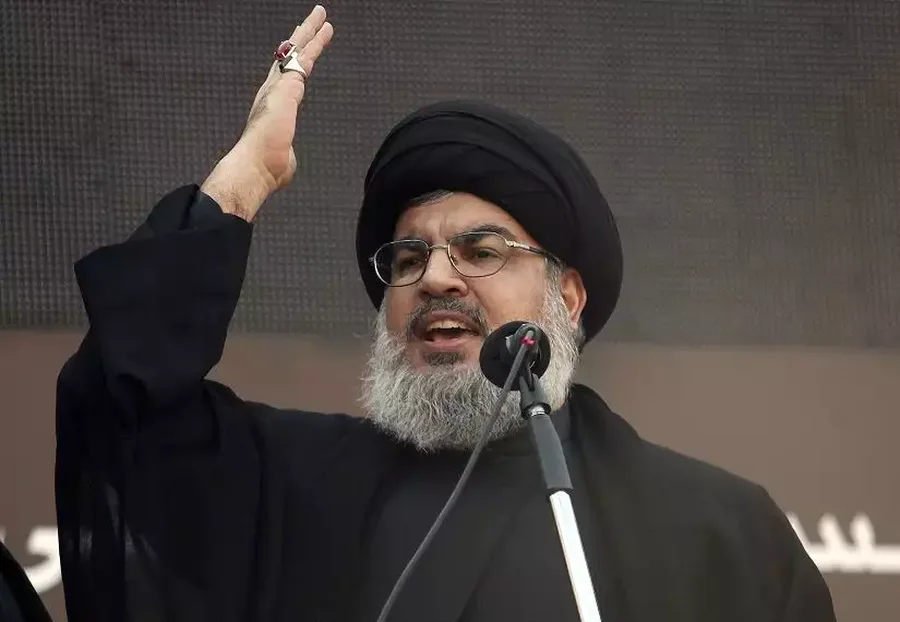
It was a significant escalation after 10 months of firefights along the Israel-Lebanon border, which have raised fears of an all-out war between the two enemies.
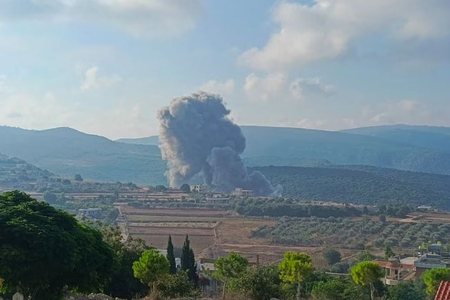
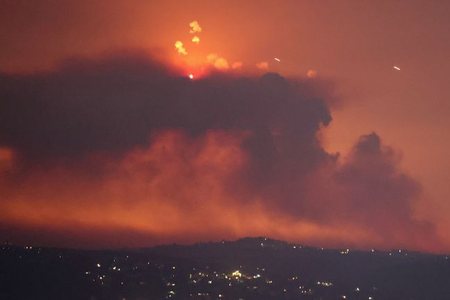
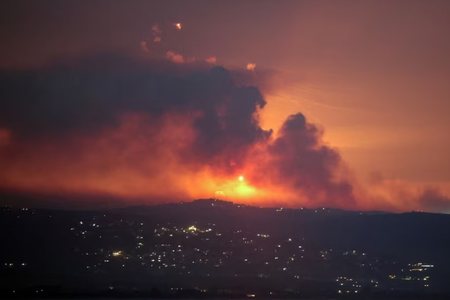
Israel's military said its jets preemptively struck thousands of Hezbollah rocket launchers across southern Lebanon today after identifying that Hezbollah was preparing an attack on Israel.
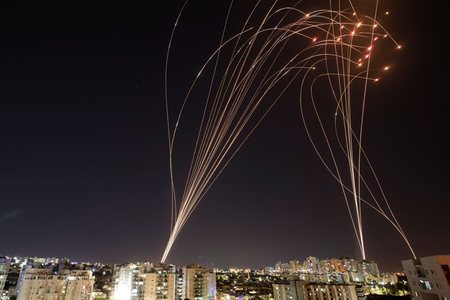
Hezbollah then said it launched hundreds of rockets and drones into Israel in an initial response to the killing of its top commander last month.
It was a significant escalation after 10 months of firefights along the Israel-Lebanon border, which have raised fears of an all-out war between the two enemies.
What is Hezbollah?
Hezbollah is a Muslim organization that has political influence and controls the most powerful armed force in Lebanon.
It was created in the early 1980s by the most dominant Shiite power in the region, Iran, to oppose Israel. At the time, Israeli forces had occupied southern Lebanon during the country's civil war.
Hezbollah has participated in national elections since 1992 and has become a major political presence.
Its armed wing has carried out deadly attacks on Israeli and American forces in Lebanon. When Israeli troops withdrew from Lebanon in 2000, Hezbollah took credit for their departure.
Since then, Hezbollah has maintained thousands of fighters and a large arsenal of rockets in southern Lebanon. It continues to oppose Israel's presence at border crossings.
It has been designated as a terrorist organization by Western countries, Israel, the Arab countries of the Gulf and the Arab League.
In 2006, full-scale war broke out between Hezbollah and Israel, triggered by a deadly cross-border attack by Hezbollah.
Israeli troops invaded southern Lebanon in an attempt to eliminate the threat from Hezbollah. However, it survived and since then has increased the number of fighters and received new and powerful weapons.
Sheikh Hassan Nasrallah has led Hezbollah since 1992.
It played a key role in becoming a political force, as well as a military one. Hassan Nasrallah has close ties to Iran and its supreme leader, Ayatollah Ali Khamenei.
Nasrallah has not appeared in public for years, apparently out of fear of elimination by Israel.
However, he is honored by Hezbollah and makes televised speeches every week.
How powerful are Hezbollah's forces?
Hezbollah is one of the most heavily armed non-state military forces in the world. It is financed and equipped by Iran.
Hassan Nasrallah has claimed to have 100,000 fighters, although he is said to have between 20,000 and 50,000 soldiers. Many of them are well trained who have fought in the Syrian civil war.
Hezbollah has about 120,000-200,000 according to the Center for International Strategic Studies.
Most of its arsenal consists of small ground artillery missiles.
But it was also thought to have anti-aircraft and anti-ship missiles, as well as guided missiles capable of striking deep inside Israel.
This is far more sophisticated than what Hamas has at its disposal in the Gaza Strip.
Could Hezbollah go to war with Israel?
Earlier sporadic fighting escalated on October 8 - a day after an unprecedented attack on Israel by Hamas gunmen from Gaza - when Hezbollah fired on Israeli positions.
Since then, it has fired more than 8,000 rockets into northern Israel and Israeli border posts. It has fired anti-tank missiles at armored vehicles and attacked military targets with explosive drones.
The Israel Defense Forces (IDF) have retaliated, using airstrikes, opening fire from tanks and targeting Hezbollah positions in Lebanon.
Lebanon's health ministry says more than 560 people have been killed in the past 10 months. Most of them were Hezbollah fighters, but at least 133 of them were civilians.
In Israel, authorities say at least 26 civilians and 23 soldiers have been killed.
Almost 200,000 people have also been displaced on both sides of the border.
Despite the fighting, observers say that so far both sides have aimed to contain hostilities without crossing the line into full-scale war. But the situation is likely to get out of control.
These fears were heightened after the killing of 12 children in a rocket attack on the Israeli-occupied Golan Heights on July 27. Israel said Hezbollah carried out the attack, but the group denied involvement.
On July 30, the IDF claimed to have killed Hezbollah's top military commander Fuad Shukr in an airstrike in the southern suburbs of Beirut.
A day later, the political leader of Hamas, Ismail Haniyeh, was killed in the Iranian capital, Tehran. Israel neither confirmed nor denied that it was responsible for Ismail Haniyeh's murder.
Since then, the region has awaited a response from Hezbollah and Iran, both of which vowed to retaliate against Israel.
The US hopes to de-escalate tensions by seeking a ceasefire and a deal to release hostages in Gaza and is putting pressure on Israel and Hamas. Hezbollah has said it will stop hostilities only after the fighting in Gaza ends. /Adapted "Pamphlet", taken from "BBC"



Lini një Përgjigje