


 Shkruar nga Harriet Marsden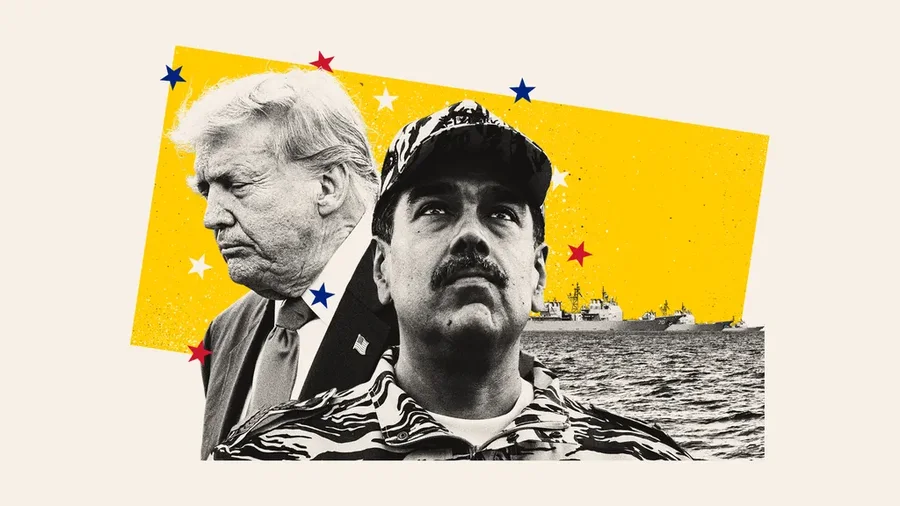
The US is escalating hostilities with Colombia over the drug trade, while deploying troops to the Caribbean to attack ships and heightening tensions with Venezuela...
Since Donald Trump began his second term, he has been exerting increasing pressure on many Latin American countries, including U.S. allies. And the seemingly random nature of his attacks is raising questions about his motives.
The US president has imposed 25% tariffs on goods from Mexico, the US's largest trading partner. He has threatened to seize the Panama Canal and carried out mass deportations of Latin Americans. He has tried to use punitive tariffs of 50% on Brazilian imports in an attempt to influence the outcome of the trial of former Brazilian president and Trump ally Jair Bolsonaro.
The US military has significantly increased its presence in the southern Caribbean, deploying 10,000 troops and numerous warships and aircraft. It has struck at least seven Venezuelan ships that Trump has alleged were smuggling drugs, without providing evidence. At least 32 people have been killed as of Friday.
Trump has sharply criticized Venezuelan dictator Nicolás Maduro and admitted to authorizing covert CIA operations against him.
Trump escalated his hostility with Colombia, one of America's closest allies, cutting aid and raising tariffs on its exports because it "does nothing to stop" cocaine production. Trump called Colombian President Gustavo Petro an "illegal drug lord" after Petro accused the US of carrying out "murder" in the Caribbean. He warned that Petro "better shut down" his drug operations or the US would "shut them down for him."
reaction
A “common complaint from Latin America” is that the US “has paid insufficient attention to the region,” the Center for Strategic and International Studies said. But now Trump has paid “more attention in nine months than many previous administrations of either party since the Cold War,” and those countries may “regret getting what they wanted.”
The US shift stems from fears that, for too long, it has prioritized power projection and policing global hotspots over caring for its ‘common neighborhood.’ This has led China to ‘expand its influence’ in the region and has allowed organized crime, drug trafficking and migration to ‘threaten US security.’ In response, Trump “appears to be adopting a ‘Monroe Doctrine 2.0’”: abandoning soft power initiatives in favor of the threat (or deployment) of military force, while “relying on economic coercion” in the form of tariffs.
The problem is that tariffs and cuts to "already reduced levels" of US development and aid to Colombia will "make it harder" for Bogota to combat the cocaine trade, Keith Johnson said in Foreign Policy.
Colombia is, by far, the main source of cocaine to the US and, historically, "the bulk" of US aid "has come in the form of counternarcotics and law enforcement support".
“If the US were truly interested in fighting drug trafficking, the last thing it would do would be to antagonize the only military in the region” capable of fighting drug traffickers, Elizabeth Dickinson, senior Colombia analyst at the International Crisis Group, told Johnson.
US military assets in the Caribbean are “not very useful” in the fight against the drug trade, said The Guardian’s foreign affairs commentator Simon Tisdall, especially if their focus is on Venezuela, through which only small amounts of cocaine are trafficked into America. So what is Trump doing here?
President Maduro claims that the White House is trying to “forcefully impose regime change” on his country and is waging an “undeclared war.” Analysts suggest that Trump “covets Venezuela’s abundant oil, gas, and mineral resources.” And there’s a personal aspect: Marco Rubio is “an early critic of left-wing rulers in Cuba and Nicaragua.” For him, Maduro is “unfinished business.” But given “Trump’s unfortunate mistakes on other key foreign policy issues,” the most likely explanation is that “he has no idea what he’s doing, in Venezuela or in Latin America as a whole.” There is no plan.
What comes next?
America is Colombia's largest trading partner, so Trump's threats of further tariffs have "some potential impact," Johnson told Foreign Policy. But "the pain will be felt as much by American consumers as it will be by Colombian exporters."
In Venezuela, the Trump administration believes that “the campaign against Maduro is working” and that increased US military pressure will convince the Venezuelan leader “that he cannot stay in power,” The Wall Street Journal reports. “The idea is to make him so miserable that he leaves,” a senior administration official said. But far from weakening Maduro, this could “achieve the exact opposite,” Tisdall wrote in The Guardian. Maduro is using the crisis to increase his grip on power.
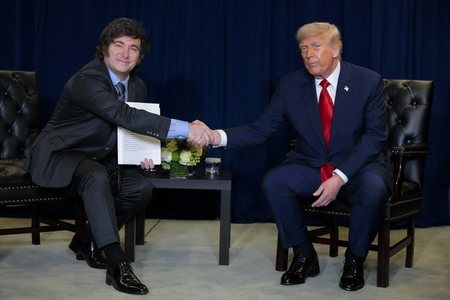
More broadly, “Trump’s bullying of other left-leaning Latin American countries,” including Colombia and Brazil, and “his arrogant support for right-wing populists in Argentina and El Salvador,” are “provoking a regional backlash.” Trump’s efforts to “reprise the role of Latin America’s neighborhood policeman” are ultimately “self-defeating.”
In the long run, the "big winner" will be China. /Adapted from The Week/


Lini një Përgjigje