


 Shkruar nga Pamfleti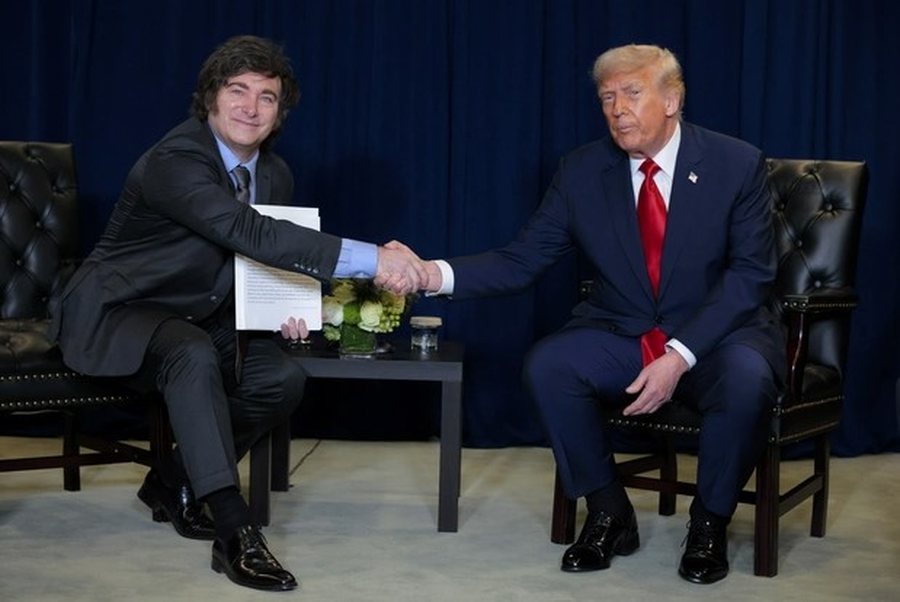
President Javier Miel's comprehensive economic agenda is at risk when Argentina holds midterm elections this weekend.
Also hanging in the balance is US credibility in the region, as President Donald Trump attempted to give his political ally a billion-dollar lifeline.
The results of Sunday's vote will shape the policies that Milley will be able to pass in the legislature, a crucial part of Treasury Secretary Scott Bessent's hopes that the country will finally break free from the decades-long debt cycle.
Beyond that, the outcome will signal whether Milley's "chainsaw" austerity program will have lasting power beyond 2027, when the president himself faces re-election.
Bessent has framed U.S. involvement in Argentina as part of a broader effort to reassert American economic power in Latin America and counter China's growing influence across the continent. A setback for Milley could severely damage that effort.
“From the perspective of the American taxpayer, there will definitely be losses, but I don’t think they are the essential thing here,” said Robin Brooks, a former chief foreign exchange strategist at Goldman Sachs who is now a senior fellow at the Brookings Institution.
The extraordinary U.S. intervention is the latest window into Trump’s often chaotic and loyalty-based approach to geopolitics. While Argentina and its repeated cycles of fiscal turmoil may be idiosyncratic, the broader consequences of Trump’s risk-taking on the country could be broader. His administration is betting billions of dollars and U.S. influence on rescuing a permanently bankrupt country, yet it has not laid out a clear exit strategy.
In the weeks since the first pledge of U.S. aid to Milei, Bessent has intervened in Argentina’s foreign exchange market to prop up the peso, which he argues is undervalued. The U.S. finalized a deal to give the central bank access to more dollars to boost the peso through a $20 billion foreign exchange swap line, and the Treasury is trying to mobilize another $20 billion in private financing.
So far, that unusual level of American aid, which is already facing domestic political backlash from Democrats and some Republicans, as well as the reluctance of American banks that have been invited to participate, is not yielding the result the Trump administration wants.
"I'm very surprised that it hasn't stabilized the exchange rate and that we've had very large fluctuations," Brooks said.
A successful bailout program, he said, requires confidence that it will be effective, which markets doubt.
"The movements we're seeing in the peso are basically just a function of two players: On one side are the Argentines who are trying to get their money out at a not-so-heavy exchange rate - and then on the other side are the central bank and the U.S. Treasury, who are buying pesos," he said.
Despite encouragement from the Treasury, Wall Street is privately reluctant to invest more money in Argentina without some U.S. government guarantee, given that there is not much collateral available in Argentina. After all, if investors thought it was a good bet, they would have already made it.
“There is no private investor who would voluntarily risk significant amounts of money in Argentina,” said Sergi Lanau, director of global emerging markets strategy at consulting firm Oxford Economics.
"Something could happen because they have to calculate the pros and cons of taking a risk in Argentina and being on good terms with the US administration," he added, adding "the total amount cannot even come close to $20 billion. There is no way."
Meanwhile, the peso could face more turmoil if Milei's party, La Libertad Avanza, has a bad night. The LLA is expected to win seats, although not enough to secure a majority against the left-wing Peronist coalition. But if the president's coalition does not perform well, it could lead to a broad sell-off in Argentine assets.
Milley has pushed through a series of reforms using executive power, including eliminating the country's deficit, an achievement that, along with lower but still high inflation, is helping to reduce the country's debt burden over time. But that could be difficult to maintain in negotiations with the legislature, as austerity measures squeeze Argentina's citizens. A lack of political popularity has regularly hampered reform efforts in recent years.
All of these factors increase the risks for Trump, who has cast the financial aid to Argentina as an attempt to prop up its president. “If he loses, we will not be generous to Argentina,” he said last week.
Bessent later clarified that the financial aid was tied to results and not to Milei personally. “As long as Argentina continues to implement good policies, it will have the support of the United States,” he said. /Adapted from Politico/






Lini një Përgjigje