


 Shkruar nga Pamfleti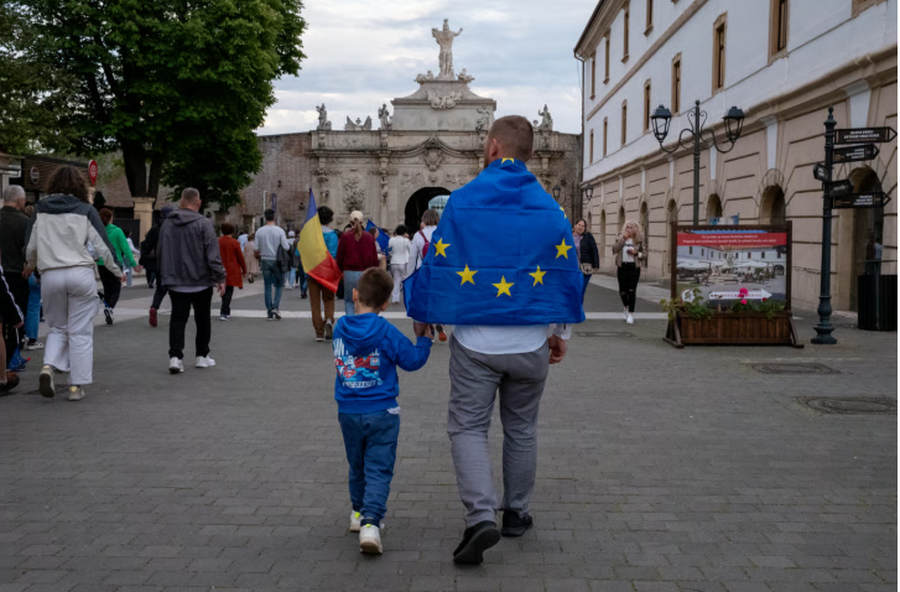
The birthplace of modern Romania is losing faith in politics 36 years after the fall of communism, amid threats of retaliation in Sunday's tight election...
Among the deep river gorges and forest-covered mountain slopes of Transylvania, home of wolves, bears, and tales of vampires, a dark and destructive spirit is beginning to stir.
In 1918, modern Romania was founded when Transylvania entered into a formal union with the rest of the country at an assembly in the fortified citadel of Alba Iulia, an ancient Roman city that is now the focus of national unification celebrations in December each year.
The country's turbulent history since then has been defined by periods of brutal dictatorial rule, first under the fascists and then through totalitarian terror implemented by the state security police, the Securitate, during the 24-year communist dictatorship of Nicolae Ceausescu.
A violent revolution in 1989 captured the world's attention when Ceausescu and his wife Elena were executed, marking a defining image of the end of the Cold War era.
However, 36 years later, democracy in Romania is in deep trouble due to an ongoing cost of living crisis, with inflation reaching almost 5 percent.
In the high-stakes presidential election taking place on Sunday, many of the proud residents of Alba County want to destroy their political system again, believing it to be corrupt beyond belief.
“We call it the big squid because it has its tentacles everywhere, only those at the top have profits,” says Dragoş, who was born a few months before the revolution and now works as a taxi driver. “Democracy was just a name. We are still under communism in every way,” he adds.
Locals are outraged when they talk about how politicians have betrayed their country. They fear and despise officials in the old political parties, who control appointments to local institutions and businesses - sometimes favoring friends or family connections for the best jobs.
'Anti-system' politicians
In some ways, Sunday's election is the perfect expression of the crisis of confidence that has gripped Romania's political system. For the first time since 1989, neither of the two presidential candidates comes from one of the main political parties that have governed more or less continuously since the revolution.
Both candidates claim to be "anti-system" politicians who will fight corruption from the top down.
But that's where the similarities end. This has been an intense campaign that has divided the country down the middle. The race looks close. Allegations of unfair campaigning have already been leveled against both sides - before the results are even announced.
Favoriti, i cili doli i pari në raundin e parë të garës presidenciale dy javë më parë, është 38-vjeçari, George Simion, i flaktë i së djathtës ekstreme. Një nacionalist krenar dhe i fuqishëm, ai ka folur për ribashkimin e Rumanisë me Moldavinë fqinje, duke kopjuar me vetëdije strategjinë e Donald Trump (madje duke mbajtur edhe kapelen e kuqe MAGA). Ai është zotuar gjithashtu të ndëshkojë figurat e korruptuara të establishmentit që u kanë mohuar rumunëve të drejtat e tyre demokratike (dhe kanë lëshuar kërcënime kundër kritikëve në media gjetkë).
Kundërshtari i tij, Nicușor Dan, është kryebashkiaku i pavarur, me sjellje të buta dhe centrist i Bukureshtit, kryeqytetit të kulturuar 220 milje larg peizazheve gotike të Albës, në fushën e butë dhe të sheshtë të jugut të Rumanisë.
Është një përplasje midis moderimit dhe populizmit që jehon me të njëjtën ritëm daulleje që gjallëron betejat politike në të gjithë Evropën dhe më gjerë - nga Amerika në Gjermani, Francë, Holandë, Mbretërinë e Bashkuar dhe Itali. Një pjesë e madhe e votuesve duan ndryshim dhe janë të përgatitur që gjërat të përkeqësohen për ta arritur atë.
Revolta e së djathtës
Vitin e kaluar, të djathtët rumunë menduan se kishte ardhur momenti i tyre.
Por ultranacionalisti Călin Georgescu — i cili ishte simpatizant i Moskës dhe skeptik ndaj NATO-s dhe armatosjes së Ukrainës, u pengua nga gjykatat pavarësisht se fitoi raundin e parë të zgjedhjeve presidenciale.
Mes pretendimeve për ndërhyrje nga Rusia dhe një fushate në TikTok që ngriti dyshime, Gjykata Kushtetuese anuloi të gjithë garën dhe urdhëroi një ripërsëritje, e cila do të zhvillohet të dielën.
Por, pavarësisht këtyre kërcënimeve të supozuara nga jashtë, për shumë rumunë - madje edhe për ata që nuk e pëlqenin Georgescun - katastrofa e vërtetë demokratike ishte vendimi i gjykatës, i cili anuloi votimin. Georgescu nuk rikandidoi dhe përballet me një hetim penal për aktivitetet e tij. Por Simion thotë se dëshiron ta bëjë Georgescun kryeministër.
“Ky djali i Simionit është opsioni më i mirë sepse është në gjendje të shkatërrojë gjithçka”, thotë Dragos.
Ai pohon se gruaja e tij nuk është dakord me të. Ajo ka frikë se çfarë mund të ndodhë nën drejtimin e Simionit, një ish-huligan futbolli.
Ngurrimi i tij për të publikuar identitetin e tij politik nuk është aspak unik. E kaluara totalitare e Rumanisë mbetet në mendjet e brezave të vjetër dhe ato "tentakula" të marrëdhënieve të korruptuara parti-biznes shtrihen thellë në shumë aspekte të jetës. Frika nga policia sekrete mund të jetë zbehur, por debati politik këto ditë ende ndihet i rrezikshëm, sikur t'u kushtojë njerëzve vendet e tyre të punës, si dhe miqësitë e tyre.
Në raundin e parë të zgjedhjeve dy javë më parë, në të cilin morën pjesë 11 kandidatë, 55 përqind e votuesve të Zlatnës mbështetën Simion.
Georgeta, 38, says she wants Simioni as president so she can get Georgescu back. “Dani can’t do anything,” she says. “I love Georgescu. That’s why I’m voting for Simioni. Calin Georgescu has a strong back and Simioni sees him as an example. We just have to be patient and Georgescu will be elected.
Andrea, 28, suddenly gets angry. “Simioni is very extremist,” Andrea says, adding, “he has so much influence because of Georgescu. Simioni wants to be president, but I’ve never heard of him doing anything. He’s only getting votes because he says he’s going to make Georgescu prime minister.”
Neither they nor their friend are willing to give their full names when discussing politics. “This is a small town. Some people are threatened that if they don’t vote for Nicușor Danin they will be fired,” says 49-year-old “Liliana,” as she asked to be identified. “I’m afraid there will be consequences, the authorities will harass me if I say I’m voting for Simion.”
This conspiracy of silence makes it much more difficult to judge how the campaign is going.
polls
Recent polls show that Dan, who initially trailed Simion far behind, has now caught up and may even be moving slightly higher in the final days of the campaign. But it is not clear whether pollsters can accurately capture the full extent of Simion’s support. His estimates in polls before the first round underestimated the share of the vote he won (41 percent). Polls show that people are more willing to admit that they are voting for Dan than for Simion.
During the exit poll for the first round of elections on May 4, 50 percent of respondents did not say how they had voted, an extremely high refusal rate.
Regardless of how they intend to vote, the fact that people do not feel safe discussing their political views openly is a warning sign that Romanian democracy is in trouble. Cynicism has long been a problem, given how the same parties - the Social Democrats (PSD) and the National Liberals (PNL) - have divided power between them over the past four decades.
Few politicians were untouched by their engagement with the communist regime, reinforcing the sense that the 1989 revolution itself did not bring the change the population desired. Since the courts annulled last year's elections, disappointment and anger appear to have grown.
As the polls narrow and appear to give Dan a real chance, Simion has accused Moldova of trying to interfere in the election. A MAGA-style "stop the theft" narrative has already begun.
Whoever wins the presidency after this campaign, rescuing Romania's crumbling democracy will be a much more difficult task. / Adapted from Politico Pamphlet/


Lini një Përgjigje