


 Shkruar nga Pamfleti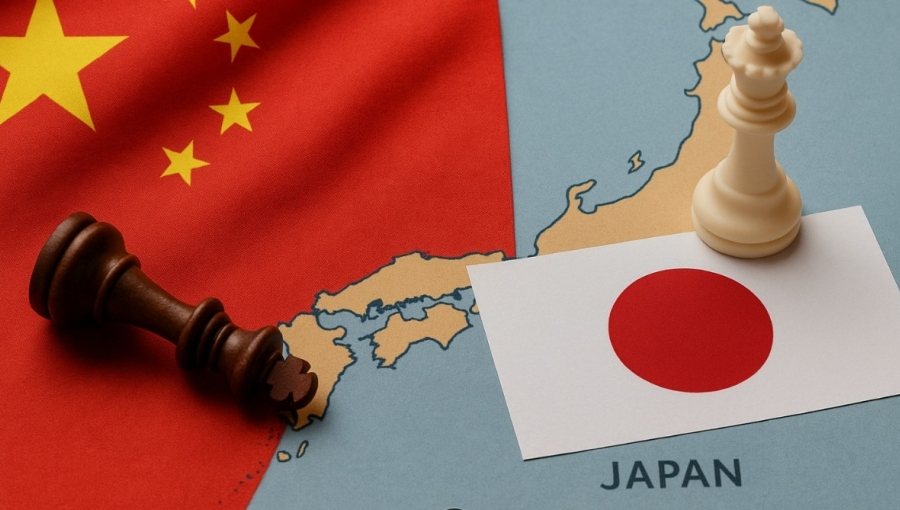
Japan has decided to further strengthen its military capabilities as tensions with China escalate.
In recent news, the government led by Prime Minister Takaichi Sanae confirmed a monstrous increase in the defense budget for next year: over 9 trillion yen, or roughly $58 billion, a 9.4% increase compared to the previous figure allocated for the same purpose.
The sum is part of a record $800 billion package and is part of the fourth year of Japan's five-year program to double annual defense spending to 2% of GDP. Meanwhile, China's Defense Ministry said that recent developments in Japanese space technology, some of which were in collaboration with the United States, are "accelerating the militarization and weaponization of space" and "spurring a space arms race."
Japan flexes muscles: record military build-up
Turning to Japan, its plan focuses on strengthening its military response and coastal defense capabilities with surface-to-ship missiles and unmanned vehicles.
To protect its coasts, Tokyo will invest 100 billion yen to deploy "massive" aerial, surface and underwater drones for surveillance and defense, as part of a system called Shield, scheduled for March 2028, Defense Ministry officials said.
The budget increase, the Guardian newspaper noted, comes as expected at a time of growing hostility between the Chinese and Japanese governments, whose relations deteriorated last month when Japanese Prime Minister Takaichi said his country would likely intervene militarily if China attacked Taiwan.
These words triggered a furious reaction from Beijing, which launched a series of diplomatic and economic retaliatory measures.
From missiles to aircraft carriers and the challenge to China in the Pacific
According to Japanese media, Tokyo has launched several rockets since March 2023, carrying cargo spacecraft and satellites for GPS systems and intelligence gathering.
"Given that Japan's fierce militarists once launched surprise attacks and the country is now adopting a space offensive policy, it is not surprising that there are growing concerns about another Pearl Harbor-like scenario," Defense Ministry spokesman Zhang Xiaogang said last Sunday.
Tokyo Movement
Japan's post-World War II constitution prohibits the use of force as a means of resolving international disputes. But a 2015 amendment, passed when Takaichi's mentor, Shinzo Abe, was prime minister, allows the country to exercise collective self-defense in certain situations, even if it is not under direct attack.
Regarding the increase in the budget for military capabilities, Defense Minister Shinjiro Koizumi was clear: "It is the minimum necessary, considering that Japan is facing the most severe and complex security environment since the war. This does not change our path as a peace-loving nation."
As the Associated Press explained, Japan has bolstered its offensive capability with long-range missiles to attack enemy targets from afar, a major departure from the post-World War II principle of limiting the use of force to self-defense.
The new budget plan also allocated more than 970 billion yen ($6.2 billion) to strengthen the capability of "unaffordable" missiles and includes the purchase of 177 billion yen ($1.13 billion) of domestically developed and improved Type 12 surface-to-ship missiles, with a range of about 1,000 kilometers.







Lini një Përgjigje