


 Shkruar nga Pamfleti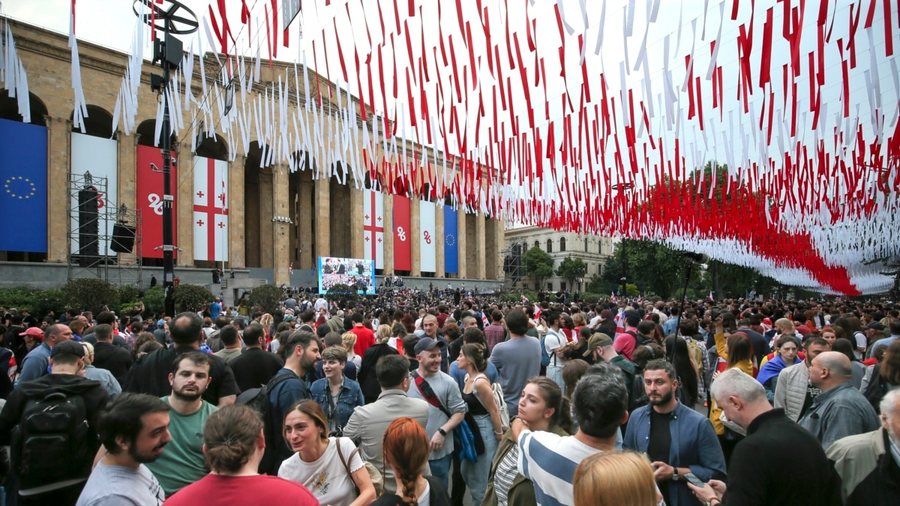
Georgia's parliament voted on Tuesday to override a presidential veto of a "foreign agents" law that has raised concerns in the West and sparked mass protests in the country for weeks. Through State Department spokesman Matthew Miller, the United States on Tuesday condemned the vote in parliament that overrode the Georgian president's veto.
Parliament, where the ruling Georgian Dream party holds a majority, overrode President Salome Zourabichvili's veto of the law, which she and other critics say limits media freedom and harms Georgia's chances of joining the European Union.
The president already has five days to approve the law, and if she does not approve it, the speaker of the parliament will sign the law's entry into force.
The bill that was approved earlier this month by parliament will force non-governmental organizations and other non-profit groups to register as entities "working for the interests of a foreign power" if more than 20% of their funding comes from abroad.
President Zourabichvili, who is at growing odds with the ruling party, vetoed the bill on May 18. She has accused the ruling party of endangering the country's future and "damaging the journey towards full membership in the free and democratic world".
The government says the bill is needed to curb what it considers harmful foreign agents trying to destabilize the South Caucasus country of 3.7 million people, but many Georgian journalists and activists argue the bill's real purpose is to stigmatize them. them and limit the debate before the parliamentary elections scheduled for October.
Opponents criticize the legislation as a "Russian law" as it resembles measures taken by the Kremlin to crack down on independent news media, non-profit organizations and activists. Critics say the measures may have been instigated by Moscow to hinder Georgia's chances of further integration with the West.
The bill is almost identical to the one the ruling party was forced to withdraw last year after mass protests. Renewed demonstrations once again spread across Georgia when the bill was introduced to parliament. Demonstrators clashed with police, who used tear gas and water cannon to disperse them.
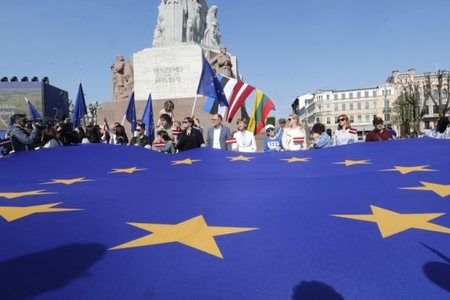
The European Union's foreign policy office has said that the adoption of the law "negatively affects Georgia's progress on the road to the EU".
Last week, US Secretary of State Antony Blinken announced that sanctions with travel restrictions would be imposed on Georgian officials "who are responsible or complicit in harming democracy in Georgia". He noted that "it remains our hope that Georgia's leaders will reconsider the bill and take steps to advance their country's democratic and Euro-Atlantic aspirations."
The European Union offered Georgia candidate country status last December, while making it clear that Tbilisi must implement key policy recommendations to advance in the membership process.
The opposition United National Movement has described the bill as part of efforts by the ruling Georgian Dream party to draw the country into Russia's sphere of influence - a claim the ruling party vehemently denies. The Georgian Dream Party was founded by Bidzina Ivanishvili, a former prime minister and billionaire who made his fortune in Russia.
Russia-Georgia relations have often been strained since Georgia became independent after the collapse of the Soviet Union in 1991.
In 2008, Russia fought a brief war with Georgia, which tried unsuccessfully to regain control over the breakaway province of South Ossetia. Moscow then recognized South Ossetia and another breakaway province, Abkhazia, as independent states and strengthened its military presence there. Most of the countries of the world consider these two regions as part of Georgia.
Tbilisi cut diplomatic ties with Moscow, and the status of these regions remains a major issue, although Russia-Georgia relations have improved in recent years. / VOA


Lini një Përgjigje