


 Shkruar nga Sir Michael Leigh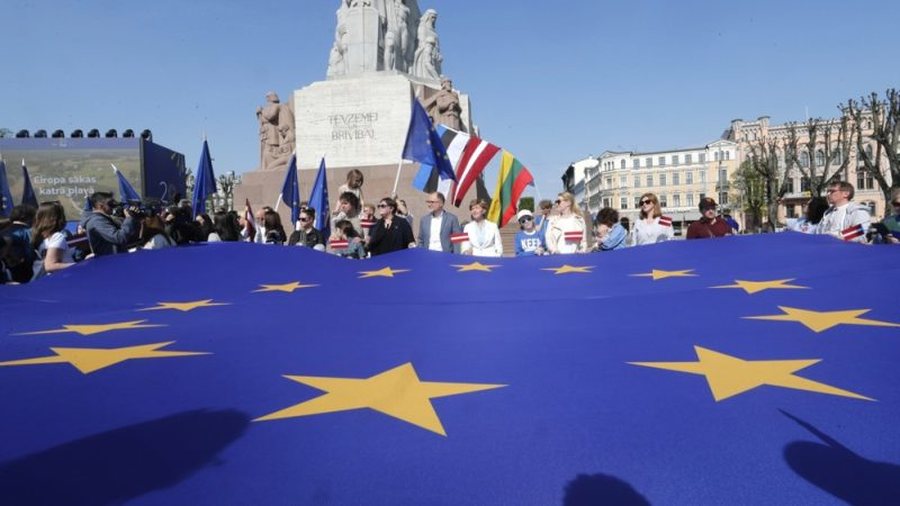
Europe's focus on security will only increase as it moves forward. Overall, this year's elections will confirm the stability of Europe, and the continued appeal to the values on which the EU is built.
As voters go to the polls in EU and then national elections, Europe faces polarization, violence, assassination attempts, conspiracy theories and disinformation. National elections are expected to be held in Austria, Belgium, Bulgaria, Croatia, Lithuania and Romania, as well as in Iceland, Georgia and Great Britain.
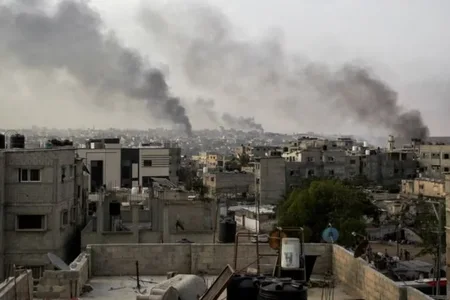
The war in Ukraine and the Middle East, as well as domestic political turmoil, economic woes and a wavering US commitment to Europe, are unnerving candidates and voters. Recent elections have produced mixed results.
Some have shown the strength and resilience of democracy, while others have led to the strengthening of extremist political parties. They are usually Eurosceptic and against migration, pro-climate policies, environmental protection and support for Ukraine.
Some are pro-Russian and some are against China's economic isolation. However, some traditional party leaders have moved to the extreme right, leading to compromises with parties that were previously considered impossible.
Is this a temporary electoral hiatus on the journey to a greener, more competitive, more connected and fairer Europe, or does it signify a deeper shift in what concerns people most? Two scenarios describe opposite futures for the EU, and in a year when half of the world's electorate is going to the polls.
A throwback
This scenario describes a Europe where far-right politics begins to be widely accepted. Far-right parties in France and Italy are trying to project a more moderate image for themselves, to somewhat alleviate the anxieties of voters. While those in Hungary and Slovakia, show no signs of softening their positions.
In Italy, the Netherlands and Scandinavia, coalition governments include center-right and far-right parties, promoting policies that were once considered unacceptable. The election seems to confirm the claim of French Marine Le Pen that voters prefer authentic far-right parties to center-right imitations.
This has an impact both at home and abroad. The European Union is known for its "soft power", promoting its economic and social model to influence other countries. But the rise of populists undermines the credibility of this model, reducing the EU's influence in areas such as labor standards, human rights, climate and the regulation of how Artificial Intelligence is used.
Policy towards China is shifting from strategic rivalry to cooperation, as politicians sympathetic to Beijing are elected to the top, despite concerns over human rights and the situation in Taiwan. And this, in turn, deepens the rift between Europe and the United States.
According to this scenario, the EU's support for Ukraine may weaken significantly, jeopardizing not only military and financial aid, but also Ukraine's aspirations for EU membership. The EU offered membership to Ukraine and its neighbors a few months after the beginning of the Russian invasion, as a proof that it can also act "geopolitically".
However, a strong shift to the right could increase the obstacles to potential membership for these countries. The Balkan region still faces the old problems of bad governance, despite the EU's encouragement to improve. In general, in this scenario, the EU's integration efforts will be halted, and its leaders will follow a transactional approach to policies such as the Green Deal, the rule of law and human rights.
A relaunch of major reforms
According to this alternative scenario, Eurosceptic parties will not be able to unite, while at the head of the union will be placed leaders committed to the essential values of the EU. The disruption caused by the elections is short, and the EU quickly resumes its main policies, giving them a major geo-economic twist.
The most immediate priorities are living standards, employment, cost of living, investment, technology and exports. The EU is committed to rebuilding Ukraine, ensuring that the new infrastructure meets European green and digital standards.
This will help Kiev get closer to Brussels. Also, the EU will provide humanitarian aid to Gaza when the fighting stops, as the budget for the reconstruction of the Strip will be part of its foreign aid program. The new European Commission will base its program on the proposals of former Italian prime ministers Enrico Letta and Mario Draghi, supported by Berlin and Paris.
The aim is to use the EU's large single market to compete more effectively with China and the US. The new EU High Representative will call on like-minded European countries to work together on foreign and defense initiatives under the EU umbrella.
Any backtracking on key commitments, such as the European Green Deal, during the election campaign will be temporary. Most of the legislation on this issue has already been passed, and it is difficult to change it. Businesses have invested heavily in the green transition, and promise to hold the EU accountable to its commitments.
After the election, the challenge from the extreme right will prompt the shrinking center to put aside its differences and work together on a credible program for the next 5 years.
Industrial cooperation, to reduce dependence on foreign and unreliable suppliers, the joint production of advanced weapons systems, the purchase of energy and very important materials from the EU, and the 2030 targets on the reduction of polluting emissions into the atmosphere, will be the main priorities of the new commission.
Membership talks with Ukraine and Moldova will start at the end of this year, despite the Hungarian presidency's efforts to delay them. The European Council will ask the Commission for proposals for cooperation with Great Britain, after its new government takes office after the July 4 parliamentary elections.
The road ahead
The battle for basic rights and freedoms will dominate Europe for years to come, but the rise of the extreme right will not harm the continent. Europe's focus on security will only increase as it moves forward. Overall, this year's elections will confirm the stability of Europe, and the continued appeal to the values on which the EU is built. /Adapted "Pamphlet" from "Euractiv".
Note: Sir Michael Leigh, former EU official in charge of enlargement, now lecturer at Johns Hopkins University (SAIS) in Bologna, Italy.


Lini një Përgjigje