


 Shkruar nga Pamfleti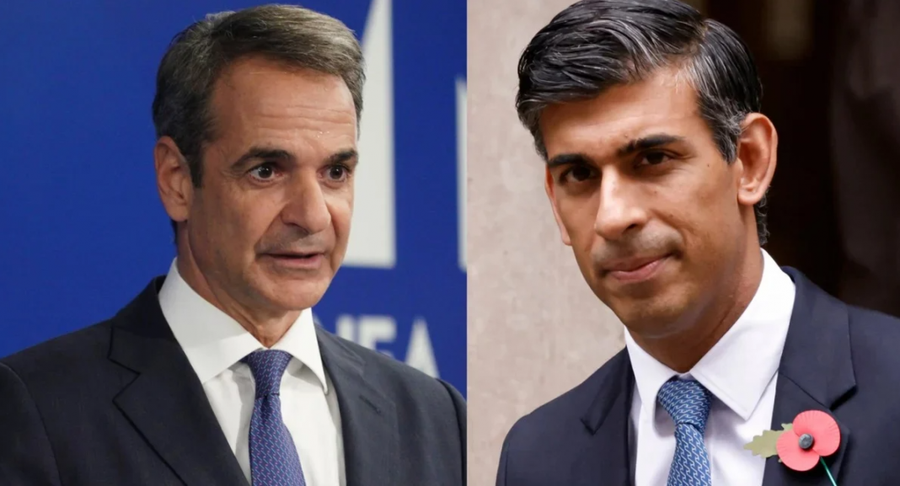
Athens has been demanding that London return the Parthenon's ancient sculptures for decades. The cancellation of the meeting between the British Prime Minister Sunak and the Greek counterpart Mitsotakis shows the hardening of the fronts between London and Athens.
At the beginning of the year, the media announced the possibility of reaching an agreement in the dispute over the return of the ancient sculptures of the Acropolis. In January 2023 the British Museum in London confirmed discussions with Athens about their temporary handover. A little later the British government denied them and ruled out permanent return.
British Prime Minister Rishi Sunak did not want to talk to his Greek counterpart Kyriakos Mitsotakis in London about the return of the Parthenon sculptures. So he canceled the scheduled meeting with him this week. Now there is even talk of a diplomatic scandal. British government member Mark Harper justified the cancellation of the meeting with the words that the British position cannot be shaken. The Elgin Marbles should remain part of the permanent collection at the British Museum, Haper told the BBC. Greek Prime Minister Mitsotakis reacted angrily to the last-minute cancellation of the meeting. He said (28.11.2023) that he was angry. "Greece's positions on the issue of the Parthenon sculptures are known," Mitsotakis is quoted as saying by the German Press Agency, dpa. "I hoped to have the opportunity to discuss them with my British counterpart, as well as the main challenges of the international situation: Gaza, Ukraine, the climate crisis, migration. Mitsotakis again refused an alternative meeting with Sunak's deputy, Oliver Dowden, and expressed outrage.
Greece insists on the return of the "Elgin Marbles"
Before the cancellation of the meeting by Great Britain, the head of the Greek government announced that during his visit he would insist on the return of the sculptures of the Parthenon. "They just fit better in the Acropolis Museum, an avant-garde purpose-built museum," he told the BBC. The head of the Greek government also drew attention with this comparison: "Dividing this art treasure is the same as cutting the Mona Lisa, the world-famous painting by Leonardo da Vinci, into two parts and exhibiting it in the Paris Louvre and the Museum British". At the same time he emphasized that Athens was interested in a partnership with the London museum.
The chairman of the museum's supervisory board, George Osborne, has recently spoken openly about lending it to Greece - on the condition that the Elgin Marbles be returned to London. But for Sunak, it's not about loans either. But a new wind seems to be blowing.
On Tuesday, the conservative newspaper "Times", which had previously supported the government's position, called for their return: "The sculptures belong in Athens", the main article says. They are essential to Greece's cultural identity.
Vatican returns Parthenon sculptures
In March 2023, the Vatican returned some fragments of the Parthenon frieze to Athens. The frieze originally adorned the upper exterior wall of the 2,500-year-old Parthenon temple on the Acropolis of Athens. It presents many figures and offerings to the goddess Athena on the occasion of a procession for the greatest festival, which took place in ancient Athens. Today part of the frieze is in the Acropolis Museum in Athens and a larger part in the British Museum in London. The other parts are owned by French, Italian, Austrian and German museums.
In Great Britain, it is considered that the 56 parts of the 75-meter long Parthenon frieze were purchased legally. Greece opposes it and says that they are stolen. The dispute about this has been going on for a long time. The marble sculptures depict scenes from Greek mythology. In Great Britain they are nicknamed "Elgin Marbles", after the name of Lord Elgin, the British ambassador to the Ottoman Empire in Constantinople. It was Elgin who removed the figures from the exterior of the Parthenon temple on the Acropolis of Athens in the early 19th century. They were brought to Great Britain in agreement with the Ottoman Empire, which ruled Greece at the time.
The return was a theme in Mitsotakis' election campaign
The dispute over the return was at the beginning of the year also an electoral topic. Greek Prime Minister Kyriakos Mitsotakis, who won re-election in the summer of 2023, made the return of the frieze part of his election campaign strategy. Recently, the Prime Minister spoke of a "progress" and a "sense of dynamism", while the British Museum did not want to admit that talks had been held on this topic.
The UK insists it bought the marble sculptures legally. "This question is at the heart of the restitution debate," says Alexander Herman, deputy director of the Institute for Art and Justice and author of the book "Restitution: The Return of Cultural Artefacts," published in 2021. "This topic has been on the agenda. cultural in Great Britain and of course in Greece for more than 200 years", says Herman to Deutsche Welle in a 2021 interview.
Legal impediment to return?
Unlike Great Britain, the return debate has gained momentum in many European countries, even in the US. The British Museum must accept criticism for so far refusing all requests for return. Meanwhile, Germany has begun to return the Benin bronze sculptures to Nigeria. In Germany and France the return of objects from colonial contexts is now an important issue of cultural policy.
But even if the British Museum decides to return the pieces of the frieze to Greece, a national law must first be repealed. Until now the "British Museum Act" of 1963 has prevented the British Museum from handing over objects from its collections, because it considers the museum's holdings to be "national heritage". Thus the Parthenon frieze could end up in Greece only as a loan. But this is too little for Athens.
A spokesman for Prime Minister Rishi Sunak stated that there are no plans to change the law: "Our position on this issue has not changed", he said in December 2022 to Euronews. "Decisions about the care and management of the collections fall within the competence of the museum and its administrators. The Parthenon sculptures are legally the property of the administrators and are functionally independent from the government," added Sunak's spokesperson.
The cancellation of the meeting with his counterpart Mitsotakis proves that London has not moved an inch in this matter./DW







Lini një Përgjigje