


 Shkruar nga Marc Champion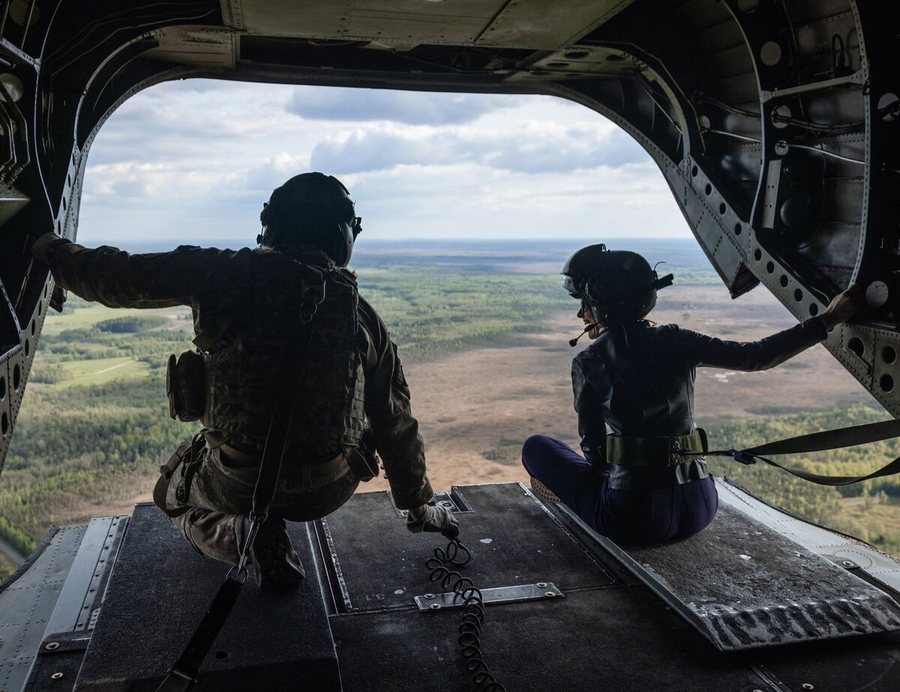
Few things could better express Estonia's current predicament than the image of the tiny Baltic state's prime minister, Kaja Kallas, sitting aboard a military helicopter with a parachute draped over her leather jacket.
She was returning home in the British Chinook helicopter from a visit to the NATO exercise that started on Wednesday about 130 kilometers south of the capital Tallinn. "Spring Storm 2024" involved 9,000 Estonian soldiers and reservists, as well as 5,000 troops from other alliance members, hundreds of armored vehicles, aircraft and warships.
Its aim, says Kallas, is to send a clear message to Moscow: "Don't you dare come here!". For Estonia, this strategy is definitely the right one. Hoping that President Vladimir Putin isn't crazy enough to risk attacking a NATO member, and consequently doing nothing to prepare, would prompt the Kremlin chief to ask: Are they really Are British, Spanish and American mothers willing to send their sons and daughters to fight thousands of miles away, against a vast military force that has a seemingly limitless tolerance for its casualties at the front?
For a nation of just 1.3 million people, deterrence would be unattainable without clear evidence that NATO's security guarantees, backed by the full military power of the US and major European allies, are sustainable. So it's all or nothing.
And the only way to guarantee that kind of security is to train and develop the capacity to fight a war that should never happen. This was also the main lesson of the Cold War. Finally, such preparations are beginning to look more plausible in the Baltics.
Sure, 14,000 troops couldn't hold off a Russian invasion, but they could delay it long enough to bring the kind of force it could, especially now that Finland is a member, and soon Sweden too.
"My army tells me that now NATO is working the way we thought it was working before we joined," Kallas told reporters. She has not always been so appreciative of the levels of European commitment to the bloc's eastern front. But for every sign of an alliance learning to pool its military capabilities, recognize its failures and begin to address them, there is another sign that speaks to its fragile foundations.
France showed off 4 of its impressive new Jaguar infantry fighting vehicles in this exercise. But along with old armor from Great Britain. All agreed that words mean nothing if the munitions and weapons to fight a sustained ground war with Russia cannot be produced when needed, and for the Baltics bordering Ukraine this must happen now.
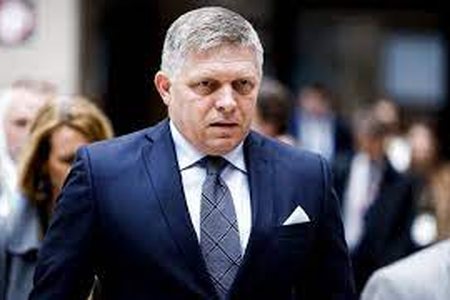
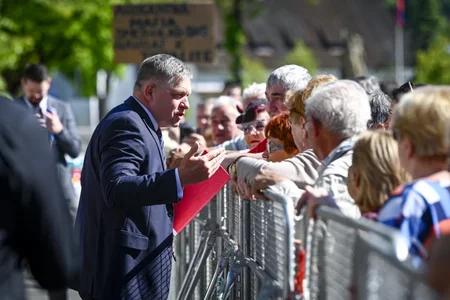
Even more disturbing was the reminder - along with the news of an assassination attempt on a European leader - that the events have the potential to change all the political assumptions that should define any NATO military strategy. When news broke Wednesday that Slovakia's populist prime minister, Robert Fico, had been shot, you could clearly feel the wave of concern.
Kallas expressed her shock and sympathy in an official statement. But the thoughts of some others who visited the drill site quickly turned to how the Kremlin might try to use the attack to tear apart the alliance, perhaps by blaming Ukraine and spreading conspiracy theories, regardless of what might have motivated it. actually the author.
Empires may suffer blows from external enemies, but usually they explode from within. Putin knows this, having experienced the self-destruction of the Soviet Union all too badly. But in Russia, despite much talk of the weakness of his regime a year ago, he just won another term in March and has forged a powerful alliance with China.
His determination to restore Moscow as a superpower, impose a sphere of influence on the former empire's territories, and foment instability among those who stand in the way of his plans is abundantly clear. Meanwhile in the West, NATO's strategy and collective strength depend on a host of unpredictable choices.
Above all from the November presidential elections in the USA, where Donald Trump has made it clear that he will have little commitment to the defense of Ukraine, or the transatlantic alliance as a whole. Putin's dual narrative of Western arrogance and decadence is finding a ready audience in much of the globe, including a significant portion of the electorate in Europe and the US.
There is no need to look far for signs of political fragmentation within the alliance. Robert Fico won re-election last year on a pro-Russian, anti-American platform, pledging to freeze military aid to Ukraine.
The real impact of these promises was limited, because the fact is that Slovakia had largely depleted its stocks of available weapons. and was continuing non-military aid to Kiev. But his election widened the pro-Putin camp within NATO and the European Union, along with Hungarian Prime Minister Viktor Orban.
Right-wing populists are expected to do better in the European Parliament elections this summer. Orban, who constantly talks about "occupying" Brussels, has already used his EU veto to slow down the bloc's aid to Ukraine.
This week, he was reluctant to condemn the domestic government's violent response to popular protests against the passage of the so-called "Russian law" in Georgia, another small former Soviet republic that is largely under Putin's influence.
It is not known whether Fico will survive the assassination, so it is too early to tell what impact the act of a 71-year-old Slovak who disliked his policies will have.
But the threat of great polarization that such an extreme act causes is more than clear. Especially at a time when many people in the West are unsure about the value of democratic institutions. If it wants, NATO has the resources and capacity to put an end to Putin's revanchism. Coming away from the Spring Storm exercise in Estonia, I found it hard to avoid the conclusion that the alliance is just beginning to get its military act together, at a time when its political stature is weak and threatened by events, the results of which are simply unpredictable.
The only way to correct this situation is to strengthen those foundations, deciding among ourselves what is worth fighting for./ Adapted Pamphlet from "Bloomberg"




Lini një Përgjigje