


 Shkruar nga Pamfleti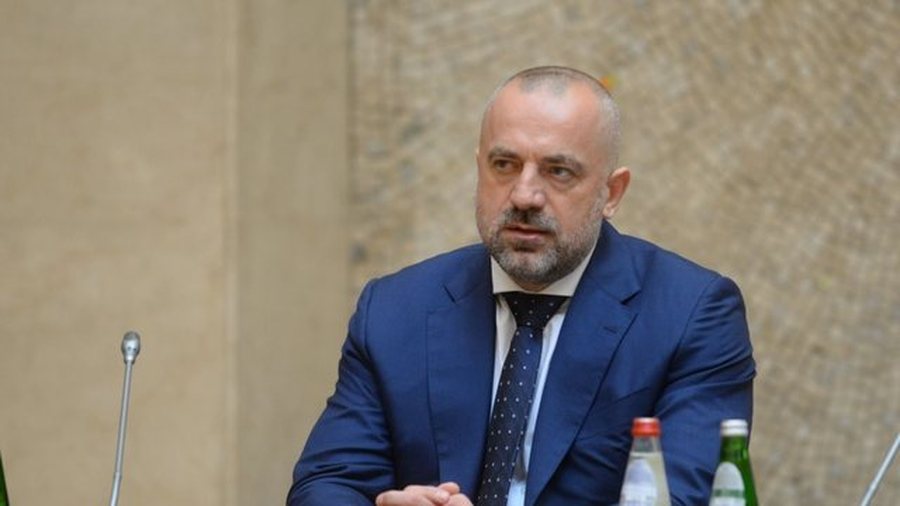
The Prosecutor's Office of Bosnia and Herzegovina has not initiated any investigation into the claims of the High Public Prosecutor's Office in Belgrade that Millan Radoicic, former chairman of the Serbian List in Kosovo, has secured weapons, ammunition and explosives from Tuzla - the arsenal that on September 24 was used in an attack against the Kosovo police in Banjska.
In that attack, the Kosovar policeman, Afrim Bunjaku, was killed, while in the clashes that followed, three attackers of Serbian nationality were also killed.
"In the Prosecutor's Office of Bosnia and Herzegovina, we have not received any report from the police bodies about the possible criminal act and the perpetrators; we did not receive any information from the institutions of the neighboring countries, so there was no order to carry out any investigation", said Boris Grubešić, spokesman of the Prosecutor's Office of Bosnia and Herzegovina, for Radio Free Europe.
The High Public Prosecutor's Office in Belgrade has announced that Radoicic is accused of providing weapons, ammunition and explosive devices with great destructive power from Tuzla, in the northeast of Bosnia and Herzegovina, from January of this year to September 24.
The Belgrade Prosecutor's Office specified that the weapons were delivered to him on the territory of Belgrade, "most often on the road Bubanj Potok - Vërčin", in the southeast of the capital of Serbia.
In the statement, it is said that the weapons were then transported and hidden in abandoned buildings and forests in Kosovo.
The Minister of the Interior of the Federation of Bosnia and Herzegovina, Ramo Isak, rejected the accusations from Serbia.
"During all the checks, operative and intelligent, regarding those claims, it has been established that they are all untrue," Isak told Radio Free Europe.
In addition to the police of this entity, the Intelligence and Security Agency of Bosnia and Herzegovina, the State Agency for Investigation and Protection (SIPA), also participated in the investigations, while the authorities in Bosnia also requested the help of the international police agency, Interpol.
The Belgrade Prosecutor's Office did not respond to Radio Free Europe's questions about whether there is evidence that the weapons were indeed provided by Tuzla and who helped Radoicic in the transport.
REL also did not receive an answer to the question of whether the authorities in Bosnia and Herzegovina have been asked to verify the claims that the weapons were provided by Tuzla.
After the attack in Banjska in the municipality of Zveçan, the Kosovo police have exhibited a large arsenal of confiscated weapons.
Among others, there were rocket launchers, grenade launchers, automatic rifles, snipers, military vehicles, explosives and detonators, anti-tank and anti-personnel mines and the like.
Most of the weapons were produced in Serbian and ex-Yugoslav arms factories.
Institutions in Kosovo and Serbia are conducting separate investigations into this case.
The Kosovo government accuses Serbia of the incident in Banjska, while official Belgrade denies involvement.
Through a public letter on September 29, Radoicic resigned from the position of leader of the Serbian List and admitted that he "personally" organized the armed rebellion in the north of Kosovo.
He has denied the responsibility of the state authorities of Serbia, as well as denied guilt for the crimes with which the Prosecutor's Office of Belgrade has charged him, namely for the illegal provision of weapons from Bosnia and Herzegovina.
On October 4, after the court hearing, Radoicic was released and his travel documents were confiscated./REL


Lini një Përgjigje