


 Shkruar nga Karl Bildt
Now that Donald Trump’s administration has clearly rejected the rules-based international institutions and agreements that America created after World War II, the very idea of an international order is no longer relevant. The world now belongs to illiberal regimes intent on pursuing their own interests.
It was once common to speak of a “liberal international order.” Even if the accompanying institutional arrangements were not always entirely liberal, international, or orderly, the label had its uses. After all, the purpose of an ideal is not to describe reality but to guide behavior, and for many decades, most countries aspired to be part of the liberal order and to contribute to its development (even if some preferred to play it safe or manipulate the system).
Those days are clearly gone. We have entered a new era of global disorder. Of course, the continued rise of China and other emerging economies would always pose a challenge to the arrangements that Western powers forged after World War II. But the decisive factor in the decline of the liberal international order is that its chief architect, the United States, has abandoned it. American leaders no longer echo John F. Kennedy’s commitment to “pay any price, bear any burden, meet any hardship, support any friend, oppose any foe to ensure the survival and triumph of freedom.”
It is true that the US has not always been consistent in upholding international law or in supporting the United Nations and its multilateral cooperation networks. But there is no doubt that without American support, this entire edifice would have collapsed, as it appears to be doing now.
Under President Donald Trump's second administration, the US has become clear in denouncing the old liberal order, with Secretary of State Marco Rubio arguing that it is "not only outdated; it is now a weapon being used against us."
By definition, an international order involves some shared rules. But the Trump administration has been openly hostile to any such constraints. It is clearly pursuing a policy of putting its own self-defined interests above all else, and has shown a willingness, even a thirst, to brutalize friends and allies in the process.
Trump’s punitive tariffs are only part of the story. He has rejected all regulation, including imposing import tariffs for reasons that have nothing to do with trade. While it is still early days, there is no doubt that the global economy will pay a heavy price for Trump’s destructive reign, with the US economy likely to suffer the most in the long run.
The very concept of international law has been virtually erased from the making of US foreign and economic policies. The long-held view of geopolitics as a contest between democratic and authoritarian regimes now seems utterly irrelevant. Trump and his appointees talk about human rights only selectively, as when they issue false claims about a genocide being committed against white farmers in South Africa (while Palestinians in Gaza and the West Bank barely deserve a mention).
There has been an understandable backlash in the US against the “eternal wars” in Afghanistan and Iraq, as well as a belated recognition that foreign countries cannot simply be reorganized by American dictatorship. The “unipolar” moment of unparalleled US power, between the fall of the Berlin Wall and the emergence of China as a technological superpower, undoubtedly gave impetus to American arrogance.
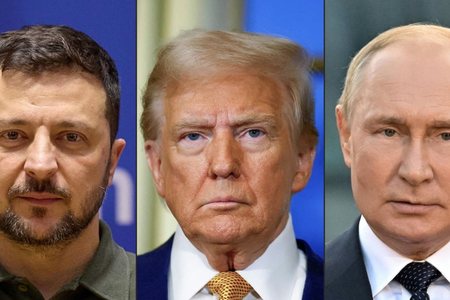
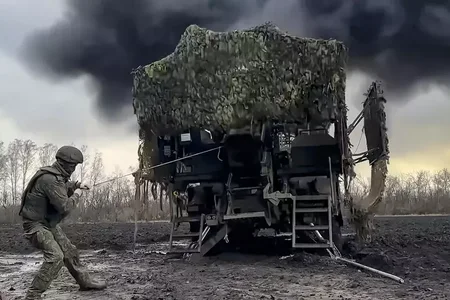
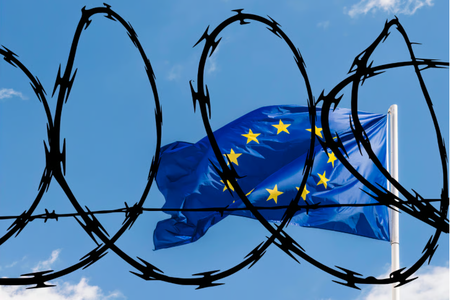
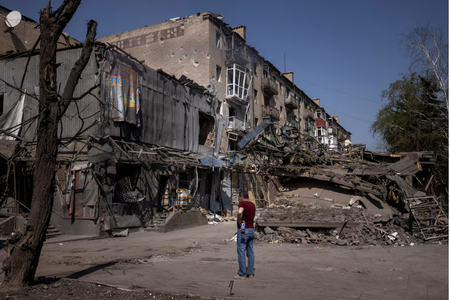
But now the pendulum has swung completely the other way. From Greenland to the Panama Canal, the US has become an engine of international disorder, joining countries like Russia with its illusory war of aggression against Ukraine and its mushrooming shadow war against the European Union. Meanwhile, vast regions, from the Horn of Africa to Sudan and across the Sahel, are plunging into conflict and chaos, and no one seems to care. In fact, the US is busy with its own “little war of choice” against the regime of Nicolás Maduro in Venezuela.
Despite its growing industrial might and naval resources, China is unlikely to fill the void left by the United States. So far, the Chinese have tread carefully, strongly resisting what they see as US bullying but refraining from intervening in various conflicts around the world. China clearly wants a new global order, not a continuation of the US-led liberal order that prevailed for eight decades after World War II.
But there is no new order on the horizon. We have entered a period of global disorder, with illiberal regimes gaining ground and old international structures collapsing. These trends would be dangerous enough in isolation; they are even more dangerous in the face of climate change, pandemic risks, and potentially disruptive technologies like artificial intelligence.
The cooperation needed to manage these threats is not on the horizon. If there is any hope in this era of global chaos, it will lie in plurilateral coalitions focused on specific issues, trade rules, global health, and the energy transition, among others. Countries that recognize the risks we face will have to find new ways to come together themselves. /Adapted from Project Syndicate/
Carl Bildt is a former Prime Minister and Foreign Minister of Sweden.


Lini një Përgjigje