


 Shkruar nga Pamfleti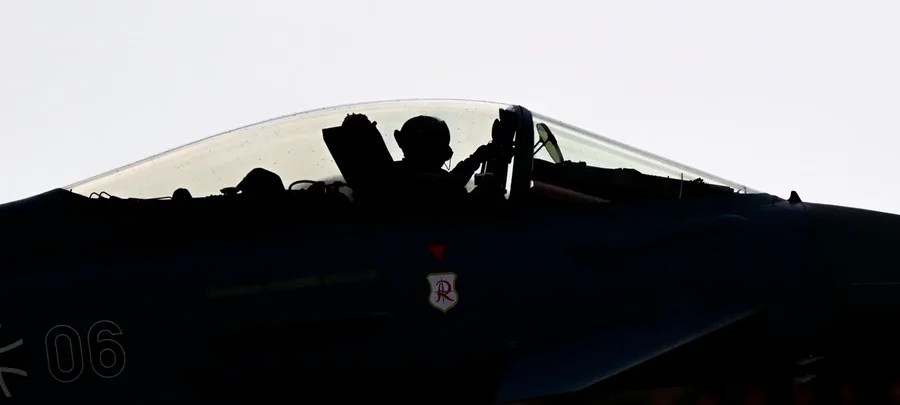
The use of AI in the military brings operational benefits, but raises major ethical and legal dilemmas
In the United States, the use of artificial intelligence (AI) in the military is being steadily pushed forward: Secretary of Defense Pete Hegseth has made it clear that AI systems should be available to the armed forces for “all lawful purposes.”
On this issue, the Pentagon is in debate with the company Anthropic, whose chatbot, Claude, is considered particularly suitable for use in war, but the company refuses to allow it for use in fully autonomous weapons or for mass surveillance.
In Europe, the debate over the use of AI in warfare is characterized by reservations and fundamental questions: What is allowed? What is ethically acceptable? What risks does its use pose? How does AI change the course of battles? And who is responsible when a system goes wrong?
The US government has long pursued a results-oriented approach to military ethics. US presidents often present the elimination of terrorists as a success in public speeches. In military operations, innovation is measured by the number of terrorists killed. “In Europe, it would be embarrassing to applaud this,” says retired Lieutenant General Ansgar Gerhard Rieks, a former deputy inspector general of the German Air Force.
According to him, in Europe the approach is the opposite: first, it is assessed whether a measure is justified or necessary, and only then is it implemented.
Rieks, together with Professor Wolfgang Koch from the Fraunhofer Institute for Communication, Information Processing and Ergonomics (FKIE), works on issues of technological responsibility in the military context, analyzing how AI can be developed and used responsibly.
The biggest benefit of AI in the military, according to Rieks, lies in the creation of situational awareness. Data from sensors, reconnaissance and reporting are merged in real time, threats are identified and information is constantly updated. “We are much more informed and we process much more data,” he emphasizes, adding that this significantly reduces uncertainty.
AI makes information analysis much faster. In the past, air operations planning required cycles of eight hours or more; today, this would seem unacceptable due to the fast pace of operations.
AI is also essential for the operation of modern weapons systems. Flight control and assistance systems make it possible to use highly maneuverable aircraft like the Eurofighter. Without the help of AI, these aircraft would be uncontrollable.
AI encompasses a wide range of technologies, from simple algorithms to complex systems that continuously learn and develop and whose results are not always predictable.
According to Rieks, AI also enables new applications, such as predicting space weather and assisting in planning operations or training forces. In military operations, it increases the accuracy of strikes, avoiding unnecessary use of resources and collateral damage.
However, Koch emphasizes that AI is a "powerful tool" that can be used both responsibly and irresponsibly.
AI and connected systems significantly extend the ability to perceive beyond human limits, collecting and analyzing information from spatially distributed sensors and sharing it in real time. This also increases decision-making ability, but at the same time increases complexity and the risk of human information overload.
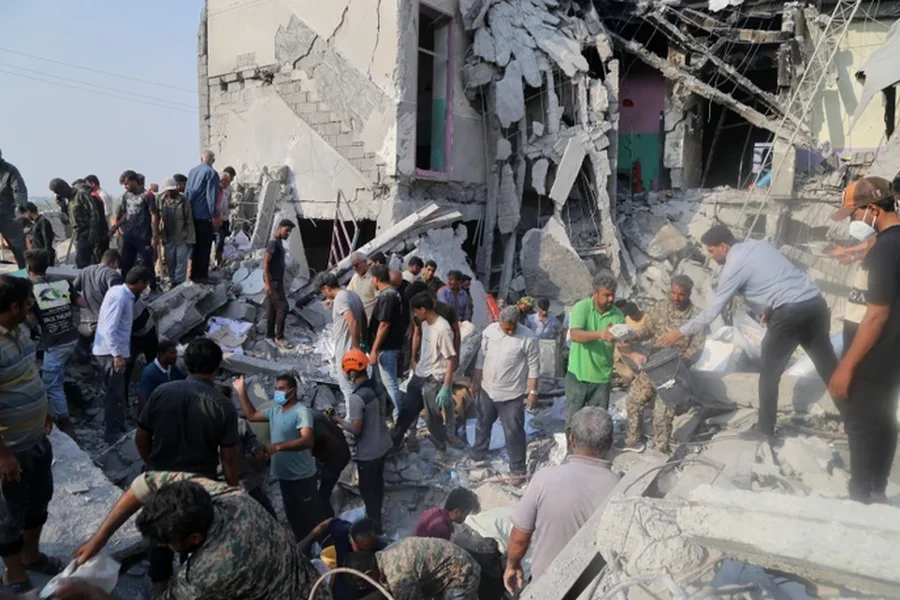
The issue of accountability becomes particularly complicated. An incident in Iran, where a school was mistakenly bombed and over 170 people died, has prompted investigations into the role of inaccurate data in decision-making.
Rieks argues that responsibility should be viewed systemically: it can be distributed among those who supply the data, those who operate the sensors, those who maintain the systems, and operators in the field. The operator remains responsible, but no longer alone.
Koch emphasizes the importance of transparency in data collection and processing, as well as the need for continuous monitoring and retraining of systems when conditions change.
Lawyer Vanessa Vohs warns of the danger of "automation bias," where people tend to trust a machine more than their own judgment. This could lead to violations of international humanitarian law.
It also highlights the "black box" problem, where the system's decision-making is not understandable, making it difficult to verify the results.
International humanitarian law remains applicable regardless of technology. States have an obligation to verify the legality of new weapons, while individual criminal responsibility is linked to intent and knowledge.
In conclusion, experts emphasize that humans remain at the center of decision-making. AI increasingly takes on the role of expert, while humans act as supervisors who must understand and assess the limits of the technology they use. /Adapted from FAZ /





Lini një Përgjigje