


 Shkruar nga Pamfleti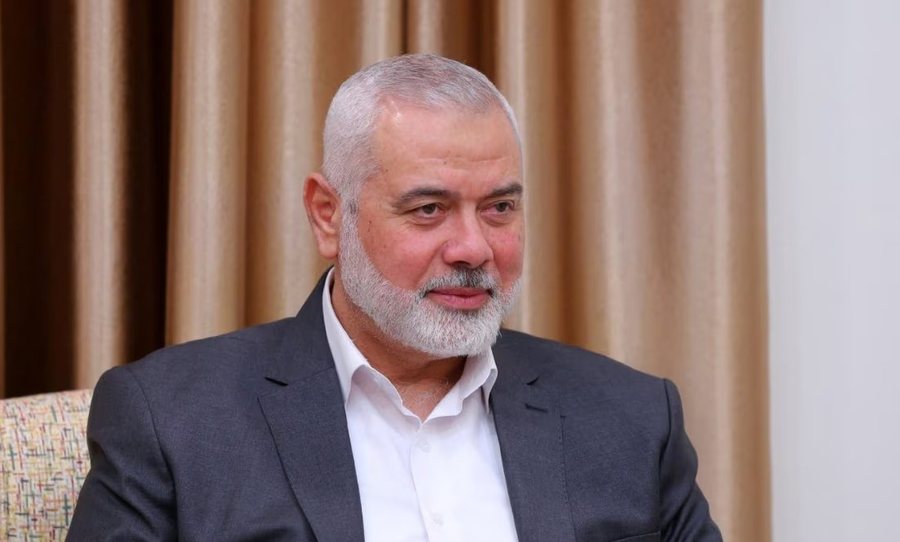
The enemy believes that by targeting the families of the leaders, it will force us to give up on the demands of our people. Anyone who believes that targeting my boys will cause Hamas to change its position is delusional.
The three sons and three grandsons of Hamas leader Ismail Haniyeh have been killed in an Israeli airstrike in Gaza, according to Hamas' Shehab news agency.
The news was also confirmed by the leader of Hamas, Ismail Haniyeh, who accused Israel of killing his three children in the "spirit of revenge".
He told the Al Jazeera satellite channel that his sons were martyred on the way to the liberation of Jerusalem and Al-Aqsa Mosque.
" The criminal enemy is driven by the spirit of revenge and murder and does not appreciate any standards or laws ," said Haniyeh, who lives in exile in Qatar. He said the killings would not pressure Hamas to soften its negotiating position.
" The enemy believes that by targeting the families of the leaders, it will push us to give up the demands of our people. "Anyone who believes that targeting my sons will cause Hamas to change its position is delusional ," he said.
Who is Ismail Haniyeh, who is widely considered to be the overall leader of Hamas?
He is a prominent member of the movement in the late 1980s. Israel imprisoned Haniyeh for three years in 1989 as it suppressed the first Palestinian uprising.
He was then exiled in 1992 to a no man's land between Israel and Lebanon, along with a number of Hamas leaders.
After a year in exile, he returned to Gaza. In 1997 he was appointed head of the office of the spiritual leader of Hamas, strengthening his position.
Haniyeh was appointed Palestinian prime minister in 2006 by President Mahmoud Abbas after Hamas won a majority of seats in national elections, but was dismissed a year later after the group overthrew Mr. Fatah's party. Abbas from the Gaza Strip in a week of deadly violence.
Haniyeh dismissed his dismissal as "unconstitutional", stressing that his government "will not abdicate its national responsibilities to the Palestinian people" and continued to rule in Gaza.
He was elected head of the Hamas political bureau in 2017. In 2018, the US State Department designated Haniyeh as a terrorist. He has been living in Qatar for the past few years.
Rapid growth followed by sudden enrichment
Before Hamas' victory against Fatah in the 2006 Palestinian elections, Haniyeh was not a prominent member of the terrorist group's leadership. After the election victory, his star began to rise. He was named prime minister of the Palestinian Authority in the Gaza Strip, and his wealth grew rapidly thanks to the control he and other ministers in the Hamas government exercised over the Gaza economy and the taxes they collected on goods imported from Egypt, Index reports.
Senior Hamas officials, including Hani, imposed a 20 percent tax on all trade passing through the tunnels, according to a 2014 report in Inet, an Israeli media website.
A senior Palestinian official claims that smuggling through the tunnels has turned 1,700 Hamas officials into millionaires, according to a report in the Saudi weekly Al-Mayal.
Four million dollars for land in the Gaza Strip
In 2010, Haniyeh spent four million dollars on land in the Gaza Strip near the Shati refugee camp, where he grew up, and registered it in his son-in-law's name, according to the Egyptian magazine Rose al-Yusuf. Since then, Haniyeh has bought several apartments, villas and buildings in Gaza, registered in the names of his 13 children.
Its rich wealth is in stark contrast to the poverty of Gaza, where about half the population is unemployed and GDP per capita was about $5,600 per year in 2021, making Gaza one of the poorest countries in the world.
Some experts blame the economic burden on the Israeli-Egyptian blockade, which has been in place since 2007 and has placed restrictions on goods entering or leaving Gaza. Israel says the restrictions are necessary for security reasons to prevent Hamas from arming and building tunnels into Israel. Corruption is also believed to be widespread.
Gaza's economy is heavily dependent on foreign aid, with Qatar at the top of the donor list – the Gulf monarchy is estimated to have contributed more than $1.5 billion over the past decade, although the money has been paid to civil servants and poor families . not directed towards economic development./ Pamphlet



Lini një Përgjigje