


 Shkruar nga Pamfleti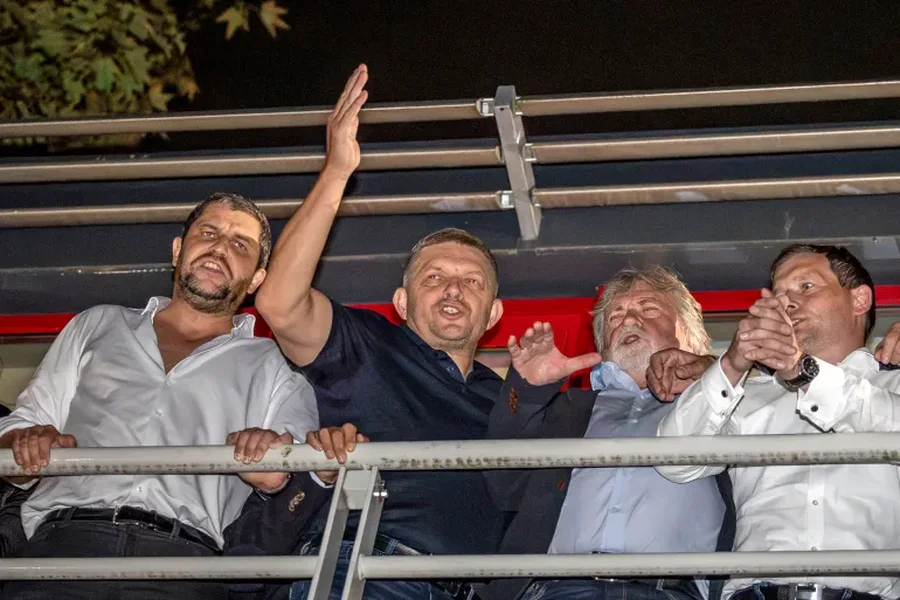
Smer SD, the populist party led by Robert Fico, has now practically, if not yet officially, won the parliamentary elections in Slovakia.
The formation led by the former prime minister, who characterized his electoral campaign with pro-Russian and anti-EU positions, can boast of 23.42% of the votes when 98.13% of the votes were counted.
Progressive Slovakia, a centrist and liberal party with a clear pro-European nature, favored by surveys and exit polls, has stalled at 16.75%.
Against aid to Ukraine
Fico recently said Slovakia would not send "a single bullet" into Ukraine if his party comes to power and called for peace talks between the two sides.
"The war in Ukraine started in 2014, when Ukrainian fascists started killing civilian victims of Russian citizens," he said in a recent video. "It is in our vital interest to have good relations with all countries in the world, including the Russian Federation," he added, labeling his pro-Western opponents "warmongers." He also stated that he will not allow Russian President Vladimir Putin to be arrested under an international arrest warrant if he travels to Slovakia.
Former representative at the European Court of Human Rights
A lawyer by profession, Fico began his political career in the Communist Party shortly before the Velvet Revolution of 1989 broke up the former Czechoslovakia. He was Slovakia's representative at the European Court of Human Rights in Strasbourg from 1994 to 2000. In 1999, after not being considered for a ministerial post, he left the Democratic Party of the Left (SDL), politician heir to the Communist Party and created his own political formation, Smer-Social Democrat (Smer-Sd).
In 2006, Smer-SD achieved an electoral success that catapulted Fico to the post of prime minister two years after Slovakia's entry into the European Union. Without thinking twice, Fico formed a coalition with the far-right Slovak National Party (SNS), with strong anti-refugee rhetoric and strong populist leanings.
Fico e shfrytëzoi me zgjuarsi krizën financiare globale të vitit 2008 për të rritur popullaritetin e tij duke refuzuar të vendosë masa shtrënguese. Hyrja e Sllovakisë në eurozonë në vitin 2009 e mbylli mandatin e tij të parë katërvjeçar si kryeministër, por zgjedhjet e vitit 2010 e kthyen atë në opozitë, pasi nuk arriti të formonte një koalicion pavarësisht fitores së tij.
Humbja me Kiskën
Një sukses i ri zgjedhor erdhi në vitin 2012, pas rënies së një koalicioni të qendrës së djathtë, të rrëzuar nga akuzat për korrupsion. Në vitin 2014, megjithatë, ai u mund në garën presidenciale nga Andrej Kiska, një filantrop dhe rishtar politik.
When the refugee crisis engulfed Europe in 2015, Fico took a tough stance on migrants, refusing to "create a separate Muslim community in Slovakia" and criticizing the EU's quota program for refugee redistribution. On this platform, Smer won the 2016 elections, but Fico's premiership ended two years later after the murder of investigative journalist Jan Kuciak and his girlfriend.
The 2020 election saw him lose but retain his seat in Parliament. Born on 15 September 1964, Fico is married to Svetlana Ficova, with whom he has a son, Michal, although Slovak media claim the couple have separated.


Lini një Përgjigje