


 Shkruar nga Janusz Bugajski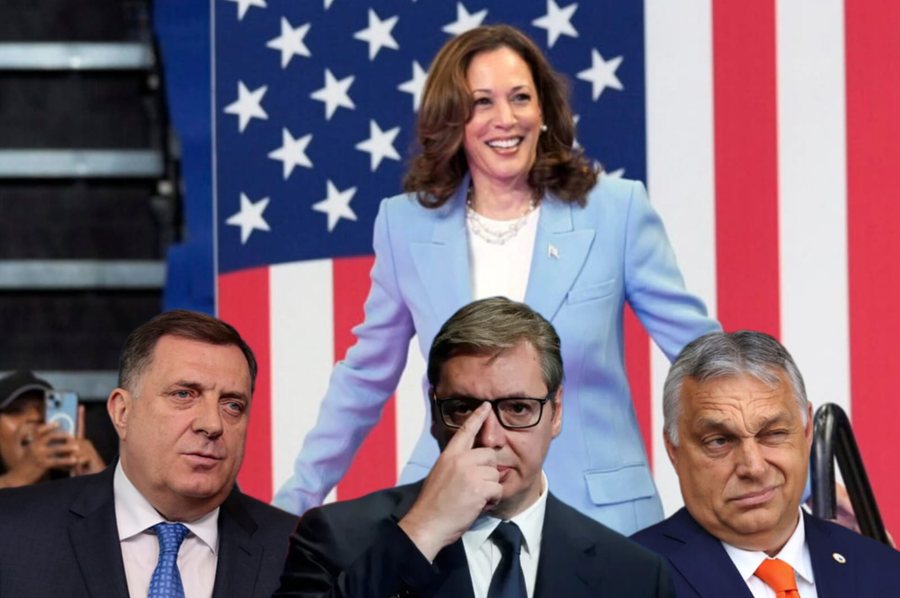
Dealing with Vučić, Dodik and Orban could help define her approach to other autocrats without risking direct confrontation with China and Russia.
Allies and opponents of the US are calculating whether a possible presidency of Kamala Harris will mean political continuity from the Biden administration or some innovation. Neither Harris nor her running mate Tim Walz have extensive foreign affairs experience, but they could bring new energy to policymaking. And they will certainly try to distinguish themselves from Trump's "America First" isolationism and may need some early policy successes.
Observers believe Harris will continue Biden's foreign policy approach, but will also want to make her own mark. In particular, Harris could target dictators more effectively than Biden to demonstrate America's commitment to freedom and democracy and differentiate himself from Trump. As the first female president, she will also want to prove her toughness early in her term. Harris is a fierce critic of Putin and attacked Trump for embracing him as a "great leader". She declared Russia's attacks on Ukrainian civilians "crimes against humanity" and vowed to hold Moscow accountable.
Harris has expressed her full commitment to NATO and will emphasize that America is not abandoning its allies. She has already replaced Biden at important international gatherings, including the Munich Security Conference, where she voiced strong support for Ukrainian President Zelensky. Military supplies to Ukraine could actually be intensified with fewer restrictions on their use in destroying Russia's military logistics and fuel supplies inside Russia. Much will also depend on the congressional elections and whether international Republicans are elected to key positions in the Senate and House of Representatives.
In East Asia and the Pacific, Harris will seek to deepen US alliances and defend Taiwan against an expansionist China. It has already co-sponsored legislation to impose sanctions on Beijing for human rights abuses in Hong Kong and Xinjiang. Likewise in the Middle East it will seek to protect Israel and build alliances against Iran and its terrorist proxies. At the same time, it is likely to be more open to the plight of Palestinian civilians and may even pursue a two-state solution.
Although the Western Balkans will not be an international priority, the region may offer Harris an opportunity for more visible success than the Middle East or East Asia. Dealing with Vučić, Dodik and Orban could help shape her approach to other autocrats without risking direct confrontation with China and Russia. All the little dictators will try to test her resolve and answers. However, further provocative moves by Belgrade towards Kosovo, Montenegro or Bosnia-Herzegovina could convince the new US administration that Serbia's regional policies mirror Russia's policies towards Ukraine and that Belgrade's appeasement could lead to another war. regional. Conversely, more US support for a Ukrainian victory in ousting Russian occupation forces will also send a strong signal to Belgrade to abandon its expansionist policies.
Appeasement towards Vučić will have to be stopped and a stronger approach towards the "normalization" of relations between Serbia and Kosovo would bring dividends. Belgrade can no longer be rewarded diplomatically or economically if it does not make progress in recognizing Kosovo. State Department Harris could also demonstrate more open support for the Pristina government in its moves to integrate the northern regions into the state structure while fighting criminality and corruption promoted by Serbian officials.
Additionally, a more concerted campaign against Russian influence operations and political corruption across the region, especially in the "Serbian world," will be helpful. If any politician or businessman has political or financial ties to Kremlin officials and oligarchs, then a full range of sanctions should be imposed. As sanctions against Russia's leaders and tycoons intensify for their complicity in war crimes in Ukraine, this should also be reflected in sanctions against representatives in the Serbian and other governments.
The direction of Harris' foreign policy will also depend on her choice of foreign policy officials, most of whom are traditional internationalists. Her top national security adviser, Philip Gordon, served in the Obama and Clinton administrations. Although he is an expert on Western Europe, he also has experience dealing with Central Europe and the Balkans and may be open to new ideas and initiatives to resolve regional disputes and move beyond the past four years of stagnation.
*Janusz Bugajski is a senior fellow at the Jamestown Foundation in Washington DC.



Lini një Përgjigje