


 Shkruar nga Hal Brands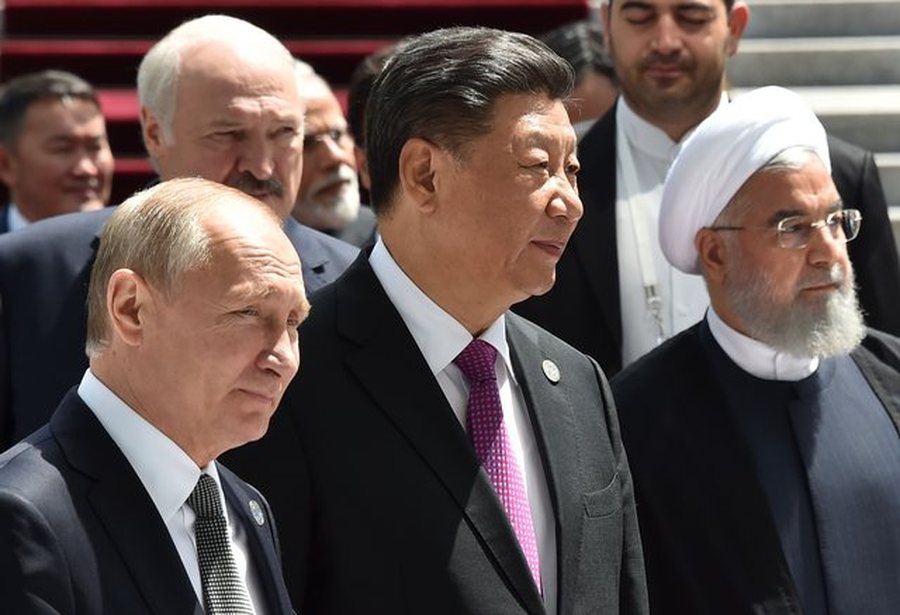
The German, Japanese and Italian empires were destroyed by the global conflicts these countries started. But the winners didn't fare much better either: The two world wars and the independence movements that followed broke up the empires of Britain, France, the Netherlands and other European powers.
The ghosts of empire are haunting Eurasia. President Xi Jinping's China is aiming to regain the power and privileges of the great dynasties that once dominated Asia. President Vladimir Putin is channeling the memory and methods of famous conquerors from Russia's imperial past.
Meanwhile, Iran is using friendly militias, missiles and other means to build a sphere of influence that includes parts of the old Persian Empire. Not long ago, most of the world was ruled by empires. If today's revisionist states are allowed to succeed, then the future may resemble the past.
Empires take many forms. But generally the term refers to a large collection of peoples and territories in which power flows from a dominant center. For centuries, global order and chaos have been shaped by the clash between rival empires. The great geopolitical story of the 20th century was the decline or destruction of the great formal empires of Europe and Asia, and their replacement by an even larger informal empire led by the US. However, dreams of empire die one day.
So the story of 21st century geopolitics - at least to date - is the quest for the restoration of empires by a host of ambitious autocracies that are doing their best to disrupt the current liberal international order led by Washington.
But this story also shows how powerful and damaging historical legacies can be. The empires of yore, which most successfully adapted to the modern world, were the ones that ultimately overcame the drama of loss of greatness. Germany, Japan, Great Britain and others conceded, albeit reluctantly, that they were more likely to thrive as members of America's empire than by trying to revive their own.
Meanwhile, those who are causing the most trouble today are those determined to revive the glories of the past. Empires have existed throughout history, which is not surprising given the tendency of the strong to expand at the expense of the weak. Rome once ruled a large part of the known world. Today's China and Russia are the heirs of the imperial states that controlled most of Eurasia. The US itself began history as part of a British Empire that at one point encompassed nearly the entire globe.
The age of empire reached its peak in the early 20th century. As historian Richard Overy points out, before World War I, Britain controlled an empire of 31 million km2. Meanwhile, the French Empire, with only 12.5 million inhabitants, was 20 times larger than France itself.
Under these conditions, there were only a handful of independent countries in Africa and Asia, one of which, Japan, was building for itself an empire that would extend deep into Asia and across much of the Pacific Ocean. The worst wars of the 20th century were imperial wars.
Thus World War I had its roots in the clash between the Austro-Hungarian and Russian empires for influence in the Balkans, as well as the tensions created by Germany's desire to dominate Europe and gain further influence.
World War II broke out when Germany, Japan, and Italy sought to conquer vast territories that would make them more prosperous and secure. Empires can be sources of power: Nearly 1.7 million Indians served the British cause during the First World War. Food and raw materials from the British and French empires supported the Allied war effort.
The lesson that Nazi Germany, Fascist Italy, and Imperial Japan learned from that conflict was that violent expansion was the key to gaining access to the lands, markets, and resources that would allow them to rule a rival world.
However, ambitions for greatness often ended in destruction, infuriating opposing coalitions. The German, Japanese and Italian empires were destroyed by the global conflicts these countries started. But the winners didn't fare much better either: The two world wars and the independence movements that followed broke up the empires of Britain, France, the Netherlands and other European powers.
Russia's tsarist empire, collapsed under the pressure of World War I, was resurrected as a socialist empire in the form of the Soviet Union. Then it fell apart again when it was defeated in the Cold War. With him it seemed as if the age of empires had ended. Or rather the age of official empires.
Sepse Amerika nuk ka qenë asnjëherë një perandori sipas standardeve evropiane. Ajo nuk ka pasur asnjëherë një grup të madh kolonish jashtë shtetit. Pasi i dha pavarësinë Filipineve në vitin 1946, asaj i kishin mbetur pak mbetje të perandorisë formale. Por në atë moment, Uashingtoni po ndiqte një projekt tjetër perandorak.
Pas Luftës së Dytë Botërore, ai mori përgjegjësinë kryesore për menaxhimin e ekonomisë globale, ashtu siç kishte bërë Britania, me marinën e saj dhe epërsinë e saj në tregti dhe financat ndërkombëtare, një shekull më parë. SHBA-ja lidhi aleanca ushtarake me vende anembanë Euroazisë, duke i kthyer disa prej tyre, si Gjermania Perëndimore dhe Japonia, de fakto në protektorate strategjike.
Po ashtu, ndërtoi dhjetëra baza ushtarake jashtë shtetit, që do ta lejonin atë të projektonte fuqinë e saj në skajet e largëta të botës. Uashingtoni ndërhyri në shkallë të ndryshme në politikën e brendshme të vendeve nga Evropa Perëndimore deri në Azinë Juglindore.
Ai e përdori fuqinë e vet të pakrahasueshme për të dekurajuar agresionin ushtarak dhe përhapjen bërthamore, për të kundërshtuar komunizmin e për të mbështetur (ndonëse në mënyrë selektive) demokracinë dhe për të vendosur rregullat globale të rrugës. Dhe falë Hollywood-it dhe kompanive të mëdha si Coca-Cola, arriti edhe dominimin kulturor.
Në aspektin e fuqisë dhe ambicies globale, SHBA tejkaloi çdo perandori të së kaluarës. Ky projekt ishte i motivuar kryesisht nga interesi vetjak, pra nga nevoja për të frenuar Bashkimin Sovjetik dhe për ta formësuar botën në mënyra që do ta bënin vetë SHBA-në të begatë dhe të sigurt.
Si të gjitha projektet perandorake, ka pasur edhe shumë akte moralisht të dyshimta, si mbështetja për kryengritjet apo për disa sundimtarë represivë në atë zonë që ne tani e quajmë Jugu Global. Ndikimi i SHBA-së mund të duket i mirë për vendet demokratike e të përparuara.
Por perandoria amerikane, duket shumë më kërcënuese për disa nga autokracitë e Euroazisë, të cilat i shohin vlerat liberale si kërcënime për regjimet e tyre, dhe e shohin fuqinë e SHBA-së si një pengesë për rifitimin e privilegjeve perandorake që gëzonin dikur. Presidenti rus e cilëson sot veten me krenari si një pushtues të madh si Carët dikur.
Këshilltarët e tij më të afërt janë Ivani i Tmerrshëm, Pjetri i Madh dhe Katerina e Madhe. Ai e sheh mohimin e sovranitetit të fqinjëve të tij, si një parakusht për të rivendosur kontrollin e Moskës mbi ta. Ashtu si Rusia, edhe Kina e sheh veten si viktimë e imperializmit evropian, japonez dhe amerikan, gjatë “shekullit të poshtërimit” që shtrihet nga fillimi i Luftërave të Opiumit në vitet 1830 deri në fund të luftës civile kineze në vitin 1949.
But now China is strong, proud, and wants to recreate a quasi-imperial domain. The third revisionist Eurasian power, Iran, has its own imperial tradition. He is a descendant of the Persian Empire and the Pahlavi dynasty, which ruled until 1979. And although Iran's Ayatollahs gained power by overthrowing the Pahlavi, they are trying to revive some of its old patterns of influence.
These 21st-century efforts to revive empires threaten America's liberal order, threatening a return to a world in which empires expand and conquer in more coercive and violent forms. / Taken with abbreviations from "Bloomberg" , adapted by 'Pamphlet'
Note: Hal Brands, professor at the School of Advanced International Studies, Johns Hopkins University, USA.



Lini një Përgjigje