


 Shkruar nga Ishaan Tharoor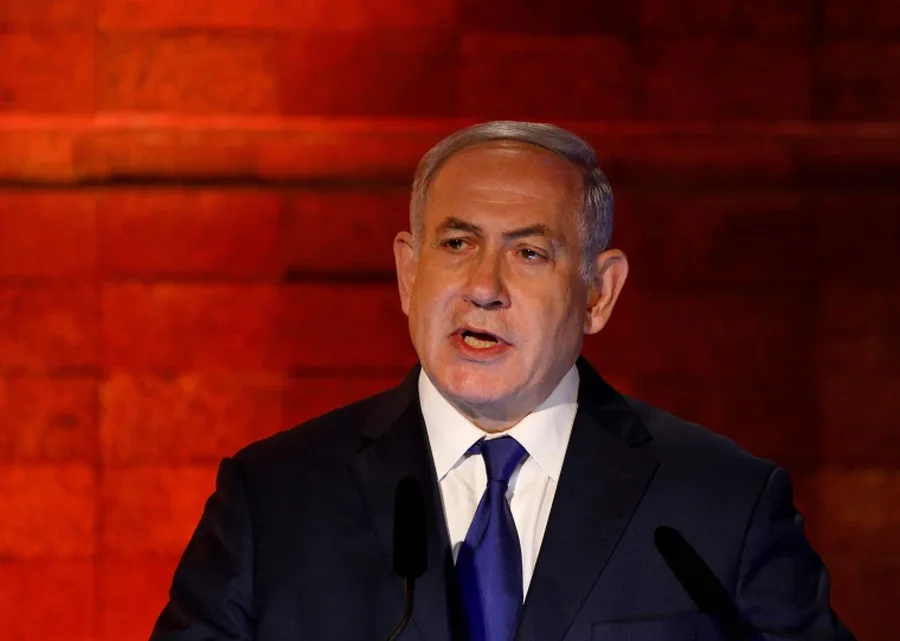
After the attack, comes the revenge.
Israeli officials said yesterday that they would respond to a surprise attack two days ago by Iran, which launched hundreds of ballistic missiles and drones from Iranian territory toward targets in the Jewish state.
The Iranian barrage was successfully countered by Israeli air defenses, supported by the United States and a number of regional partners and allies. Almost all Iranian launches were intercepted before reaching Israel. There were no casualties.
For Tehran, the attack was a response to an Israeli operation that killed seven senior Iranian officers of the Islamic Revolutionary Guard Corps at an Iranian compound in Damascus, Syria. For Israel, the Iranian response calls for its own revenge. General Herzi Halevi, chief of staff of the Israel Defense Forces, said on Monday that " the launching of so many rockets and drones into Israeli territory will be met with retaliation ".
How it will play out is still unclear, although a new Israeli attack seems on the cards. Iran and Israel have been locked for years in a silent war, punctuated by airstrikes, assassinations and acts of sabotage. But the current round of escalation has sharpened the prospect of open war between the two Middle Eastern powers, a volatile flare-up that is likely to see violence spill over across the region.
Iran has signaled that it does not want to engage in an all-out war, either on its own accord or through key proxies such as the Lebanese Shiite faction Hezbollah. The regime in Tehran appeared to telegraph its revenge attack, which was countered by the combined efforts of Israel, the United States, Britain and Arab states such as Jordan, and remained a symbolic victory. Right-wing members of Israeli Prime Minister Benjamin Netanyahu's government called for a strong response, while other Israeli allies, including President Biden, called for restraint.
The back-and-forth drama has offered Netanyahu a diversion from the more immediate crisis at hand. The right-wing prime minister and his war cabinet have faced growing international criticism over their handling of the war in Gaza, which has led to the deaths of more than 33,000 Palestinians and a humanitarian disaster in the besieged territory. But the international response to the Iranian attack reminded Israelis of both the long-standing support they have in the West and among their Arab neighbors in the region – such as the monarchies of the United Arab Emirates and Saudi Arabia.
For Palestinians, the escalation is a reminder of a status quo that existed before the October 7 terrorist attack by the militant group Hamas, which sparked the current conflict.
Over the weekend there were reports of new Israeli attacks on Palestinian civilians in both Gaza and the West Bank.
" The world largely supports Israel, turning a blind eye to the plight of Gaza. We are of no importance and the world will not allow harm to its favorite child, Israel ," said 59-year-old Moreedd al-Assar. a resident of Nuseirat refugee camp in central Gaza.
Iran, in its statements about its attack on Israel, made no call for a cease-fire in Gaza and linked its decision to the Israeli attack on their IRGC officers – rather than the suffering of the Palestinians, the causes of whom Tehran claims to protect.
" After the Iranian attack, it seems as if the war in Gaza is back to square one, Israel against Hamas. As such, more than six months after the battle began, there are still 133 Israeli hostages and non-Israelis begging for release, while Gaza remains devastated and bloodied, with no horizon or vision for tomorrow ," writes Jack. Khoury in the Israeli newspaper Haaretz.
The focus on Monday was on the need for Israel to show restraint. Iran appeared to have carefully calibrated its attack on Israel in such a way that all Western governments rushed to advise Israel against significant punishment.
" The attack was a failure ," British Foreign Secretary David Cameron said repeatedly in a televised BBC interview on Monday morning, describing it as a "double defeat" for Tehran both militarily and internationally. geopolitical.
"It's about persuasion against an escalating response. Isolate Iran, convince countries in the region that Iran is a threat, build sanctions, strengthen pressure against nuclear activity," French President Emmanuel Macron urged.
The opening shift away from Gaza may or may not take. There are two scenarios: "One is that US decision-makers realize that Netanyahu and his war cabinet are dragging NATO into a regional war with Iran, which is not in the interests of the US or the EU," Fadi said. Quran, a member of the Palestinian policy network Al-Shabaka, told Politico.
"The second scenario is that Netanyahu's gamble on a regional war succeeds and Western leaders are backed into a corner to allow Israel to continue using starvation as a tactic in Gaza, attack the southern Gaza city of Rafah and draw the region closer." abyss.” he added./ Adapted Pamphlet, taken from "Washington Post" .




Lini një Përgjigje