


 Shkruar nga Pamfleti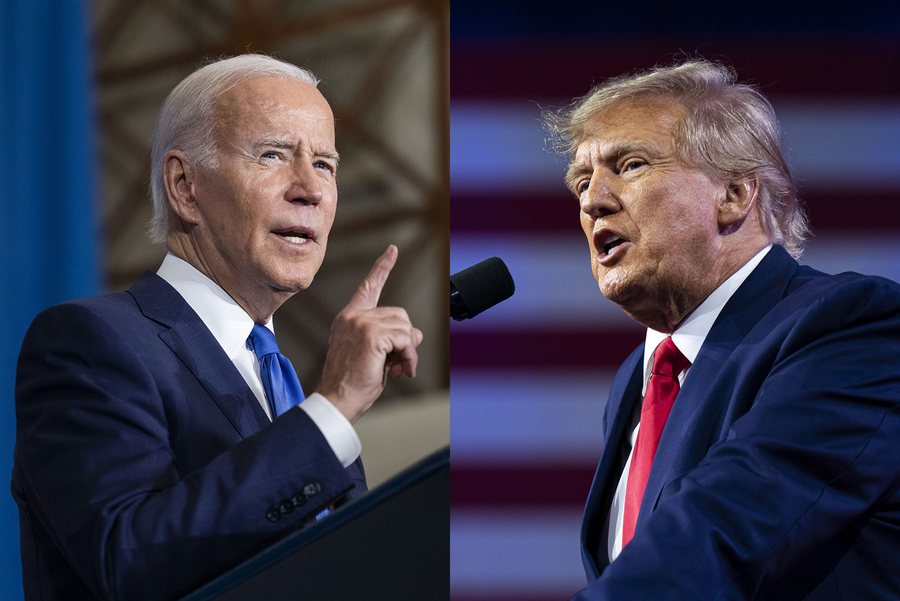
One of the founders of the United States and the first minister of finance from 1789, Alexander Hamilton, imposed a series of tariffs on all products imported from around the world by the then state of America.
And for Donald Trump's supporters, buoyed by his primary victories, Hamilton's charges were not all that different from those of the former and possibly future US president in 2025.
"Tariffs are a crucial resource for a nation, acting as a dam against imports and encouraging domestic production," the Wall Street Journal recently argued, citing last year's estimated trade deficit as proof of the tariffs' necessity.
In Europe, however, concern about the effects on the European Union and its $16 trillion economy of a second Trump term is widespread, and the European Union has begun to prepare for a repeat of the trade war with Washington.
The reasons are, on the one hand, the heavy dependence of European economies on trade and, on the other, the particular importance of the European Union's trade and economic ties with superpowers such as the United States, which remain the number one source of foreign direct investment for the Union. European, with bilateral trade reaching $1.3 trillion in 2022.
During the term, according to some American media of the "first term" of Donald Trump, trade relations between the European Union and the United States entered a crisis course due to the tariffs he imposed on European steel and aluminum products.
It then provoked EU retaliation, with tariffs on $3 billion worth of American goods, including popular Harley-Davidson motorcycles and whiskey.
"Let's prepare for the possibility of imposing tariffs on us, for potentially difficult decisions that will be unpredictable. Let's be strong", with these words, the president of the European Central Bank, Christine Lagarde, expressed her concern a few days ago about what a second term of Trump in the White House means.
Today and after three years on the "bench" of politics, Donald Trump looks even more aggressive and his announcements regarding his trade policy are particularly worrying.
He declared that he will impose a single tax of 10% on all imports without exception, including European products, while he plans to retaliate against the digital taxes imposed by the EU on American technology giants.
The United States remains the number one source of foreign direct investment for the European Union.
As his economic adviser, Stephen Moore, recently revealed, Trump is unhappy that Europe has not aligned itself with Washington directly against China and is "using tariffs as a negotiating tactic to force other countries to serve US interests." .
Having bitter experience from Donald Trump's policies, Lagarde spoke a few days ago both to American media such as CNN and to French media such as France 2 television.
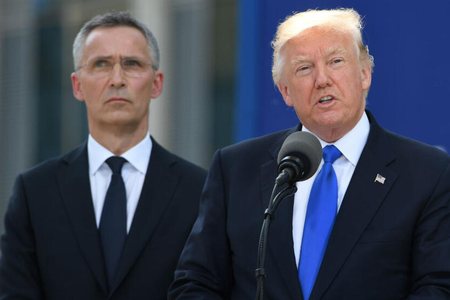
"It's enough to look at the tariffs he set, it's enough to look at the commitments in the North Atlantic Alliance, it's enough to look at the battle against climate change," Lagarde stressed and underlined that during Trump's term in these three areas, American interests did not go parallel to the interests of Europe".
At the same time, the president of the ECB expressed her opinion on how the protection of the Old Continent should be, stressing that the best way to protect Europe against an even more aggressive Trump is nothing more than strengthening the market. common European.
"The benefits of a truly single market are great", he underlined and added that "we must move in this direction as this is how Europe moves and especially when it is threatened".
He also underlined that the EU should promote the integration of its financial markets in order to make it easier for small companies to raise the necessary capital in order to "encourage innovation", while proposing the creation of a common system of uniform recognition of vocational training across the EU.
At the same time, other European officials oppose a diplomatic approach aimed at avoiding a frontal conflict with the US.
Among them is German Foreign Minister Analena Burbock, who has already tried to reach out to Republicans and in September traveled to Texas and Washington to meet with Trump supporters. Speaking to Bloomberg months ago, she stated that the EU should be ready to work with Trump.
After all, it's a fact that when it comes to trade policy, the difference between Donald Trump and Joe Biden is more in style.
The current US president is softer in his expressions and speaks in conciliatory tones, but has kept most of Trump's tariffs and his general "America first" approach in place.
Perhaps far more damaging and dangerous for Europe is the so-called Biden package, the $390 billion package of subsidies and tax breaks that Washington is offering to all companies that have plans for the green transition, but on the condition that they invest within the US. With this, Washington is luring European businesses into the territory of the superpowers and the EU, struggling to compete on a level playing field.
Donald Trump is repeating his familiar rhetoric, the one that got him elected in 2016 and has largely proven to be a sham.
Repeating Trump's statements, Stephen Cheung, the head of his election campaign, has emphasized that the former US president intends to use all available weapons to protect American workers, whether they are employed in the automotive industry or in steel mills, or in technology or if they are farmers.
When Donald Trump was at the helm of the superpower, the EU got lucky and avoided the worst-case scenario for trade relations between the two sides of the Atlantic: a full-blown trade war involving the auto industry.




Lini një Përgjigje