


 Shkruar nga Hans Kundnani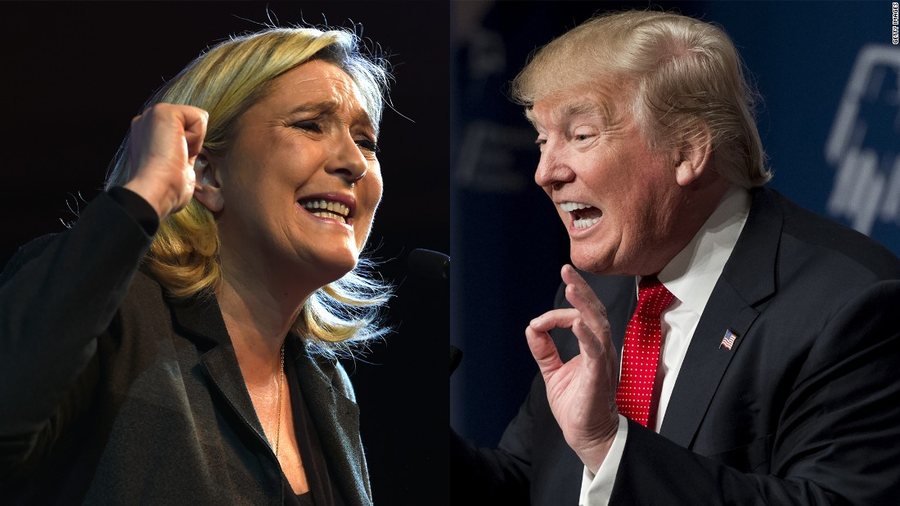
The successes of the extreme right, especially in the last 2 years, have made many centrists of the European Union aware of the danger of the usurpation of the EU by the extreme right, something that until recently was considered a conceptual and practical impossibility.
Far-right parties fared better than ever in June's European parliamentary elections. Now the two far-right alliances are the third and fourth largest groups in the European Parliament, ahead of the centrist grouping, New Europe.
Marine Le Pen's National Rally emerged the largest party in France, prompting President Emmanuel Macron to dissolve parliament and call snap elections. TK did not win an absolute majority, but became the largest party in the French parliament for the first time.
The achievements of the far right in France - along with successes in Germany, Italy, the Netherlands and elsewhere in Europe - have caused quite a bit of concern. The successes of the extreme right, especially in the last 2 years, have made many centrists of the European Union aware of the danger of the usurpation of the EU by the extreme right, something that until recently was considered a conceptual and practical impossibility.
From the perspective of these alarmed centrists, far-right nationalism poses a fundamental threat to the European integration project. According to them, the extreme right is a kind of alien force, fundamentally opposed to the EU, anti-European. But such thinking rests on a fundamental misunderstanding of both the extreme right and the EU itself. In fact, the far right and the EU are much more compatible than many would like to believe. The vision of the extreme right, which sees Europe as a bloc of Christian whites, is not fundamentally opposed to the liberal project of European integration. On the contrary, it has always been a part of him.
In fact, as liberal politicians like Macron increasingly talk about Europe in terms of civilization, the visions of the "pro-European" center-right are increasingly aligned with those of the Eurosceptic far-right. In the event that the extreme right would become even more powerful within the EU than it currently is, the bloc would not automatically disintegrate as many imagine.
On the contrary, it is likely to continue on the path it is already on, what I have called the "civilizational turn" of the European project. Shortly after the European parliamentary elections, Hungarian Prime Minister Viktor Orban created a new group called Patriots of Europe, a moniker that describes the apparent tension between nationalism and civilization in the far-right imagination.
Members of the far right call themselves nationalists and Europeans. They are not automatically against the idea of European unity. But they tend to be distrustful of further integration, preferring what they call a Europe of sovereign states.
However, this is not an extreme position or only theirs. The famous French president Charles de Gaulle thought so. In addition to simplifying the understanding of the extreme right, focusing exclusively on its nationalism, many analysts and officials have idealized the EU as a cosmopolitan project, just as some Americans idealize the United States, and based on this approach they describe it as "un-American" former president Donald Trump.
Many people in Europe say that when they choose to think of themselves as Europeans rather than French, German and so on, they are actually thinking of themselves as citizens of the world. British Prime Minister Theresa May described the EU as a cosmopolitan project, when, while defending Brexit, she declared in 2016: "If you believe you are a citizen of the world, then you are a citizen of nowhere!".
Supporters of European integration - that is, the removal of barriers to the movement of capital, goods and people within Europe - often talk about it as if it were global integration. When the EU was awarded the Nobel Peace Prize in 2012, the then head of the European Commission, José Manuel Barroso, said that the European project had shown "that it is possible for peoples and nations to unite across borders, and to overcome differences between ' them' and 'us'".
But in reality, the EU has always been a project analogous to nationalism and not its opposite. You could call it regionalism, a quasi-nationalism on a larger, continental scale. Its supporters like to believe that it can only be based on civic values.
But European regionalism has always included ethnic and cultural elements associated with Christianity and whites. These ethnic and cultural elements of European identity did not disappear in 1945 after the end of World War II. On the contrary, they existed and influenced the European project itself, which, in the context of the Cold War, was imagined both in terms of civilization and ideology.
On the other hand, there is a particular American version that tends to idealize the EU as a model of multilateralism, as the antithesis of everything that Trump stands for. However, the EU is already far more Trumpian than many Americans realise, particularly in its approach to immigration.
It, like the USA, has built a wall. The southern border of the EU is far more deadly than the southern border of the United States. Since 2014, over 30,000 people have died trying to cross the Mediterranean, over 5 times the number of people who have died crossing the Sonoran Desert or the Rio Grande River in the same period.
Sipas organizatës Human Rights Watch, politika e BE-së ndaj emigrantëve është thjesht t’ii “lënë të vdesin”. Këto dy keqkuptime - pra që e djathta ekstreme është nacionaliste dhe që BE-ja është në thelb kozmopolite - kanë krijuar një frikë të madhe si mund të duket një BE e drejtuar nga ekstremi i djathtë.
Në fakt, për ta konceptuar si mund të duket një BE e ardhshme e ekstremit të djathtë, mjafton që të imagjinoni bllokun duke ecur më tej në drejtimin që po ndjek prej një dekade, sidomos mbi çështjet rreth identitetit, migrimit dhe Islamit. Që nga kriza e refugjatëve në vitin 2015, qendra e djathtë pro-evropiane ka imituar gjithnjë e më shumë të djathtën ekstreme për këto çështje.
Në këtë drejtim, Partia Popullore Evropiane e qendrës së djathtë (PPE), ka luajtur një rol në integrimin dhe normalizimin e ideve të ekstremit të djathtë, një qasje e ngjashme me rolin e luajtur nga Partia Republikane në Shtetet e Bashkuara. Figura kryesore është Ursula von der Leyen, kristiandemokratja gjermane e cila u rizgjodh në korrik për një mandat të dytë si presidente e Komisionit Evropian.
Kur u zgjodh për herë të parë si presidente e Komisionit Evropian në 2019, ajo krijoi një pozicion të ri, Komisionerin Evropian për Promovimin e Mënyrës Evropiane të Jetës, me synim koordinimin e një qasjeje të re të BE-së ndaj migracionit. Si në emër ashtu edhe në funksionimin e saj, kjo zyrë e re e bëri të qartë se migrimi nuk ishte thjesht një problem politikash, por një kërcënim kulturor për Evropën.
Ndërsa e djathta ekstreme ka vazhduar të rritet, PPE thotë se duhet të kundërpërgjigjet duke marrë masa edhe më të ashpra për të ndalur migracionin sesa ka marrë tashmë që nga viti 2015. Pas zgjedhjeve në Holandë të vitit të kaluar, të fituara nga Partia e Lirisë e Geert Wilders, liderët e PPE si Manfred Weber, u shprehën se mënyra për të mposhtur “populizmin” ishte ndalimi i hyrjes në Evropë të azilkërkuesve.
Dhe sipas modelit të krijuar nga marrëveshja e nënshkruar në 2016 midis BE-së dhe Turqisë, Brukseli ka paguar shtetet autoritare në Afrikën e Veriut për t’i ndaluar me dhunë emigrantët që kalojnë Mesdheun, pavarësisht pretendimeve të unionit për mbrojtjen e demokracisë dhe të drejtave të njeriut.
Duke e nënvlerësuar prej kohësh të djathtën ekstreme, elitat e politikës së jashtme evropiane po vetëdijësohen dalëngadalë mbi mënyrën se si ajo po ndikon në BE. Por për shkak të mënyrës se si ata e idealizojnë BE-në dhe e imagjinojnë të djathtën ekstreme si një entitet të huaj, e keqkuptojnë marrëdhënien midis të dyve.
Nuk arrijnë të kuptojnë se sa e djathta ekstreme është e natyrshme në BE, dhe jo një kërcënim i jashtëm për të. Kjo nga ana tjetër e bën të duket sikur ekziston një zgjidhje e drejtpërdrejtë për mundësinë e një mandati të dytë të Trump:një “Evropë autonome” e çliruar nga varësia e saj nga Shtetet e Bashkuara.
But relying on other EU member states that have far-right governments or may have them in the near future risks triggering another crisis. /Adapted "Pamphlet", from "Foreign Affairs"
Note: Hans Kundnani, researcher at the Remark Institute at New York University.



Lini një Përgjigje