


 Shkruar nga Pamfleti
Most of the participants in the Conclave don't know each other at all...
Sometimes the conclaves function like in Edgar Allan Poe's classic detective story, "The Purloined Letter," with agents searching everywhere, dismantling floors and walls until Inspector Dupin has a genius idea and discovers that the letter was in the most prominent place in the house: right in the living room closet.
Among the few cases where the Pope's successor was known is the case of Joseph Ratzinger in 2005, considered a "great elector" until the moment he emerged smiling from the Loggia delle Benedizioni. Other times, the Pope-elect is a real surprise: like Jorge Mario Bergoglio, who in 2013 was 76 years old and in the classic lists of "papabili" tended to be excluded because, after the resignation of Benedict XVI, the general belief was that a relatively young Pope would be elected.
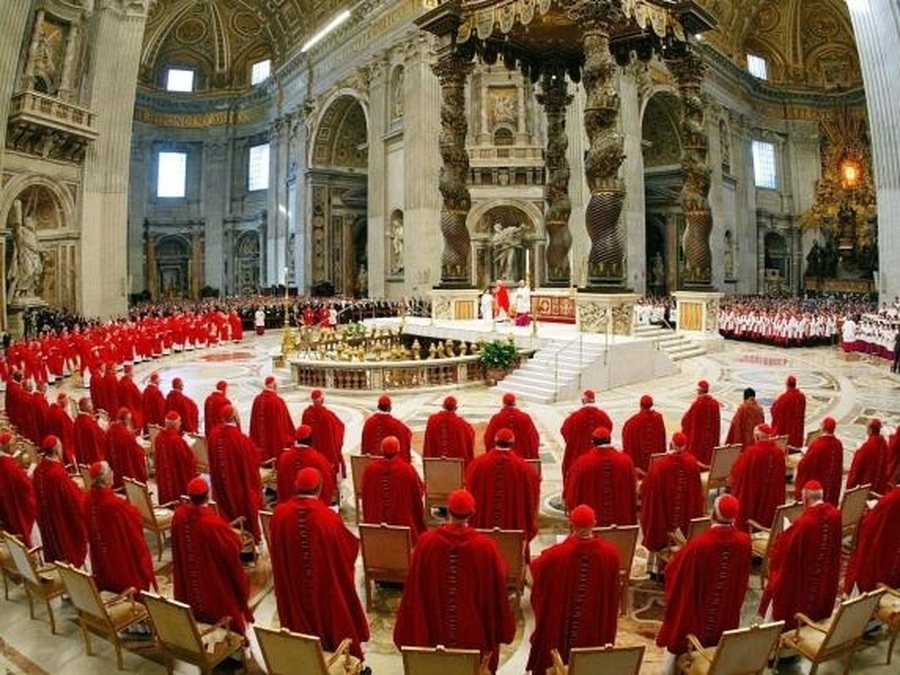
In any case, conclaves are by definition unpredictable, also because in the end a person is elected, not a mental scheme or an idea, and perhaps the voters themselves change their orientation during the meetings that precede the vote. The general congregations of cardinals, which began yesterday, mark the days of the vacant See during which the electors study each other and even cardinals over eighty, who will not enter the Sistine Chapel, can play their part.
Everything is as usual, except that this year the situation has become even more complicated. It was Francis who overturned the classic points of reference such as the dioceses that were once called "cardinalities". Thus, for example, the bishop of Como Oscar Cantoni will enter the conclave, but not Mario Delpini, archbishop of Milan, the largest diocese in Europe, which in the twentieth century gave the Church two Popes (Pius XI and Paul VI). Likewise, Francesco Moraglia, Patriarch of Venice, will not vote in the Sistine Chapel, as three popes (Pius X, John XXIII and John Paul I) did in the last century.
The symbolic image of this conclave could be the one taken on September 2, 2023, in Ulaanbaatar, Mongolia, an unprecedented photo, showing Francis in a wheelchair in front of the cathedral and around him fifteen hundred smiling believers posing: they are the Catholics who have arrived from every corner of Mongolia. Next to the Pope is Giorgio Marengo, a missionary of the small community and apostolic prefect, whom Bergoglio, a year earlier, had named cardinal when he was not even fifty years old. He will be there, but the archbishops of Paris or Los Angeles will not be there.
Thus the Pope of the suburbs has revolutionized the College of Cardinals, which has never been so international: 135 electors coming from 71 countries from all continents. Europeans continue to represent the relative majority (53), but voters from Asia (23), Latin America (21), Africa (18) and even Oceania (4) will be just as decisive as the cardinals from the Old Continent and those from North America (16).
The country with the most voters remains Italy, with 17 cardinals, which in reality is 19 if we take into account the Patriarch of Jerusalem Pierbattista Pizzaballa and, indeed, the Apostolic Prefect in Mongolia. But ultimately, the fundamental fact is not so much the composition of an electoral area that is increasingly less Eurocentric and increasingly representative of the global South. The central point, more simply, is that many of the cardinals do not know each other, have never seen each other in their lives and have not even exchanged a word.
All this will end up making more important the role of some cardinals, known to the majority, who will be able to represent a point of reference for those arriving at the conclave, "great electors" capable of supporting the priority of certain themes and promoting the names most similar to them. At the entrance to the Synod hall yesterday morning, one could see the Guinean cardinal Robert Sarah, two by two, with the American Raymond Leo Burke, leader of the conservatives and of the internal resistance to Bergoglio, and a little later, the Maltese cardinal Mario Grech with the Luxembourg Jesuit Jean-Claude Hollerich, two of Francis' close collaborators.
And then there are those over eighty who always enjoy great respect and influence: from Camillo Ruini to the Archbishop Emeritus of Vienna, Christoph Schönborn. What is true of the great electors, moreover, is also true of the so-called papabili, who will in any case make their influence felt. It is natural that those figures who are both prestigious and known to all should be considered favored, especially if they are considered capable, through their moderation, of keeping the spirits of the conclave together. Starting with the Secretary of State Pietro Parolin, 70, the great and architect of the agreement with China. And from two other Italians: Cardinal Matteo Zuppi, 69, chosen by Bergoglio as envoy of peace for Ukraine, and Pierbattista Pizzaballa, 59, the patriarch of Jerusalem who for years has been a fundamental figure of balance in the most difficult area of the planet.
Among the so-called conservatives, the most credible candidate is Péter Erdö, 73, archbishop of Budapest. In Africa, the charisma of Cardinal Fridolin Ambongo, 65, archbishop of Kinshasa, has been expressed. In Europe, the names of the bishop of Stockholm Anders Arborelius, 75, Juan José Omella, of Barcelona, and the archbishop of Marseille Jean-Marc Aveline, 66, are also mentioned, as are progressives such as the Americans Blase Cupich, 75, archbishop of Newark, Joseph, Tobin, 7. Asian candidates remain strong: Luis Antonio Tagle, 67, a Filipino with a Chinese mother, and the South Korean Lazarus You Heung-sik, 73, outgoing prefect of the Dicastery for the Clergy. /Adapted by “Pamphlet” from “Corriere Della Sera”



Lini një Përgjigje