


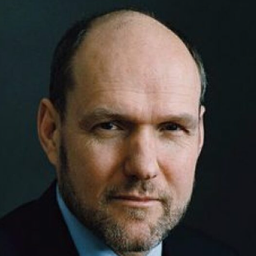
 Shkruar nga Stephen M. Walt
Four steps that the country's next generation of leaders should think about...
Sensitive people around the world have been shocked by the first three months of the Trump administration. And not just by the chaotic dismantling of key institutions of the US government, the attack on higher education, the attacks on renowned law firms, the open disregard for due process and defiance of court orders, the personal vendettas against individuals the president dislikes, and most recently the imposition of tariffs on penguins.
But also from the increasingly apparent inability of Donald Trump's appointees to advance his autocratic ambitions. The impacts of these behaviors on America's image as a stable and trustworthy country were immediate.
The turmoil in the once-robust U.S. Treasury market prompted Mark Blyth of Brown University to tell the New York Times: “The whole world is seeing that the U.S. government has no idea what it’s doing.” Or as my colleague Jason Furman told CNN: “The U.S. is currently an incredibly unreliable partner for anyone in the world, and I don’t know how we’re going to restore that trust.”
That's a very good question. Trump won't be president forever, and future American leaders may want to restore a degree of trust with once-friendly governments, the business community at home and abroad, and the majority of the American people. But once broken, trust can be hard to restore.
So how can the world regain trust in the US with a more accountable set of leaders? That won't be easy. In 2021, restoring trust in the US's credibility was easy because Joe Biden was a figure known for his commitment to working with other countries.
Likewise, Americans could tell themselves that Trump's first term was a freak accident that would not be repeated. For them, it was certain that Americans would not vote for another 4 years of chaos with Trump at the helm.
Unfortunately, Trump's reelection in 2024 - after trying to overturn the 2020 election result, and being found guilty of several crimes - makes it harder for outsiders to see what is happening today as an aberration.
When the Prime Minister of Canada says with obvious regret that "the old relationship we had with the United States, based on the deep integration between our economies and close cooperation in the security and military fields, is over," it is clear that the problem goes deeper than just one person.
So what steps can a future president and cabinet take to restore some degree of trust in U.S. judgment and credibility? Here I offer four suggestions.
First, admit mistakes. When countries commit idiotic and harmful actions to others (and themselves), it helps repair relationships if they openly admit their mistakes. Apologizing for past mistakes shows others that you have learned from the experience and are less likely to make the same mistake again.
Post-World War II Germany repaired its relations with the rest of Europe by directly acknowledging the mistakes of the Nazi era. Japan, meanwhile, was more reluctant, and its relations with its neighbors, while improved, remain more fragile today.
Second, the next administration should sign new agreements with others that are clearly in America's self-interest, while recognizing that it will not get everything it wants, that others must also satisfy some of their interests.
Trust is a scarce commodity in international affairs, but states are more likely to trust that you will keep your commitments if they can see that it is truly in your interest. It is much harder to convince them that you will fulfill a commitment that could make you worse off.
Hence why so many people, including me, didn't believe Trump would actually launch his trade war. This feature doesn't guarantee that a country will do what it has promised, but it makes it more likely.
Third, rebuilding trust will be easier if future presidents appoint senior officials who are qualified for the positions they hold and respected by their foreign counterparts, and if they implement a disciplined and coherent policy-making process.
Other countries will trust US judgment more if they are confident that the people in charge know what they are doing. Conflicts of interest will still exist, but allies will be less concerned that their fates will be subject to presidential whims or amateurish politics.
Fourth, and perhaps most importantly, the people who are now diligently damaging America's reputation for trustworthiness and competence must be held accountable. In the US, accountability has been lacking for too long.
The architects of past foreign policy failures and economic abuses remain respected members of the establishment. This lack of accountability has opened the door to Trump’s false populism and his attacks on elites in both camps. Of course, I am not proposing a post-Trump vendetta similar to the one he is trying to inflict on anyone who has angered him.
But if administration officials have broken the law, they should be prosecuted, and subjected to the due process they are denying to others. But the greater the policy mistakes or crimes committed by the Trump administration, the greater their incentive to stay in office forever.
It's the same problem with other once democratically elected leaders who are now illiberal, like Viktor Orban in Hungary, Recep Tayyip Erdogan in Turkey, or Benjamin Netanyahu in Israel. They are grabbing all the power by any means necessary, because they may have to face justice if they give it up.
Both the future of American democracy and the ability of future American leaders to build lasting trust in other countries may depend on whether Americans across the political spectrum recognize the damage that Trump and the MAGA radicals are doing and succeed in relegating them to the periphery of political life.
Note: Stephen M. Walt, professor of international relations at Harvard University



Lini një Përgjigje