


 Shkruar nga Pamfleti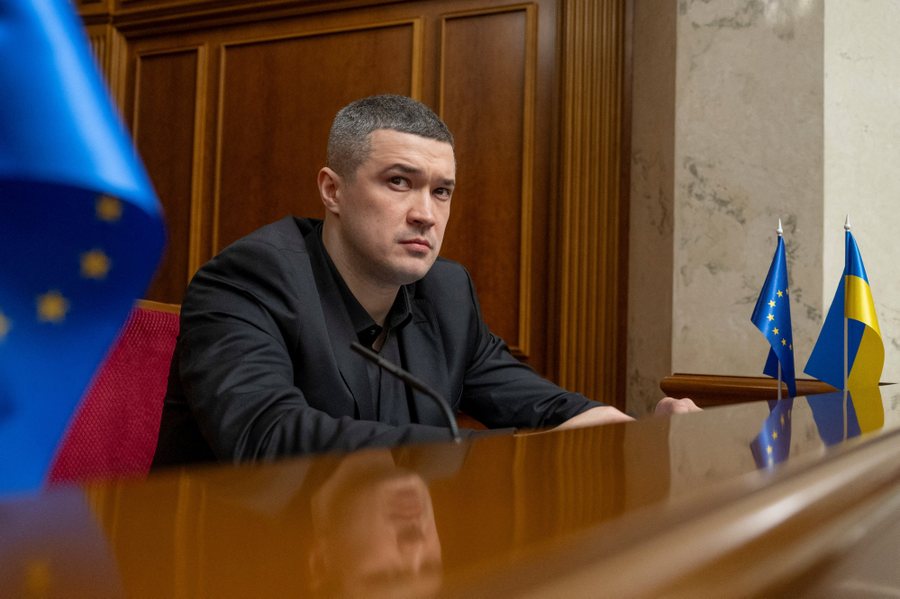
Mykhailo Fedorov, 35, one of the most prominent figures in Ukraine's technological reforms, was the last minister to serve in all of President Volodymyr Zelensky's governments. He was considered one of the president's closest aides since his victory in the 2019 election.
The Ukrainian parliament is expected to vote on replacing him with Interior Minister Ihor Klymenko, while it remains unclear whether Fedorov will take on another role in the government cabinet.
His supporters credit him with contributing to shifting the balance of the war in Ukraine's favor, particularly through expanding the use of drones and committing to limiting Russia's unauthorized use of the Starlink satellite system.
On the other hand, efforts to reform the Ministry of Defense and the armed forces have led to clashes with the commander of the Ukrainian army, Oleksandr Syrskyi. He has also failed to resolve long-standing problems related to the military recruitment system.
President Zelensky did not give a detailed explanation for his departure, but stated that he expects "more unity" between the Ministry of Defense and the military leadership.
How did you get into politics?
Mykhailo Fedorov was born in Vasylivka, a town in southern Ukraine currently under Russian occupation. He grew up in Zaporizhzhia, one of the regions that is now frequently hit by Russian missile and drone attacks.
He began his career in marketing, until he was approached by Volodymyr Zelensky, then a television presenter, to run his social media campaign during the 2019 presidential election.
The digital strategy was considered one of the elements that influenced the convincing victory of Zelensky, who then included Fedorov in his first government cabinet.
"The state on a smartphone"
At just 28 years old, Fedorov was appointed Minister of Digital Transformation, a newly created ministry focused on modernizing public administration.
Under his leadership, the Diia application was developed, which in Ukrainian means "action".
The platform was promoted with the slogan "the state on a smartphone", enabling citizens to perform a range of public services online, such as vehicle registration, marriage and divorce procedures, and other administrative documents.
Role in Starlink and drone warfare
After the launch of the Russian invasion in February 2022, Fedorov publicly addressed Elon Musk, demanding the activation of the Starlink satellite network for Ukraine.
The request was accepted, and today the Ukrainian military uses tens of thousands of Starlink terminals, which are considered essential for frontline communication.
In February of this year, he collaborated with the company to limit unauthorized use of this service by Russia.
From the early stages of the war, Fedorov was among the initiators of the concept of a "drone army", promoting the massive use of technology on the battlefield.
The ministry he headed set up a system where Ukrainian soldiers earned points towards the purchase of military equipment, including drones, if they documented on video strikes on Russian targets.
This scheme created an extensive database from the front, which Fedorov described as a "card" that Ukraine could use in negotiations with allies for more military assistance.
What did he achieve as Minister of Defense?
In January 2026, Fedorov took over as head of the Ministry of Defense, promising to modernize the institution through the use of technology and data analysis.
At the time, the ministry was facing constant criticism for corruption scandals and problems in war administration.
He presented a strategy aimed at weakening Russian military capabilities, limiting air strikes and hitting Moscow's economy.
However, it failed to present the promised reforms to the military recruitment system and to make it more transparent and fair.
Fedorov announced changes to service contracts for the Ukrainian army, which numbers about one million members, and promised salary increases, especially for infantry soldiers.
However, some active soldiers criticized these measures, arguing that the benefits favored new recruits more than those with years of service.
Meanwhile, many of the volunteers who joined the army at the beginning of the war continue to have limited opportunities to leave the service, except in cases where they suffer serious injuries.



Lini një Përgjigje