


 Shkruar nga Thomas PM Barnett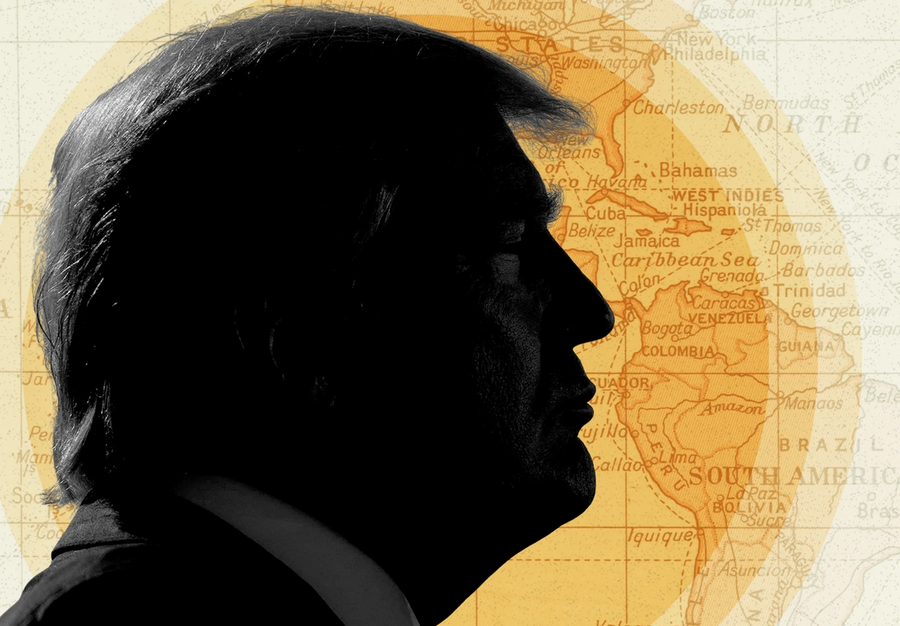
If Iraq was George W. Bush's "Big Bang" theory of regional transformation, Venezuela is Trump's test case for rebuilding the Eastern Hemisphere.
After two world wars nearly destroyed the planet, America decided to act on the many dynamics of the Eastern Hemisphere.
Europe needed to calm down, then Asia and later the Middle East and Africa.
Now, through the radical presidency of Donald Trump, we are seeking to shed distant responsibilities and refocus on our own hemisphere.
If Iraq was George W. Bush's "Big Bang" theory of regional transformation, Venezuela is Trump's test case for rebuilding the Eastern Hemisphere.
His administration has cast President Nicolás Maduro’s regime as the antichrist, a cauldron of corruption, narcotics, and Chinese meddling that requires and justifies a belligerent approach. His overthrow, Trump vows, would be the restoration of the strategic physics of the Americas: a “nice little war” for the digital age.
As unlikely as it may seem, it is a grand strategy of America that goes back into history, part of an ideological line that runs from founder James Monroe to William McKinley and then through Theodore Roosevelt to Trump.
We witness the latest iteration of a lasting American impulse: to redraw the map of the hemisphere as the world system begins to bend back on itself.
Monroe published his famous doctrine in 1823. The Monroe Doctrine was, in essence, a hemispheric bulwark against a resurgence of European imperial power in the post-Napoleonic world.
The Doctrine's function was more of a psychological bluff than a strategic threat: an assertion of autonomy in a world still ruled by much more powerful empires.
However, doctrines are like software, written for one era, they constantly evolve and update for another. Expansion followed the tracks of industrialization, and industrialization required order, access, and secure markets. The US may have rejected Old World imperialism, but it engaged in inventing a variant of the New World.
McKinley, more than any president before him, carried this program forward. McKinley made clear what Monroe had simply implied: that the hemisphere was not just a protective shell but also the economic wheel for America's industrial revolution.
Economic nationalism fueled industrial growth, while wars abroad served both moral and mechanical functions: clearing the neighborhood of old empires (Spain) while testing America’s new capacity for global projection. Cuba was the bulwark; the Philippines was the graduation test. The United States simultaneously secured its hemisphere and anticipated its emergence as a global actor.
McKinley's commercial patriotism is surprisingly embodied in Trump's own rhetoric today.
Both saw “protectionism” not as withdrawal but as readiness: a way to make America the secure base from which expansion could resume.
This is the part of Trumpism that most MAGA simply doesn't understand.
If McKinley gave the Monroe Doctrine its commercial aspect, Theodore Roosevelt gave it strength and momentum.
Again, note Trump's obvious lines: the rhetorical reclaiming of the Canal, the Nobel Prize quest for resolving the Russia-versus-Ukraine dispute, the literal bombing of Venezuela.
Roosevelt's expansive energy linked industrialization to the creation of order; Trump's, on the other hand, links the reindustrialization of the digital age to hemispheric control. The medium changes, but the organizing instinct persists.
Trump, now in his second term, consciously revives this lineage. Monroe's sphere, McKinley's tariff stronghold, Roosevelt's managerial empire. He no longer depicts the Western Hemisphere as a neighborhood to be defended but as a domain to be dominated. Monroe's shield becomes Trump's sword.
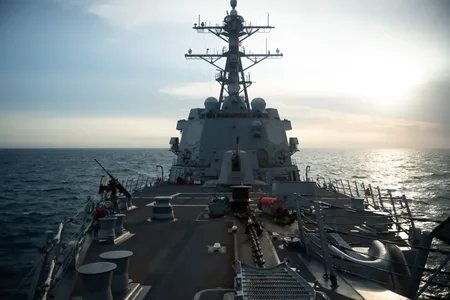
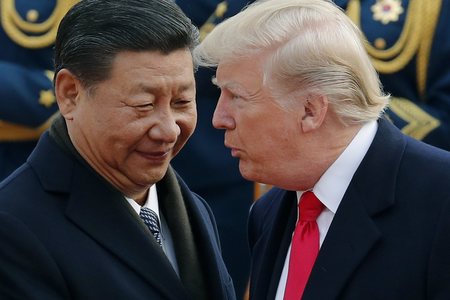
This fast-paced ‘Monroeism’ is not about resisting foreign intervention; it is about outright expelling the foreign presence. The target is not Europe this time, but China. This is Monroe’s formulation, but with 21st-century tools: economic sanctions, tariff blackmail, displays of naval power and strategic investments designed to suffocate Chinese alliances in Argentina, Brazil, Peru and Venezuela.
In this sense, Trump’s Doctrine 2.0 mirrors McKinley’s operational logic: the consolidation of regional control to serve industrial revitalization. Energy dominance replaces steam industry; reestablished supply chains replace imperial trade routes. The hemisphere becomes both resource base and security zone, a closed system that empowers an open nationalism.
Trump's goals are not simply economic, but a visible test of dominance. McKinley thought about railroads and tariffs, while Trump thinks about spaceports and pipelines. Both methods achieve the same goal: the self-actualization of national ambitions.
For Trump, the Western Hemisphere represents the legacy, the space of American myth, or manifest destiny reborn. He relishes the historical echo: annexations and canal zones as hallmarks of American greatness. It is no wonder, then, that he resurrected “Mount McKinley” as a name, reaffirming 19th-century faith as a 21st-century brand.
The hemispheric vision of the 'Florida Man' also has a central headquarters: Miami. In the Trumpian worldview, aided and abetted by his Cuban-American Secretary of State Marco Rubio, Miami is not just an American city, but the geopolitical capital of the Americas.
Miami connects the hemispheric network that Trump wants to command, linking Cuban dissidents, Venezuelan opposition leaders, Colombian investors and regional security hawks into a single operational network that replaces China's "One Belt, One Road" scheme.
In true Trumpian style, it is a system built less on law than on influence. Every action is a trade deal here, serving as both a tool and a message: the return of hemispheric hierarchy. Monroe would know fear; McKinley would know the pattern; Roosevelt would approve of ambition.
Trump's test case, Venezuela, is a move as theatrical as it is strategic. The support of opposition leader María Corina Machado allows Trump to ground his intervention in moral terms.
In this narrative, Venezuela is not just a rogue state; it is the obstacle to an integrated America First order. Hemispheric markets, connected by artificial intelligence-driven supply chains and governed by American security guarantees, this is Trump’s 21st-century version of McKinley’s tariff empire.
What unites Monroe, McKinley, and Trump is that American instinct for building order, first territorial, then industrial, now digital. Monroe drew the perimeter. McKinley filled it. Roosevelt made it move.
A century later, Trump reclaims it, portraying the Western Hemisphere as America’s natural sphere of destiny after decades of distracted globalism. In an era of turmoil, Trump sells shrinkage as revival.
This is the paradox at the heart of Trump's grand strategy: nostalgic and revolutionary, isolationist and imperial, defensive and expansive. Like man himself, it is everything, everywhere, and at the same time./ Taken from "Politico" , adapted by "Pamphlet".




I flasin grate Sllave qe ka marre.