


 Shkruar nga Pamfleti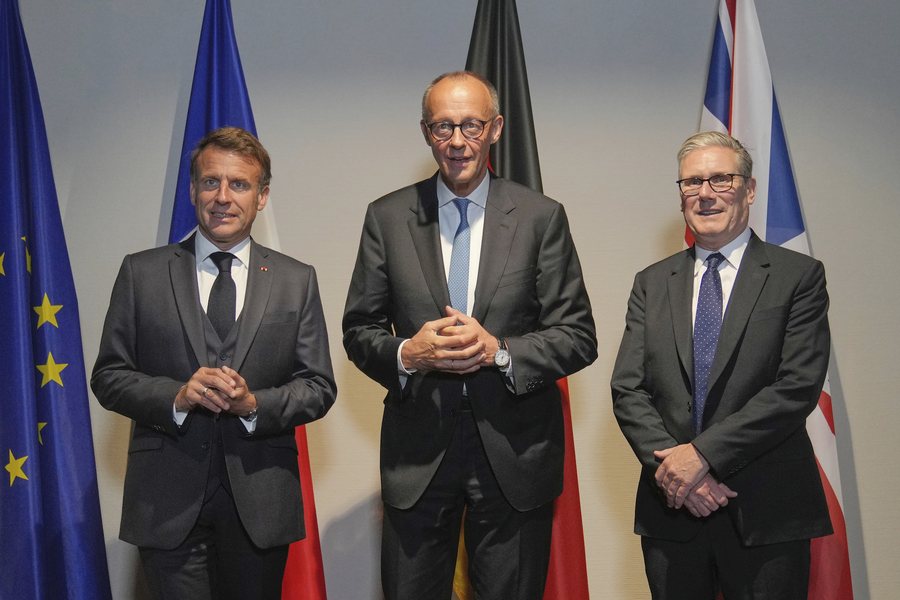
Referring to the actions of Macron, Starmer and Mertz, the New York Times sees "foreign policy successes", which, however, contradict what is happening on the domestic policy front.
Europe's three main leaders, as the NY Times characterizes the leaders of France, Britain, and Germany, are currently taking "dynamic steps" on the world stage, but at the same time are "stuck" within their own borders.
Referring to the actions of Macron, Starmer and Mertz, the New York Times sees "foreign policy successes", which, however, contradict what is happening on the domestic policy front.
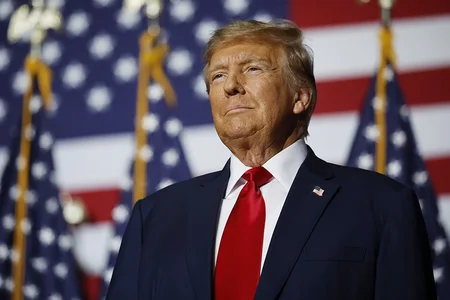
British Prime Minister Keir Starmer is preparing to welcome US President Donald Trump to England next week, projecting a leadership profile with international renown on a personal level. At the same time, however, things are not going well for the Labour government within British borders. Tellingly, Starmer has recently seen British Deputy Prime Minister Angela Rayner resign in the shadow of a tax scandal, British Ambassador to the US Peter Mandelson expelled over his relationship with Jeffrey Epstein, and the ruling Labour party’s ratings have fallen sharply in the polls.
In France, on the other hand, President Emmanuel Macron has just appointed a new prime minister, Sébastien Lecorni, to replace the resigned François Bayrou: the fifth politician to ascend to the French prime ministership in about two years. Meanwhile, in Germany, Chancellor Friedrich Merz's plans to restructure the economy have been hampered by an unstable governing coalition.
Europe's leaders are now marching united and determined on the world stage, a rare feat at a time when they are suffering defeats at home. Their relatively recent joint presence in the White House can be seen as a confirmation of this unity.
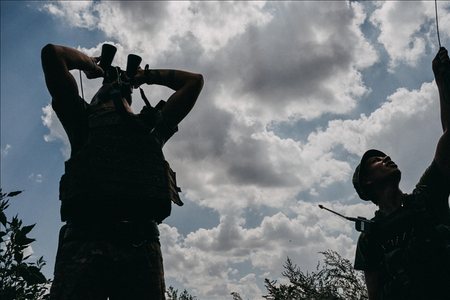
The resistance they demonstrate abroad reflects their determination to confront Russian aggression, which just this week "bared its teeth" inside Polish and at the same time NATO airspace.
For how long?
However, many analysts wonder how long Europe's leaders can continue to move with a steady footing abroad while stumbling at home. Centrist governments in Britain, France and Germany are now worried they could lose control of power as they are asked to deal with issues such as immigration and the economy.
“While majorities across Europe still favor supporting Ukraine, Europe’s ability to continue to support Kiev in the long term will be limited if its leaders are unable to address domestic economic weaknesses. Current solidarity could easily be broken if countries are asked to contribute troops to a peacekeeping force, especially if voters reject centrist leaders in favor of more extremist alternatives,” writes Mark Landler in the NY Times.
European countries have taken important steps recently, increasing their defense spending, militarily supporting Ukraine, demonstrating unity against Russia, and, among other things, drawing up plans for Ukraine's post-war future within the framework of the so-called "coalition of the willing"...
The big bet for Europe
However, as veteran American diplomat Richard Haas says, the big challenge for Europe will be breaking away from US security guarantees.
“Such a project would require commitments involving multiple administrations, which will be difficult to handle in a time of political instability ,” says Haas.
In Poland, for example, Prime Minister Donald Tusk is now called upon to overcome obstacles placed in his path by newly elected conservative President Karol Nawrotski, while one of the issues now dividing Poland is not that of broader support for Ukraine, but of Ukrainian refugees who have found refuge within Polish borders.
In Germany, on the other hand, the ruling coalition of the Christian Democrats and Social Democrats is being rocked by disagreements, while at the same time seeing the populist nationalist Alternative for Germany (AfD) gaining the position of the first party in the polls.
It is noted that based on current data, Macron should go to the presidential elections in 2027 (elections in which he himself will not be a candidate), while for Starmer and Mertz the next parliamentary elections are expected in 2029. / Adapted by "Pamphlet" from "Kathimerini"



Lini një Përgjigje