


 Shkruar nga Pamfleti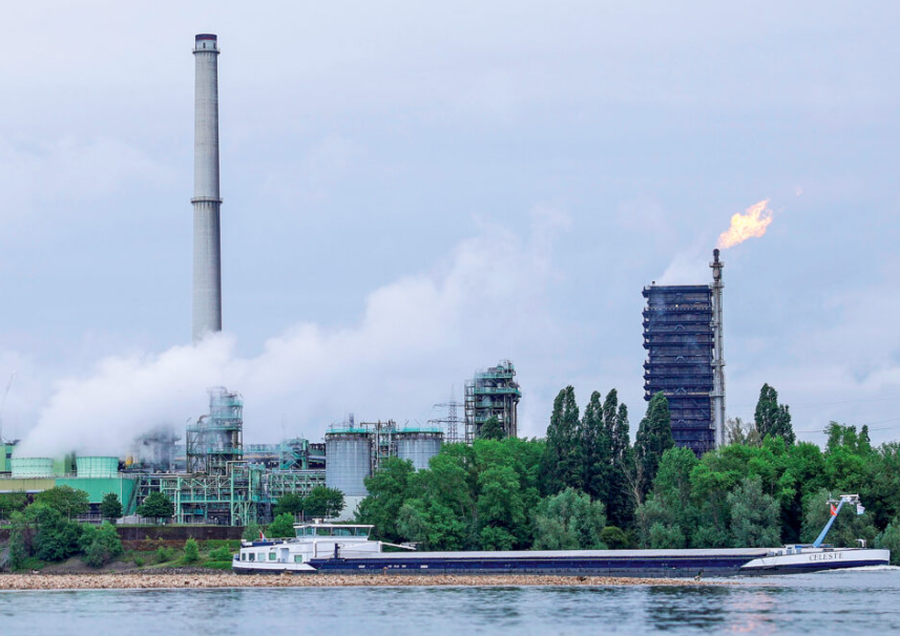
Prolonged drought and high temperatures have significantly reduced water levels in Europe's major waterways, causing serious problems for the continent's supply chains and industry...
Europe is facing a new energy nightmare, fueled not only by the wars in Ukraine and the conflict with Iran, but also by the climate crisis. In recent weeks, investors’ attention has focused on the escalation of tensions in the Strait of Hormuz between the United States and Iran, a development that has raised oil prices, threatening global supply chains and rekindling the risk of a new wave of inflation. At the same time, however, an equally serious, if less visible, threat is emerging for the Old Continent. Prolonged drought and high temperatures have sharply reduced water levels in Europe’s main waterways, causing serious problems for the continent’s supply chains and industry.
On the Rhine River, Western Europe’s most important industrial artery, water levels at points such as Cologne and Kaub have fallen to levels indicative of extreme drought. This has forced barges to reduce their loads, significantly increasing transport costs. The situation is similar on the Danube. In Budapest, water levels are approaching historic lows, already causing serious disruptions to the economically important river tourism sector. Cruise ships have been stranded in ports, while many companies have announced reduced bookings and cancellations.
After the loss of Russian natural gas supplies via pipelines as a result of the war in Ukraine, Europe rebuilt its energy architecture by relying on imports of liquefied natural gas (LNG) and petroleum products through major ports such as Rotterdam, Antwerp and Amsterdam. These ports constitute the invisible arteries of the European energy system. However, the arrival of cargoes at ports is only the first stage of the process. Transporting these fuels, coal and chemical raw materials to the industrial heartland of continental Europe has traditionally relied on river transport. When drought reduces the carrying capacity of barges, each ton of coal, oil, gasoline, chemicals or biofuels requires more vessels, higher freight rates and longer delivery times.
As tensions between the US and Iran once again threaten the flow of oil through the Strait of Hormuz and drive up energy prices, shrinking waterways in Europe risk turning an external supply shock into a much broader logistics crisis within the continent, analysts say. And the timing couldn't be more inopportune.
The Rhine is Europe’s most important waterway for freight transport. German industry alone relies on the river to transport around 200 million tons of goods a year, including fuel and industrial raw materials. ThyssenKrupp Steel was forced to temporarily suspend its river transport service to supply raw materials to its Duisburg plant due to low water levels in the Rhine. Meanwhile, chemical giant BASF has expanded its fleet of barges to compensate for the loss of transport capacity. In many stretches of the Rhine, the water level has fallen significantly, forcing barges to reduce their loads and increasing transport costs.
The problem is made worse by the lack of alternatives. The shift of freight transport from rivers to rail is facing serious obstacles, as one of the main rail freight lines along the right bank of the Rhine has been closed for maintenance work. In these circumstances, German industry, which is struggling to recover after several years of stagnation, faces the risk of a new wave of difficulties. History shows that the economic consequences can be considerable. A similar drought on the Rhine in 2018 cost the German economy around 0.4% of Gross Domestic Product.
Combined with rising geopolitical tensions, falling water levels in European rivers are becoming a factor that multiplies energy insecurity. The real threat for Europe is the possibility of two major crises occurring simultaneously. On the one hand, refineries and industry are facing rising oil costs as a result of tensions in the Persian Gulf. On the other, they are facing the physical inability to distribute fuel efficiently to the hinterlands. This supply chain crisis risks reigniting inflationary pressures, precisely at a time when the European Central Bank is considering its next steps in the fight against inflation.
"Policymakers are increasingly seeing climate change and geopolitics as separate challenges that require different solutions. Recent events show that they are closely intertwined," says Gavin Maguire, Reuters columnist on the global energy transition.
Around 600,000 passengers travel on the Danube every year. The river is a vital transport artery and an important source of tourism revenue for the 10 countries it flows through.
Oil river transport tariffs from the Rotterdam area to Karlsruhe, in southern Germany, increased last week, reflecting the difficulties created by low water levels in European rivers. / Adapted by "Pamphlet" from "Kathimerini"







Lini një Përgjigje