


 Shkruar nga Pamfleti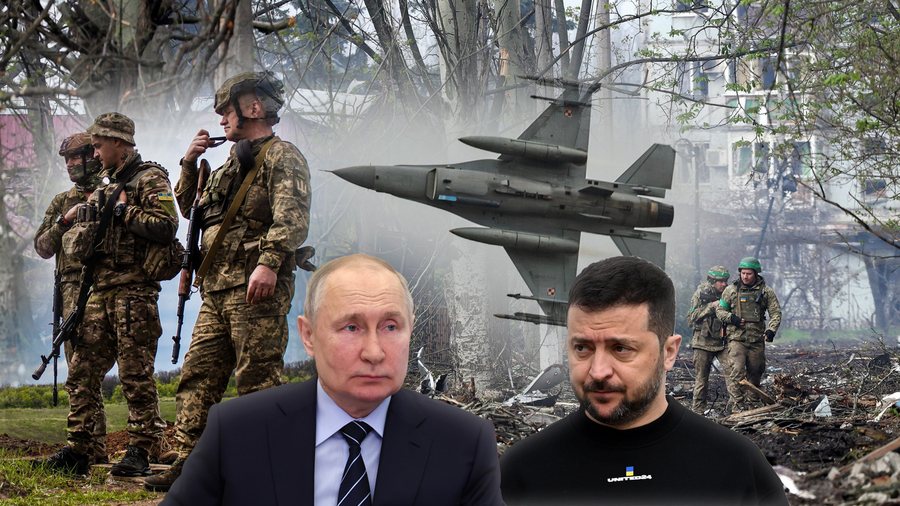
Denmark, the Netherlands, Norway and Belgium have pledged to send about 45 planes to Ukraine, enough for three small squadrons.
Ukrainian pilots are likely to fly F-16 fighter jets starting in May, the New York Times reports. The 12 pilots are expected to be ready to fly the F-16 this summer after completing training in Denmark, Britain and the US. But by the time the pilots return to Ukraine, only six of the 45 planes promised by European allies will be ready.
Training of Ukrainian pilots began last August at Skridstrup Air Base in southern Denmark, but training progressed slowly because the pilots did not know enough English and Western flying techniques. They were ready for flight only in January. Danish Defense Minister Trolls Lund Poulsen told the New York Times that training is progressing well and that Ukrainian pilots are already flying over Danish airspace, but added that their progress will ultimately depend on the length of the training.
Since Putin's full-scale invasion of Ukraine began, Kiev has been asking its Western partners for fighter jets. US President Joseph Biden's administration gave in to Ukraine's demands only last August. American officials have warned that the F-16 aircraft will not be a decisive factor in the war, so they have emphasized that the training will take a long time. Ukrainian officials have agreed that the F-16s will not only change the tide of battle, but believe that in combination with long-range missiles, artillery and drones, they could be key in the fight against Russia. In January, an international coalition was formed to deliver the F-16s and train Ukrainian pilots. But there is much uncertainty about when each country will send in its planes, how quickly pilots can be trained and whether there are enough people to properly maintain the planes.
Denmark, the Netherlands, Norway and Belgium have pledged to send about 45 planes to Ukraine, enough for three small squadrons. Denmark will take delivery of the first six aircraft before the summer, and another 13 should arrive by the end of this year. Other countries have not yet set a delivery date for their F-16s. The Dutch Defense Ministry, which promised to hand over 24 fighter jets, said it would hold them until Ukraine was ready to accept them.
There is also a need for fighter aircraft maintenance personnel. Currently, about 50 Ukrainian technicians are being trained in Denmark for aircraft maintenance and repair, as well as for working with weapon systems. F-16s are so complex that it takes eight to 14 people to maintain one plane. Western defense contractors must accompany the planes to Ukraine and remain in place until sufficient Ukrainian personnel are trained to maintain the planes, a process that could take years. Additionally, the need to repair aging and war-damaged military airstrips in Ukraine could also delay the F-16's entry into combat.
It is not yet clear when exactly the next batch of Ukrainian pilots should begin training at the newly opened training center at Feteşti Air Base in southern Romania. "It depends on the governments and the contracts. We are still waiting for all the approvals," said Colonel Bill Thomas, a retired US Air Force officer who oversees the training program for Romanian pilots at the Feteşti base.
The establishment of the center at the Fetești base was announced last May at the NATO summit, and in January instructors began training Romanian pilots for the country's new F-16 squadron. Like the Ukrainian pilots, the Romanian pilots in F-16 training are skilled in flying Soviet-era aircraft, but unlike the Ukrainians, the Romanian pilots already spoke English and were familiar with NATO operational standards. / Pamphlet







Lini një Përgjigje