


 Shkruar nga Fabio Martini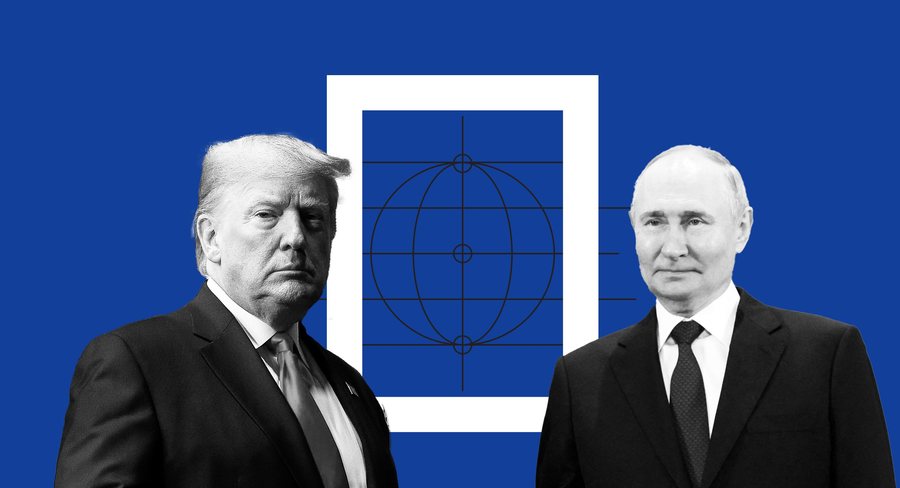
We are moving towards a new division of the world.
Former Italian Prime Minister Romano Prodi: We are moving towards a new division of the world. Putin has a free hand in Ukraine, while Trump has a free hand in the Middle East. So we are moving towards a balance between two authoritarianisms, which only takes into account those in power and not the people.
During his long life, Romano Prodi has met and confronted the world's leading leaders, from George W. Bush to Vladimir Putin, from Helmut Kohl to Benjamin Netanyahu, from Chinese to Iranian leaders.
And for the professor, the unrest of these last few days in the Middle East shows that we have entered a profoundly different era from the previous ones: “We are living in a new phase, in which the idea that force is everything and decides everything dominates. An idea that is accompanied by contempt for the law. We have complained so much about Russian and Chinese authoritarianism, but we are heading towards a dangerous decline. Precisely in these days that we are celebrating the 80th anniversary of the adoption of the UN Charter, we are forced to commemorate this anniversary with sadness. Sadly, the dream that took shape in the first post-war period has come to an end! ” .
Likewise, the former Prime Minister of Italy and former President of the European Commission sees a huge gap between the recent past and the current chaos of the world, recalling one of his missions to Iran: "In the second half of the 1990s, despite the long period of tension with Tehran, Italy was the first country to go to monitor. During a direct conversation, I had convinced US President Bill Clinton that it could be useful to resume a dialogue with a country that would have had a major political role. In fact, this prediction was well-founded. It was the beginning of a very difficult de-escalation of relations on the international stage. But then, Iran unfortunately became even more radicalized."
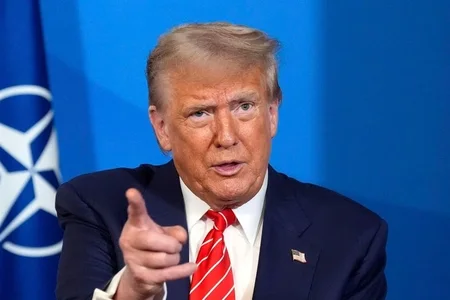
Through his hyperbole, Trump has trumpeted a permanent end to the conflicts in the Middle East, but the Israeli-Iranian ceasefire is very fragile. Have we entered an era of show wars, which allow us to celebrate victory for a few hours or weeks, but which essentially leave the problems unchanged?
Yes, and this is how the problems get worse. We are moving towards a new division of the world. I do not want to be like the cinematic character Dr. Strangelov. However, I am convinced that recent events have strengthened a relationship in which Putin has a free hand in Ukraine, while Trump is in agreement with Israel, in the Middle East. So we are moving towards a balance between the two authoritarianisms, which could also give the world stability. But it will be a terrible stability, because it only takes into account those in power and not the people.
A paradox that also applies within the United States? With the disregard for basic rules, with the illegal arrests of parliamentarians, is it conceivable that “regime change” is taking place there too? Of course. And on the other hand, if force is everything, then those who have no force are out of the game. After 177 years from the Manifesto of Marx and Engels, which addressed the proletariat of the whole world, we have reached the call “Autocrats of the whole world, unite!”. Paradox? Given its strength, today the coordinator of authoritarianism is precisely the country that for so long has supported the opposite path: that of democracy.
In recent months, Germany, France and Britain have taken potentially strategic initiatives, paving the way for a new troika. But is the EU trying to take control of the situation? I don’t think these fragmented dialogues between the three countries will change the essence of things. Europe has not decided anything politically important for the world for a very long time. The euro and the enlargement of the bloc, which are the last two major European projects, date back decades.
There was a resurgence of unity during the Covid-19 pandemic, but there is division about everything else. I am very sorry, even if not surprised, that according to opinion polls, spread across the main European countries, young people, despite the Erasmus school program, are more Eurosceptic than older people. They have lived in a period in which the European Union has only mediated. So we have a Europe that is weakened and increasingly less confident in itself.
The new Europe can be born from a common defense. But isn't NATO's rule rigid: 5 percent of GDP spending on defense? Strict proposals serve to facilitate consensus, but they do not guarantee the effectiveness of the commitment. Of course, with the new American policy we should spend more on our defense, but before determining how much, we should have determined how.
By continuing with an even greater expenditure, divided among 27 different countries, we will greatly increase our financial commitment, but in reality not our defense capacity. A common defense means a single decision-making center, common operating rules but also common production structures. If we interpret Trump's statements literally, we will never have a common defense if we continue to buy the most sophisticated weapons from the United States.
The Americans will remove their protective umbrella in Europe, and for the moment the answer has been too many national umbrellas. To accelerate the construction of a common and integrated defense, wouldn't a political protagonism of the major European parties, the EPP and the PSE, also be needed? If not now, then when?
Of course, but we must admit that this is not happening at the moment. There are many divisions in different European countries, and the divisions also have party lines. However, we can break away from the current policy of small steps, by adopting a proposal that is revolutionary in its own way.
The last popular but negative decision was the rejection of the European Constitution by France and the Netherlands. Now we must have a European referendum to abolish the paralyzing rule of unanimity in decision-making. We keep repeating it rhetorically: “ How beautiful we are!”, “How capable we are!” .
But to protect rights, decisions are needed, and to do so, a referendum is needed that calls on 350 million voters to express their opinion, to determine whether Europe will be able to decide in the future.
In her most recent speech to parliament, Meloni used harsh words about Israel's actions in Gaza. Is the government doing what it can with regard to the Middle East and Europe? Or is it sitting idly by, waiting for the worst to pass?
Our government is following Donald Trump's instructions. The European right, starting with the Italian one, supports the president of the United States, just as the communist parties once followed the Soviet Union. In this context, to be on Trump's side means to be distrustful of Europe./ Adapted from "Pamphlet" by "La Stampa"


Lini një Përgjigje