


 Shkruar nga Pamfleti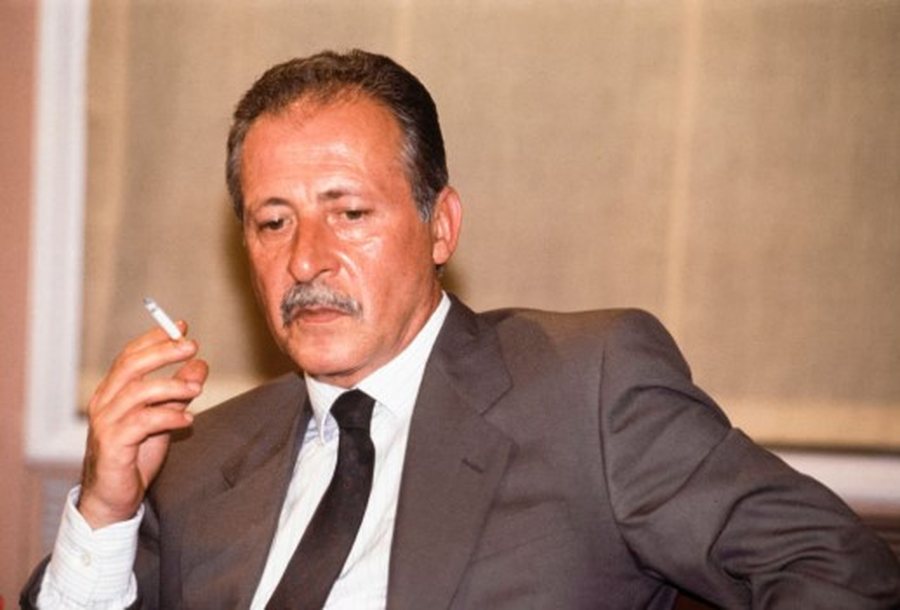
Paolo Borsellino's "red diary" was no ordinary notebook. It contained the thoughts, investigations, suspicions and names that the murdered prosecutor was collecting to uncover the collaboration between politics, the mafia and state institutions...
Italian magistrate Giovanni Tinebra, who served as Caltanissetta prosecutor from 1992 to 2001 (he died in 2017), was the head of the group of prosecutors coordinating the investigation of Arnaldo La Barbera, the police officer now considered the mastermind behind the manipulation of the Via D'Amelio massacre. Tinebra has recently been revealed to have been part of a secret and irregular Masonic lodge, which investigators refer to as "a new P2".
As part of an investigation opened by the Caltanissetta Public Prosecutor's Office into allegations of massacre and manipulation of justice, the ROS special units are carrying out three searches in premises linked to the figure of Tinebra. According to a statement by the current Caltanissetta prosecutor, Salvatore De Luca, "the searches in the premises that were at the disposal of the former prosecutor Tinebra at the time have been ordered to shed light on the context in which the already proven manipulation of the investigations into the Via D'Amelio massacre and the disappearance of the red diary belonging to Borsellino took place."
Through the testimonies of the penitents and the review of court files from previous years, the existence of a secret lodge in the city of Nicosia (province of Enna), where Tinebra served as magistrate from 1969 to 1992, has come to light. Particularly important is the testimony of the justice collaborator Gioacchino Pennino, who in 1998 had spoken of the existence of a structure called "Third Orient", created on the ruins of P2, with the aim of recruiting people who could not publicly display their Masonic affiliation. According to Pennino, it included people close to Ciancimino, doctors and entrepreneurs.
The documents also reveal an investigation launched in Naples in the late 1990s, in which Angelo Siino testified to the existence of a "super lodge" conceived by Salvatore Spinello, linked to mafiosi and entrepreneurs, which aimed to create a powerful and extensive network of power. In a conversation with Grand Master Giuliano Di Bernardo, Spinello mentioned a lodge in Nicosia and included a "character with high jurisdiction", who later turned out to be Giovanni Tinebra. "Tinebra is ours... he was part of the Nicosia lodge... I do not greet him publicly so as not to compromise him", the leaked wiretap states.
The investigators also mention the contribution of consultant Piera Amendola, according to whom Fabio Venzi, Grand Master of the Regular Lodge of Italy, has confirmed the connection between Freemasonry, both regular and irregular, and clubs like Kiwanis, where Masons of different obediences often meet.
A key element that adds to the suspicions is a note dated 20 July 1992, found in the archives of the Palermo Investigation Team, which documents that the day after the massacre, at 12:00, a box containing a leather bag and a notebook belonging to Paolo Borsellino was delivered to Tinebra. The document is signed by Arnaldo La Barbera, but there is no signature or confirmation of receipt by Tinebra, and no trace of this document in the initial investigations. It is suspected that the bag has been in La Barbera’s possession since the evening of 19 July, leaving enough time for any possible manipulation or copying of the famous “red agenda”.
Investigators emphasize that it is not possible to verify whether that block was indeed the red one, which was never found, nor whether it actually ended up in Tinebra's hands. But the suspicion, grave and serious, remains.
Paolo Borsellino's "Red Bloc"
Paolo Borsellino's "red diary" was no ordinary notebook. It contained the thoughts, investigations, suspicions and names that the murdered prosecutor was collecting to uncover the collaboration between politics, the mafia and state institutions. Its disappearance, still unanswered after more than 30 years, is an open wound in Italy's conscience. If the most important document of an anti-mafia prosecutor disappears and we still don't know who touched it, then the question is not only who killed Borsellino, but who was afraid of the truth he was preparing to reveal. / Adapted from Corriere Della Sera




Lini një Përgjigje