


 Shkruar nga Pamfleti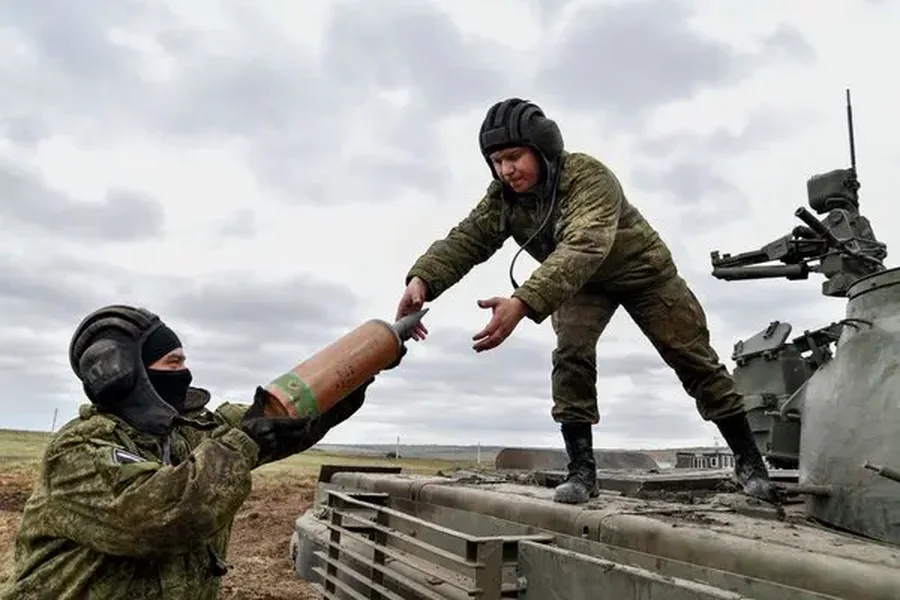
According to current estimates, at least 130,150 Russian soldiers have been killed since the start of the aggression against Ukraine.
To describe the Russian soldiers killed in Chechnya, the legendary journalist Anna Politkovskaya used a term that in Russian refers to cannon fodder: “human material.” Today, in the bloody war in Ukraine, this “material” has passed the one million mark: 1,099,530 soldiers killed or wounded, according to the latest update from the Ukrainian General Staff.
Most of these losses have occurred in the trenches of Donbas, a decision by the Kremlin to sacrifice entire generations without return. Officially, these victims simply do not exist. Russia, as in past conflicts, refuses to publish detailed statistics. The reality is covered up by propaganda and a system that denies death.
But independent media are trying to shed some light on this darkness. The “Mediazona” project, in collaboration with the BBC in Russian and a network of volunteers, has created a list of names of killed Russian soldiers, based on open and verifiable sources such as family posts on social networks, local media reports and announcements from regional authorities.
According to current estimates, at least 130,150 Russian soldiers have been killed since the start of the aggression against Ukraine. One way to arrive at this figure is to analyze the national register of inheritances. Since mid-2024, Russian courts have received tens of thousands of requests to declare soldiers missing or dead, most often at the initiative of the Ministry of Defense, which seeks to clean up the lists and give heirs the right to pensions or property.
New graves and silent cities
Unlike Ukraine, where memorials and cemeteries are public, Russia has maintained an iron screen of silence. But after more than three years of war, the first images are starting to circulate. A video posted by a resident of the town of Myski, in the Kemerovo region, showed endless rows of graves of soldiers, all young. “Look what’s happening here,” says the voice behind the camera, shocked by the age of the dead. “When we learn the truth, all of Russia will be horrified.”
Moscow spares no one anymore
Thanks to Mediazona's data, it has been possible to identify the ten regions with the highest number of deaths. At the top are Bashkiria, Tatarstan (where most of Russia's kamikaze drones are produced), the Yekaterinburg region and Moscow itself, a fact that refutes the myth that Russia recruits only from poor and peripheral areas. The percentage of officers killed has also fallen significantly since the beginning of the war: from 10% at the beginning, to only 2-3% by November 2024. This reflects a tactical shift, with professional soldiers being replaced by mass-conscripted infantry with minimal training.
From tanks to foot: new Russian tactics
Military experts, including Michael Kofman of the Carnegie Endowment, have noted a major shift in Russia's tactical approach. Instead of the massive armored column attacks that Ukrainian drones have targeted, Russian troops are now attacking in small groups at night or at dawn, wearing thermal ponchos to evade radar. The goal is to penetrate Ukrainian lines without engaging in direct combat.
This tactic is inspired by the model of the infamous Wagner group. Rumors are even circulating that the Russian army has created special units with soldiers suffering from incurable diseases such as HIV and hepatitis C – following the example of Wagner’s “Umbrella” unit, named after a computer game. Along with convicts, these soldiers have become repetitive “human material”: used and discarded. In the case of Russia, this category already represents the second largest group of victims, after “volunteers”./ Adapted from “Pamphlet” by “Corriere Della Sera”



Lini një Përgjigje