


 Shkruar nga Pamfleti
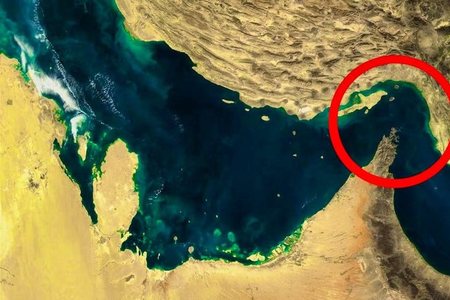
The closure of the Strait of Hormuz has upended the global oil market, significantly increasing the price of Gulf types above Brent and WTI. Although Europe currently benefits from relatively lower prices, this advantage is expected to be temporary, as demand from Asia could increase competition for supply and lead to a new price increase in the European market.
Until just before this Gulf War, Brent crude, a benchmark linked primarily to North Atlantic crude, traded at slightly lower prices than Gulf crudes: Oman and Dubai, two benchmarks that reflect barrel prices from countries like the United Arab Emirates and much of the Middle East.
Today, this ratio has not only been reversed, but significantly distorted. According to morning quotes, Brent is worth $114 per barrel, Dubai $136, and Oman $153.
At first glance, this is a relatively positive development for European consumers. Oil used in Europe has become more expensive after the closure of the Strait of Hormuz, but much less so than Gulf crudes that are mainly purchased in Asia.
On paper, this immediate and very large difference gives an advantage to Europe and the United States, where the WTI benchmark stands at $97 per barrel.
However, the main question is how long this situation can last. If the crisis and the closure of Hormuz continue, the risk in the market is that the “spread” between Brent used in Europe and Oman consumed in China or South Korea will begin to narrow. Oil is a raw material that is easily transported: it can arrive by ship at any refinery in the world, starting from any port. For this reason, it is difficult for the price on one continent to remain significantly lower than on another for long.
The strong growth of the Dubai and Oman indices is explained by the fact that these types have become much scarcer after the closure of Hormuz. As a result, they have become significantly more expensive. But Asian refineries, having used up part of their reserves, could quickly enter into competition with European and American refineries for Western oil sold at Brent and WTI prices. An increase in demand in these markets would push the prices of oil consumed in Europe closer, in growth, to those of oil consumed in Asia.
In other words, the market could face another wave of Brent growth, a movement that, according to morning signals, seems to have already begun.
Meanwhile, doubts are growing about the relative stability of the US WTI price, which remains almost unchanged at $97 today, despite negative news coming from the conflict in the Persian Gulf.
Some market operators are wondering whether the US Treasury, directly or through close operators, is trying to influence the price.
According to this assessment, one way to do this would be to short-sell WTI futures contracts, putting downward pressure on the price. Such an action would be considered market manipulation and would be seen as very risky. However, in the very short term, it could also be effective. / Adapted from " Corriere Della Sera"







Lini një Përgjigje