


 Shkruar nga Miquel Echarri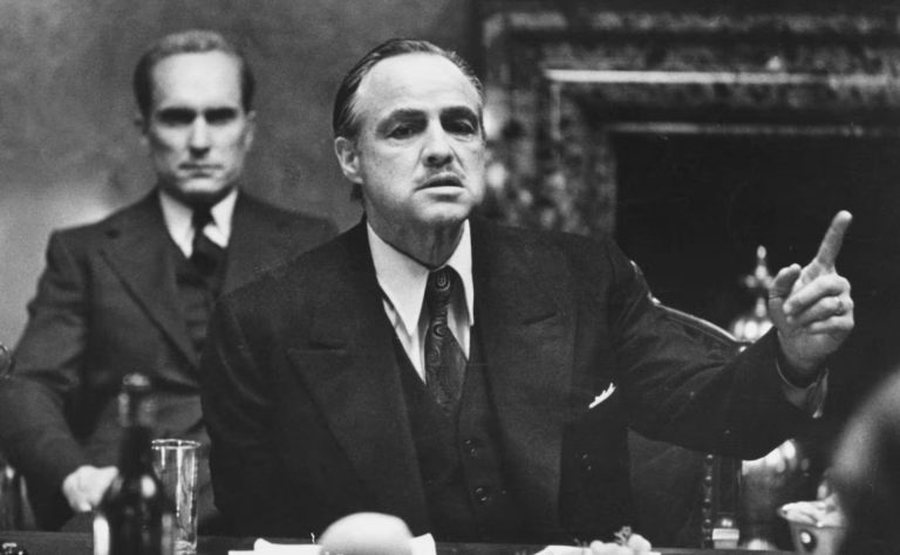
Alberto Mayol, sociologist, political scientist and writer, has noted that Mario Puzzo's films and novel provide a vehicle for reflection and learning. The Godfather, he argues, is "a real lesson in power: how to get it, how to keep it, how to strengthen it, and how to use it."
In one of the most memorable moments of the animated series "Family Guy", the Griffins are about to die, and Peter, the late patriarch, decides to tell his family the last secret: "I don't like the movie The Godfather at all." . His wife and children remind him that he is a masterpiece, a visual poem, "the great American tragedy."
If this joke is liked, it is because almost everyone likes the movie "The Godfather". Francis Ford Coppola's trilogy is one of those cultural artifacts that generates a rare consensus, a wildly popular classic that is at the same time a staple of the cinema, a hit that retains its reputation intact 5 decades later late.
Alberto Mayol, sociologist, political scientist and writer, has noted that Mario Puzzo's films and novel provide a vehicle for reflection and learning. The Godfather, he argues, is "a real lesson in power: how to get it, how to keep it, how to strengthen it, and how to use it."
This is seen in the impartial and amoral ability of Vito Corleone and his son Michael, heir to his empire. Mayol is currently promoting the Spanish edition of The Goodfather's 50 Laws of Power, a very informative book on the silent majority who have never reflected on the nature of power and are therefore condemned to suffer from his.
Looking back in time, the author remembers that he came into contact with the film saga in 1990, when the third part was broadcast in Chile: "My uncle insisted that we go see it together in the cinema, even though I was still a minor. His argument, scandalous for a small child, was that to really enjoy such a film, you must first break a law."
Years later, Mayol would be surprised to return from time to time to particular sequences, finding in them "a very profound, not at all trivial, reflection on that mythological god which we call power, and which stands behind almost all social relations, not only in politics."
This intuition prompted him to develop a series of seminars on "The Godfather" and an even more popular podcast entitled "La Cosa Nostra", which became very popular during the pandemic. And the idea for the book was born from them. At the opening of his seminar, Mayol joked that his is "an essentially right-wing analytical method, because it starts from a very strict pragmatism".
Ai citon shembuj specifikë për të zbërthyer logjikën e paepur të Corleones dhe arrin në përfundime shumë domethënëse: “Don Vito e ushtronte gjithmonë pushtetin pa kufizime, por me një sens të mirë dhe moderim”.
Studentët e tij më të mirë do të duhej të gjendeshin në spektrin konservator, tek Winston Churchill, Giulio Andreotti dhe Angela Merkel, por edhe tek dhomat e pasme dhe të errëta të pushtetit si për shembull CIA, Vatikani apo bordet e drejtorëve të korporatave shumëkombëshe”.
According to him, the Western left is not generating great leaders, because it is stuck in a discourse of resistance to power, which condemns it to a lack of effectiveness". The same can be said for the majority of EU citizens who are "vegetarians in a carnivorous world", some of them as voracious as Vladimir Putin, "who not only poison their opponents, but want let this be known". / "El Pais" - Bota.al



Lini një Përgjigje