


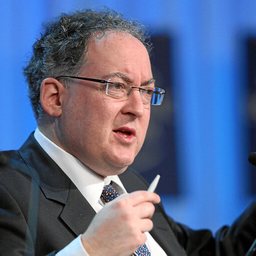
 Shkruar nga Gideon Rachman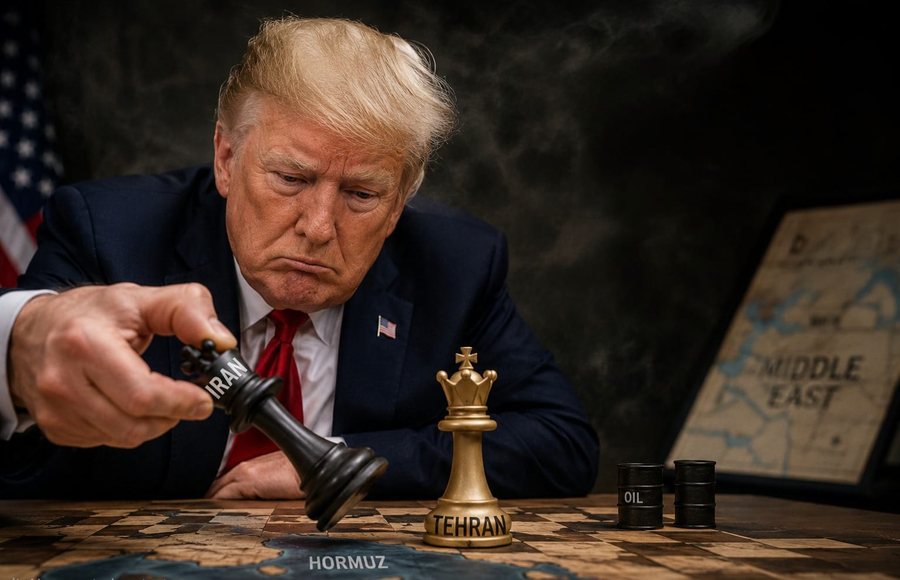
The war could end with Tehran more secure, tougher, and with new resources to rebuild its nuclear program...
"The worst thing you can do in a deal is look desperate to get it. That makes the other person smell blood and then you're dead. The best thing you can do is make deals out of strength, and influence is the greatest strength you can have ."
This was the principle that Donald Trump, or rather his ghostwriter, laid out in the book “The Art of the Deal,” published in 1987. Perhaps Trump should have reread his book before writing on April 5: “Open the Damn Strait, you crazy bastards, or you’ll live in Hell.”
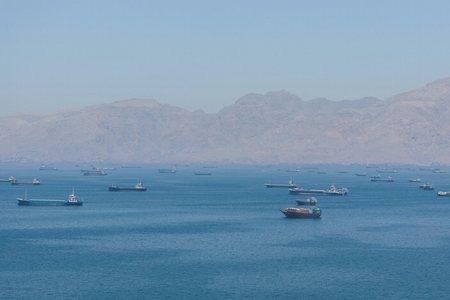
To the untrained eye, this request sounded only slightly desperate, especially when Trump failed to follow through on his threats to launch attacks on Iran. The grim reality is that, in the talks to end the war, it is Tehran that has had the upper hand. Iran’s closure of the Strait of Hormuz has put enormous pressure on the global economy. As gas prices have risen in America, Trump’s approval ratings in opinion polls have also fallen sharply.
The result is that, at the time of writing, the US seemed willing to agree to a deal that, in the long run, threatens to leave Iran in a stronger position than before this war began.
The gist of the new deal is that Iran agrees to open the strait without charging a fee. In return, it gets gradual relief from sanctions, including the unlocking of billions of dollars in assets. Iran will make promises to limit its nuclear program. But the details will be the subject of future negotiations, so the issue is essentially unresolved.
Trump has insisted that there is no rush and that he would never accept a bad deal. But the reaction from aggressive Republicans to the new deal was significant.
Senator Ted Cruz suggested that this could be a “catastrophic mistake” because it would leave Iran “capable of enriching uranium and developing nuclear weapons, as well as having effective control over the Strait of Hormuz.” Senator Roger Wicker, chairman of the Senate Armed Services Committee, warned that the emerging agreement would not even be worth the paper it is written on.
The Israeli government, which played a crucial role in persuading Trump to go to war in the first place, will be leery of any public compromise, not least because Benjamin Netanyahu will soon face the electorate. But the reality is that the Israeli leader sold the war as a unique opportunity to secure regime change in Iran.
He now sees the conflict ending with the Iranian regime still in power, more confident, tougher, and with new financial resources to rebuild its nuclear program and its intermediary network throughout the Middle East.
Eli Groner, a former director general of Netanyahu’s office, argues that the knowledge that Iran can now close the Strait of Hormuz at any time in the future “is a much deeper and more strategic victory than any military achievement that scores points.” His one-word summary was: “Disaster.” In addition to potentially easing the Islamic republic’s difficult financial and economic position, the deal is likely to tilt the regional balance of power in Iran’s direction.
As Dan Shapiro, a former U.S. ambassador to Israel, observed in X: “ Iran has gained considerable influence for the future by demonstrating that it can control the strait, by attacking its neighbors and U.S. bases in the region and inflicting significant damage, and by taking the brunt of the United States and Israel’s attacks and surviving.”
Shapiro believes, however, that Trump is so self-absorbed that accepting a bad deal that opens the strait would be a better option than continuing the war. Given the growing risks of a global energy crisis and a worldwide recession, this is an understandable calculation. America also has recent memories of wars, including Vietnam and Afghanistan, that dragged on for far too long, as the US fought in vain to improve a losing position.
If and when Trump accepts a bad deal, it will be because he has no viable alternative. Senator Wicker's proposal was to "allow America's capable armed forces to complete the destruction of Iran's conventional military capabilities and then reopen the strait."
But an attempt to secure the strait by military means would probably have required the deployment of ground troops and the acceptance of heavy American casualties. Even then, the Iranians would have been able to threaten the ships with drones or missiles.
Trump’s repeated threats to unleash “Hell” on the Iranian regime lacked credibility, given his apparent reluctance to engage in a ground war and the risk of Iranian retaliation against the Gulf states and their energy infrastructure. In the jargon of military analysts, the weakness of the Gulf gave Iran “escalation dominance.”
The US president, who obsessively compares himself to former President Barack Obama, liked to mock the nuclear deal that the Obama administration reached with Iran in 2015. Trump has called it "one of the worst and most one-sided transactions that the United States has ever entered into" and has claimed: "I have never, ever, ever in my life seen any transaction negotiated as ineptly as our deal with Iran."
But Trump himself is now negotiating a deal that, in many ways, looks worse than the one Obama negotiated, partly because of the implicit knowledge that Iran can still close the Strait of Hormuz whenever it wants. This is an achievement by the master of the art of the deal, Trump. / Adapted from “Pamphlet” by “Financial Times”


Deri tani ajo që tha ai nuk ishte e vërtetë. Lexon mendjen e tij me zë të lartë! Ai nuk mendon për qëndrimin e palës tjetër. Kjo është si shoferët e automjeteve luksoze në Shqipëri: "Unë duhet të shkoj i pari." E njëjta psikologji.