


 Shkruar nga Pamfleti
To this day, Kosovo's status remains contested and efforts to normalize relations between Serbia and Kosovo have stalled, leading to military tensions tempered by the continued presence of NATO...
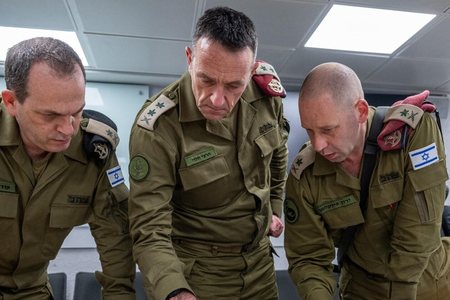
After the current operation against Hamas ends, Israel plans to take over the security guarantee in Gaza.
This is likely to require a continued presence of Israeli forces in Gaza, raids against Hamas bases, control over population movements and isolation of the territory from the outside world.
"We don't want to govern Gaza," Israel's Foreign Minister Eli Cohen told the Wall Street Journal. "We just want to protect our people," he continued. But this is a new kind of "occupation lite" concept that externalizes the costs, risks, and burdens of occupation beyond the steps necessary to maintain Israel's security.
Washington is proposing that the Palestinian Authority led by President Mahmoud Abbas and his Fatah party, which rules the West Bank, should extend its authority to Gaza once the conflict ends. However, the Abbas team is not reliable. Its administration in the West Bank is notoriously ineffective and beset by corruption.
An alternative, or an additional step, would be to establish an international governing mission. This mission would combine peacekeeping with steps to oversee local governance and build more credible self-government structures over time. The examples of East Timor and Kosovo are often mentioned in this context. Both returned to places where thousands of soldiers were deployed.
There is a critical difference between Gaza on the one hand and East Timor and Kosovo on the other. The operation in East Timor began after Indonesian troops sacked the territory in 1999, after the population chose independence in a UN-sponsored referendum. An estimated 1,400 East Timorese were killed, with half a million forcibly displaced.
The United Nations provided an international governance mission supported by 1,600 international police and 9,000 troops. Over a period of two and a half years, the mission provided security and stability to the terrorized population while preparations were made for eventual independence in May 2022.
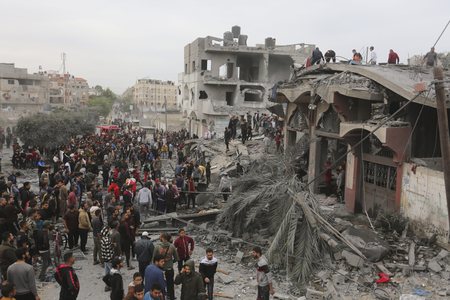
In Gaza, too, an international presence may initially be welcomed. Apparently, this would bring an end to the Israeli offensive in Gaza, which has already cost about 15,000 mostly civilian lives and resulted in the destruction of much of the civilian infrastructure.
In East Timor, the goal of the mission was clear: to prepare the territory for independence within a short period. In Gaza, the situation would look quite different. Unless linked to the implementation of a peace settlement, including full citizenship, international administration would lead nowhere. It would become another symbol of the disenfranchisement of the Palestinian people and be seen as a means of maintaining the status quo forever.
This kind of danger became clear a few years after the international operation in Kosovo. The international civilian mission was supported by a large military presence led by NATO. In the wake of the Kosovo War, NATO was widely seen by Kosovo's predominantly ethnic Albanian population as its heroic savior from Serbian repression.
The UN mandate for the operation left Kosovo's eventual status open, focusing instead on building capacity for local self-government. However, as the mission progressed, the population became concerned, demanding the start of final status negotiations.
By 2004, despite the status of NATO troops in the country as liberating heroes, violent riots erupted demanding independence. This forced the UN to start final status talks. The UN mediator ultimately concluded that the population would accept no other outcome than independence, despite Serbia's fierce resistance. To this day, Kosovo's status remains contested and efforts to normalize relations between Serbia and Kosovo have stalled, leading to military tensions tempered by the continued presence of NATO.
In short, international administration can only work if it is clear from the outset that it serves to move a territory to the political status desired by its population, as was the case in East Timor and, eventually, Kosovo. Where there is no clear and irreversible direction of travel towards that status, the mission itself will be seen as a means to frustrate the wishes of the population, causing riots and violent protests in favor of change. And where there is no prospect of a status resolution, the mission will assume the mantle of armed occupation after a while. /Adapted "Pamphlet" from "Foreign Policy"



Lini një Përgjigje